So‑Young International (SY): supplier relationships that shape growth and risk
So‑Young operates an online platform connecting consumers with medical aesthetic providers and related products; it monetizes through platform service fees, targeted advertising and content selling, and product sales (including both third‑party injectables and items produced by its Wuhan Miracle unit). For investors and operators, the critical axis is how platform partnerships and owned manufacturing convert marketing spend into higher lifetime customer value and diversified revenue streams. Learn more about how we surface supplier relationships and material signals at https://nullexposure.com/.
Why suppliers matter for So‑Young’s thesis
So‑Young’s core business is consumer acquisition and transaction facilitation in a discretionary healthcare vertical with high unit economics when customer conversion is sustained. The company reported Revenue TTM of $1.431B and Gross Profit TTM of $739M, but it still runs negative margins at the bottom line (Diluted EPS TTM of -1.05 and Profit Margin -51.7%), which makes efficient supplier relationships and owned product lines important levers to improve margin profile and cash flow. Platform partnerships that lower customer acquisition cost and in‑house manufacturing that lifts product margin are therefore principal operational levers for upgrading the economics.
What the package of supplier relationships looks like
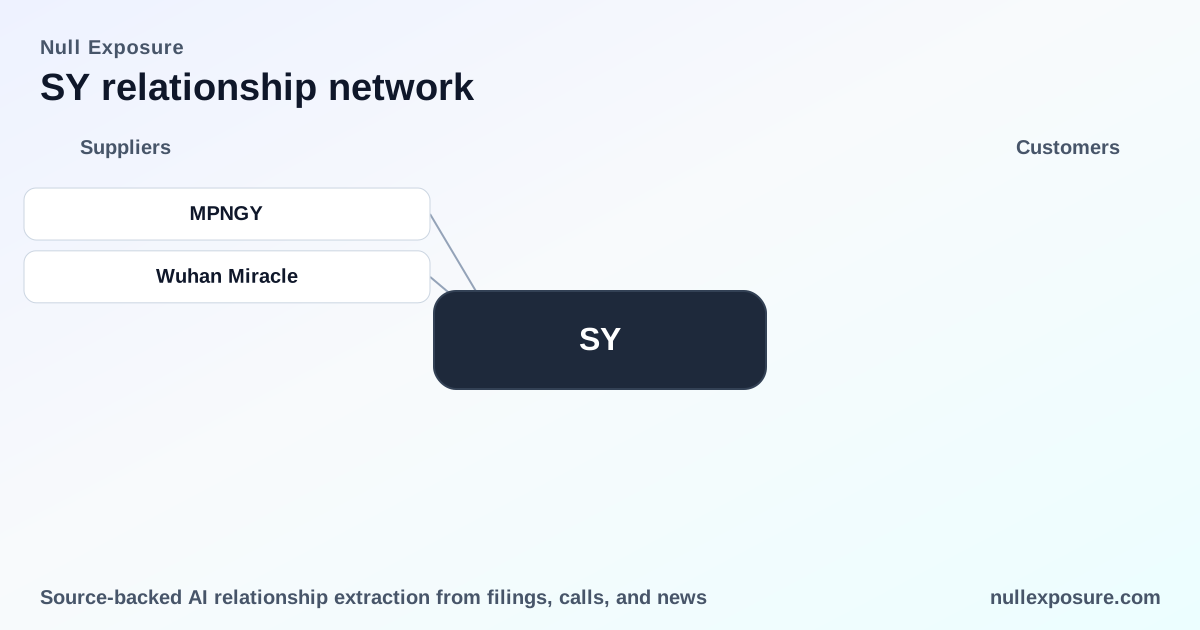
So‑Young’s public supplier signals in the available feed highlight two relationships with clear commercial and strategic roles: a platform distribution/marketing partnership with Meituan and an owned/adjacent manufacturing line through the Wuhan Miracle acquisition. Each relationship affects a different part of the revenue stack — conversion and distribution vs. product margin and revenue diversification.
Meituan — platform amplification for user acquisition and conversion
So‑Young has deepened cooperation with Meituan, using targeted advertising and content selling on the platform to improve brand exposure and user conversion, which feeds the core marketplace funnel and monetization via service fees and ad sales. According to a Q3 FY2025 earnings call transcript published on InsiderMonkey, this cooperation was explicitly cited as a contributor to improved brand exposure and conversion (InsiderMonkey, Q3 FY2025 transcript, reported March 2026).
Source: https://www.insidermonkey.com/blog/so-young-international-inc-nasdaqsy-q3-2025-earnings-call-transcript-1647558/
Wuhan Miracle — owned product supply and a separate revenue line
So‑Young acquired Wuhan Miracle in 2021 and has since scaled revenue from both third‑party injectables and Wuhan Miracle manufactured products, establishing a meaningful and separate product revenue stream beginning in 2023 that complements service revenues. A Benzinga analysis documented the role of Wuhan Miracle in creating this product revenue channel and its contribution to the company’s commercial mix (Benzinga, coverage referencing post‑2023 revenue trends).
Source: https://www.benzinga.com/Opinion/25/11/49116177/so-young-makeover-story-sends-mixed-signals
If you want a consolidated view of supplier exposures across the cap table and platform partners, visit https://nullexposure.com/ for the full supplier mapping and signal tracking.
Operational constraints and what they signal about contracting posture and maturity
The supplier feed for SY contains no explicit constraint excerpts tied to suppliers; that absence itself is a signal. At the company level, use the following interpretive framework:
-
Contracting posture — hybrid and platform‑oriented. So‑Young operates as a marketplace and advertising platform while also owning product manufacturing through Wuhan Miracle, indicating a hybrid supplier stance: long tail third‑party providers (clinics, injectables suppliers) plus a vertically integrated product arm. This structure implies negotiated relationships at scale with platform partners and supplier integration where margin capture matters.
-
Concentration risk — platform dependencies. Data points on partnerships such as the intensified cooperation with Meituan indicate concentration of customer acquisition through major consumer platforms, which is efficient but raises exposure if platform terms change or competition for ad inventory tightens.
-
Criticality — high for distribution, medium for manufacturing. Platform partners are critical for new customer flow and conversion; Wuhan Miracle is strategically critical for product margin and revenue diversification, but So‑Young’s marketplace model still relies on a wide supplier base for service supply.
-
Maturity — mixed. The platform and advertising business show scale (over $1.4B TTM revenue) but maturity gaps persist at the profitability level, given negative EPS and operating losses; the Wuhan Miracle product stream is an established but still relatively recent contributor (material since 2023), so product vertical maturity is accelerating but not yet a stabilizing margin driver.
Because the constraints feed provided no supplier‑specific flags, operators should prioritize monitoring platform contract terms, ad unit economics, and product margin trends as the next best proxies for supplier risk.
What this means for investors and operators — concrete takeaways
-
Distribution leverage matters: The Meituan partnership is a direct lever on customer acquisition cost and conversion; investors should track changes in referral volumes and CPMs because swings there will move top‑line growth and margin conversion quickly.
-
Vertical integration is real and revenue‑relevant: Wuhan Miracle has converted into a separate product revenue stream since 2023, reducing reliance on third‑party product margins and offering an internal path to higher gross margin on product sales.
-
Profitability conversion is the near‑term barbell: With large revenue but negative net margins, the company’s valuation and risk profile depend on how effectively advertising/partner spend and owned product margin translate into operating leverage across FY2026.
-
Supplier disclosure is light in the public feed: No supplier‑specific constraints were provided in the available signals; this is a governance and transparency consideration for due diligence.
Quick checklist for diligence:
- Validate Meituan referral volumes and conversion rates from So‑Young internal metrics or platform reports.
- Monitor Wuhan Miracle revenue contribution and margin trends on a quarterly basis.
- Watch advertising CPMs, content selling ARPU, and customer LTV improvements.
- Assess contingency plans for platform concentration (alternative channels, owned media).
Final verdict and actions
So‑Young’s supplier posture combines platform partnerships that accelerate customer acquisition with an owned manufacturing arm that boosts product revenue and margin potential. These relationships together represent both the upside (scalable distribution, margin capture) and the primary operational risk (platform concentration and profitability conversion). For investors and operators focused on supplier exposures, the two relationships documented here — Meituan and Wuhan Miracle — are the immediate levers to watch.
For a full supplier relationship map and ongoing signal updates, go to https://nullexposure.com/. If you want tailored intelligence on SY supplier contracts and concentration risk, start a deeper review at https://nullexposure.com/ — we provide the supplier‑first view that drives operational and investment decisions.