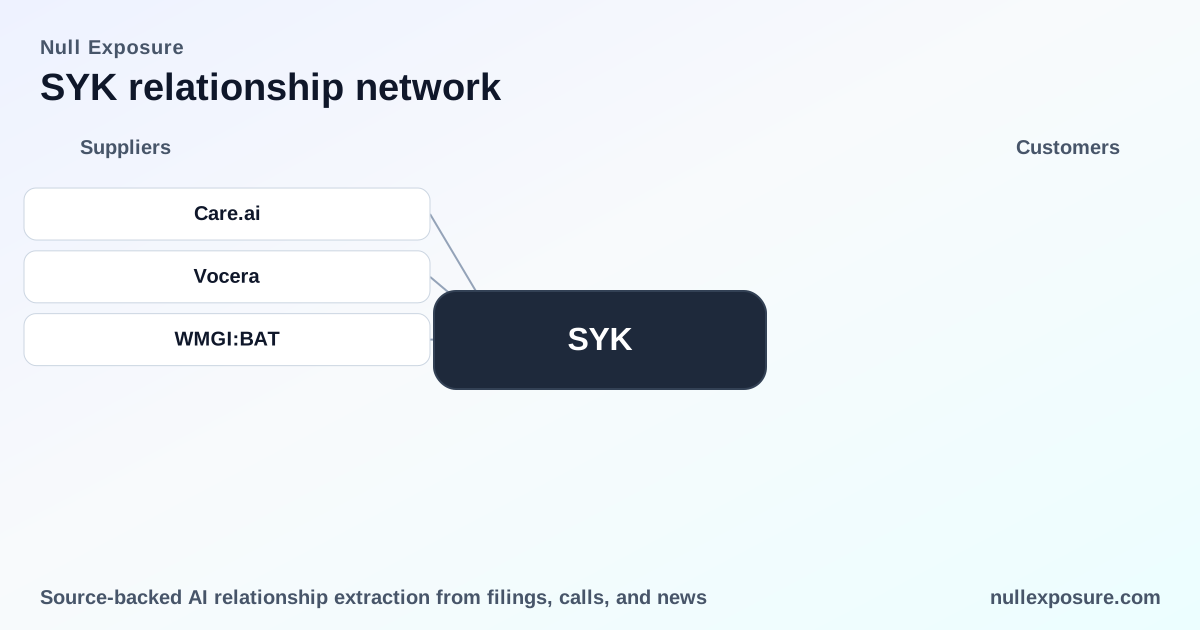
Stryker (SYK) — supplier relationships that shape durable margins and product lock‑in
Stryker monetizes through a two‑pronged model: high‑margin implanted devices and durable capital equipment sales, plus recurring revenue from consumables, services and software that lock customers into its ecosystem. The company expands that ecosystem both organically and by assimilating technology suppliers into the Stryker platform—turning once‑external partners into strategic, cross‑selling assets that support recurring aftermarket flows and strengthen procurement leverage. For investors and operators, the critical signal is how supplier relationships translate into product integration and revenue stickiness rather than short‑term cost reductions. Explore more supplier intelligence at https://nullexposure.com/.
Why these supplier ties matter to the investment case
Stryker’s supplier activity reported in FY2026 highlights two strategic behaviors that drive valuation: bolt‑on acquisition of adjacent digital assets and integration of implant and software brands into surgical platforms. These behaviors increase lifetime customer value and compress the vendor ecosystem inside hospitals, supporting pricing power and predictable service revenue.
Operationally, this translates into a firm contracting posture: Stryker behaves like a consolidator and platform owner—it absorbs capabilities that are critical to workflow (digital care, voice and clinical communications, implant planning) and embeds them into capital equipment sales. The result is lower supplier fragmentation, elevated end‑customer switching costs, and a higher share of revenue that is captive to Stryker’s installed base. For an investor, that is a better multiple justification than isolated product launches.
No explicit external constraints were recorded in the supplier relationship data for FY2026; as a company‑level signal, that absence indicates limited constraint disclosure in public supplier mentions, not a lack of operational dependencies. For deeper diligence on contract terms and supplier concentration, engage primary filings or targeted vendor audits at https://nullexposure.com/.
The named relationships investors need to know
Care.ai — digital virtual care integrated into Stryker’s smart hospital push
Stryker has absorbed Care.ai to expand its AI‑assisted virtual care capabilities and accelerate the “smart hospital” product line that links devices, software and clinical workflows. According to a MassDevice item from March 2026, this acquisition is part of Stryker’s strategy to bolster its digital portfolio alongside earlier buys. (Source: MassDevice, March 2026.)
Vocera — clinical communications embedded into device ecosystems
Stryker’s earlier acquisition of Vocera is explicitly referenced alongside Care.ai as a deliberate enlargement of clinical communications and workflow offerings, creating a unified digital front for hospital operations. A March 2026 MassDevice article grouped Vocera with Care.ai as contributions to Stryker’s smart hospital platform. (Source: MassDevice, March 2026.)
Tornier — implant brand integrated with Mako robotics and planning software
Stryker is integrating Tornier Perform Reversed implants with its Mako SmartRobotics and Blueprint planning software to present a turnkey shoulder solution that streamlines surgical workflow and shortens OR time. Multiple outlets in March 2026 reported this product integration—National Today covered the Mako Shoulder launch, while regional outlets and MassDevice reiterated the integration of Tornier implants and planning software with Mako robotics. (Sources: National Today, March 3, 2026; MassDevice; SG.Finance.Yahoo, March 2026.)
What this pattern implies for contracting, concentration and criticality
Stryker’s supplier interactions in FY2026 are dominated by acquisitions turned internal capabilities and brand integration. From an operational and procurement viewpoint:
- Contracting posture: Stryker negotiates from a position of control once it acquires suppliers; those assets become de facto internal teams that contribute to bundled product offerings. The company’s posture favors long‑term commercial lock‑in rather than spot sourcing.
- Concentration: Ownership of key digital and implant assets reduces external supplier concentration risk at the top level, while increasing internal dependence on the success of integrated platforms (e.g., Mako + Tornier implants).
- Criticality: Integrated software and communications (Vocera, Care.ai) are mission‑critical to the value proposition Stryker sells to hospitals—these capabilities influence purchase decisions for capital equipment and aftermarket contracts.
- Maturity: The relationships reflect a mix of mature implant brands (Tornier) and newer digital capabilities (Care.ai) that Stryker is scaling into commercialized offerings; that blend supports near‑term revenue through devices and long‑term recurring revenue through services and software.
These are company‑level signals extracted from the supplier relationship reporting; the FY2026 mentions do not include explicit constraint excerpts that change those inferences.
Operational and investor risks to monitor
The integration strategy is accretive to stickiness but concentrates execution risk into a few cross‑functional programs:
- Integration execution: Combining robotics, implants and digital care requires coordinated regulatory, commercial and service approaches; failure to synchronize can delay realization of recurring revenue.
- Hospital procurement dynamics: While integration increases switching costs, hospital capital budgeting cycles still concentrate risk into multi‑year buying patterns; investors should model lagged revenue conversions from capital sales into consumables and software subscriptions.
- Regulatory and clinical adoption: Surgical robotics and AI‑driven care systems face regulatory scrutiny and clinical adoption curves; these are program risks that determine how quickly supplier capabilities scale into durable margins.
Stryker’s public financials already price a premium for this integrated model: the company trades at elevated valuation multiples relative to peers, reflecting investor expectations for sustained margin expansion from a captive installed base.
Key takeaways for operators and investors
- Stryker is converting suppliers into platform assets—that strategy strengthens pricing power and recurring revenue, which supports higher multiples.
- Care.ai and Vocera expand clinical communications and virtual care, positioning Stryker to sell software and services bundled with capital equipment (MassDevice, March 2026).
- Tornier implant integration into Mako robotics is a clear product lock‑in move that reduces implant substitution risk and accelerates consumable and service monetization (National Today; MassDevice; SG.Finance.Yahoo, March 2026).
- No explicit supplier constraints were disclosed in the FY2026 mentions, which is a company‑level signal that public supplier constraint visibility is limited; deeper diligence requires contract review.
For more supplier intelligence and to track how these relationships evolve against Stryker’s financials, visit https://nullexposure.com/.
Stryker’s FY2026 supplier signals confirm the investment thesis: platform consolidation, integration of clinical software, and implant‑robotics bundling that convert one‑time capital sales into recurring revenue and durable market share. For investors assessing supplier‑level risk and upside, that combination is the core driver of operating leverage and valuation growth. Learn more about supplier impacts on equity performance at https://nullexposure.com/.