SZZLR: How the SPAC’s underwriting relationships define its short-term playbook
Sizzle Acquisition Corp. II is a blank‑check company that monetizes by raising capital through a public units offering and then deploying the proceeds into a negotiated business combination; value for investors depends on deal sourcing, the sponsor’s execution, and the quality of capital‑markets partners engaged for underwriting and distribution. For operators and allocators evaluating SZZLR as a supplier counterparty, the most material relationship is its underwriting placement—this determines access to capital, deal timing, and pricing discipline. Learn more on the Null Exposure homepage: https://nullexposure.com/
What the underwriting link tells you about execution risk
The single public relationship tied to SZZLR shows the company relied on traditional investment‑bank distribution rather than an internal capital raise. According to a March 2026 article in Nation’s Restaurant News, Cantor Fitzgerald & Co served as the sole book‑running manager for the units offering, and the units began trading on Nasdaq Nov. 4 under the ticker SZZLU (https://www.nrn.com/restaurant-finance/sizzle-ceo-steve-salis-discusses-155m-spac-s-targets). That underwriting posture signals a conventional SPAC market approach: outsource market execution to an established broker‑dealer.
This orientation has clear operational implications. A sole book‑runner structure concentrates execution dependency in one counterparty, which accelerates deal cadence when the underwriter is aligned but creates bottlenecks if the firm shifts capacity or risk appetite. For investors, the underwriting partner is a primary supplier of distribution and market access—evaluate its balance sheet capacity and track record on similar SPAC transactions.
Quick company signals that shape the supplier profile
A compact set of public facts frames SZZLR’s maturity, concentration, and balance‑sheet posture:
- Zero reported operating revenue and zero gross profit, consistent with a pre‑combination SPAC with no operating company in the portfolio.
- Negative book value (-1.226) and a modest public float (SharesFloat ~19.7M) indicate an early stage capital structure where sponsor economics and unit structure drive post‑deal dilution dynamics.
- Listed on Nasdaq with units previously trading under the related ticker SZZLU, and headquartered in Washington, D.C.; official site: https://www.sizzlespacII.com.
Taken together, these company‑level signals show a highly immature operating profile that is effectively a financial vehicle, not an operating supplier; the firm’s most critical external dependency is capital‑markets intermediaries like underwriters and institutional investors.
Learn how Null Exposure maps supply‑chain counterparties for financial vehicles: https://nullexposure.com/
Company‑level operating model characteristics
- Contracting posture: Outsourced distribution and underwriting; SZZLR uses an external book‑runner to execute its unit placement rather than proprietary distribution channels. This implies contractual relationships are primarily transactional, governed by underwriting agreements and SPAC formation documents.
- Concentration: With a single identified sole book‑runner in public reporting, concentration risk in capital markets execution is elevated—one partner can materially influence timing and terms.
- Criticality: Underwriting and distribution partners are mission‑critical to a SPAC’s ability to raise and retain trust capital; without them the SPAC cannot complete its IPO or manage redemptions efficiently.
- Maturity: The company is in a pre‑combination stage with no operating revenues; counterparty relationships are execution‑focused rather than long‑term supply contracts.
All public supplier relationships and what they mean
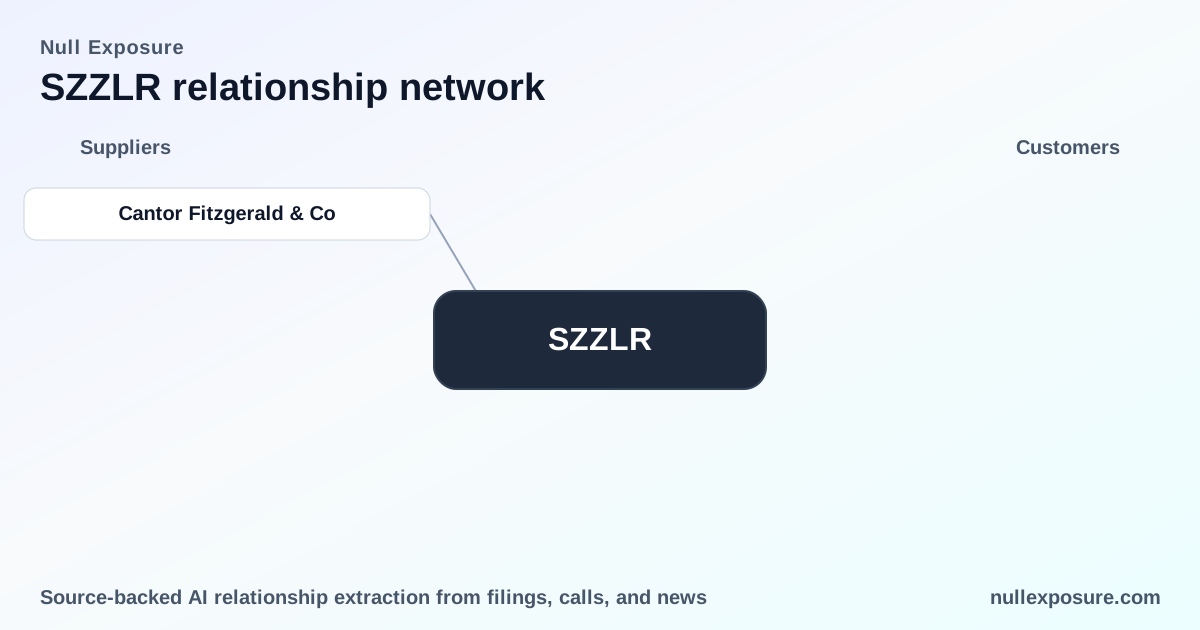
Cantor Fitzgerald & Co — The firm acted as the sole book‑running manager for Sizzle Acquisition Corp. II’s units offering, which began trading on Nasdaq under the units ticker SZZLU on Nov. 4; this places Cantor Fitzgerald at the center of the SPAC’s distribution and capital‑markets execution strategy (Nation’s Restaurant News, March 10, 2026: https://www.nrn.com/restaurant-finance/sizzle-ceo-steve-salis-discusses-155m-spac-s-targets).
That is the full set of supplier relationships surfaced in public coverage to date; any additional counterparty exposures (legal, escrow, sponsor side letters, or forward purchase agreements) should be sought in SEC filings and offering memoranda.
Investment implications and supply‑side risk map
For investors and operators considering SZZLR as a counterparty or part of a sponsor ecosystem, the practical takeaways are straightforward:
- Execution risk is concentrated. A sole book‑running manager simplifies coordination but amplifies single‑point failures in market access and repricing pressure.
- No operating revenue equals reliance on capital markets. The SPAC’s value proposition is timing and quality of the business combination; underwriters and anchor investors determine whether SZZLR can convert its vehicle into a meaningful operating enterprise.
- Counterparty diligence matters more than financial ratios. With few financial metrics available (no revenue, no EBITDA), qualitative due diligence on the sponsor team, underwriter commitment, and any forward purchase or PIPE commitments drives risk assessment.
Key risk factors to track in next‑stage diligence: underwriting fees and lockups, any forward purchase or PIPE commitments, redemption behavior on the units, and the sponsor’s track record in deal sourcing and integration.
What sensible next steps look like
For teams modeling SZZLR exposure or negotiating supplier terms:
- Request copies of the underwriting agreement and any placement memoranda to validate fee schedules and liability allocations.
- Confirm PIPE commitments or anchor investor agreements that reduce market execution risk after the business combination.
- Monitor secondary market trading in the units/tickets (SZZLU) for signs of investor confidence or stress; trading patterns will reveal market acceptance of the underwriting and the sponsor’s strategy.
If you want a deeper supplier‑level map and risk scorecard for SZZLR and comparable SPACs, visit Null Exposure and request a focused report: https://nullexposure.com/
Final read: what matters most to allocators
The central supplier relationship for SZZLR is its underwriter; evaluating that partnership and its contractual terms is the highest‑value exercise for investors. This SPAC’s lack of operating economics shifts the diligence burden away from income statements and onto market‑execution and sponsor governance. For counterparties and corporate operators, that means negotiations will hinge on distribution commitments, fee structures, and post‑closing financing assurances rather than on supply‑chain logistics or product delivery.
For ongoing supplier monitoring and detailed counterparty analysis, start your diligence on Null Exposure: https://www.nullexposure.com/