Titan Acquisition Corp (TACH): who ran the IPO, where it listed, and what that means for counterparties
Titan Acquisition Corp is a special purpose acquisition company (SPAC) that monetizes through the capital it raised in its public offering and the sponsor economics of identifying and completing a business combination. The company collected approximately $276 million in IPO proceeds, listed its units on the Nasdaq Global Market, and now operates as a cash-rich vehicle whose value depends on deal execution and sponsor incentives rather than operating revenue. If you are evaluating a supplier, adviser or investor relationship with Titan Acquisition, the relevant commercial facts are straightforward: this is a capital-raising vehicle with concentrated, mission-driven counterparties around listing and underwriting. For further supplier intelligence and relationship mapping, visit Null Exposure.
Who organized the IPO and where it listed
The public record around Titan’s offering and listing names a few key market participants that ran the transaction and provided the listing venue. The details below come from the company announcement and syndicated press coverage of the IPO and unit listing.
-
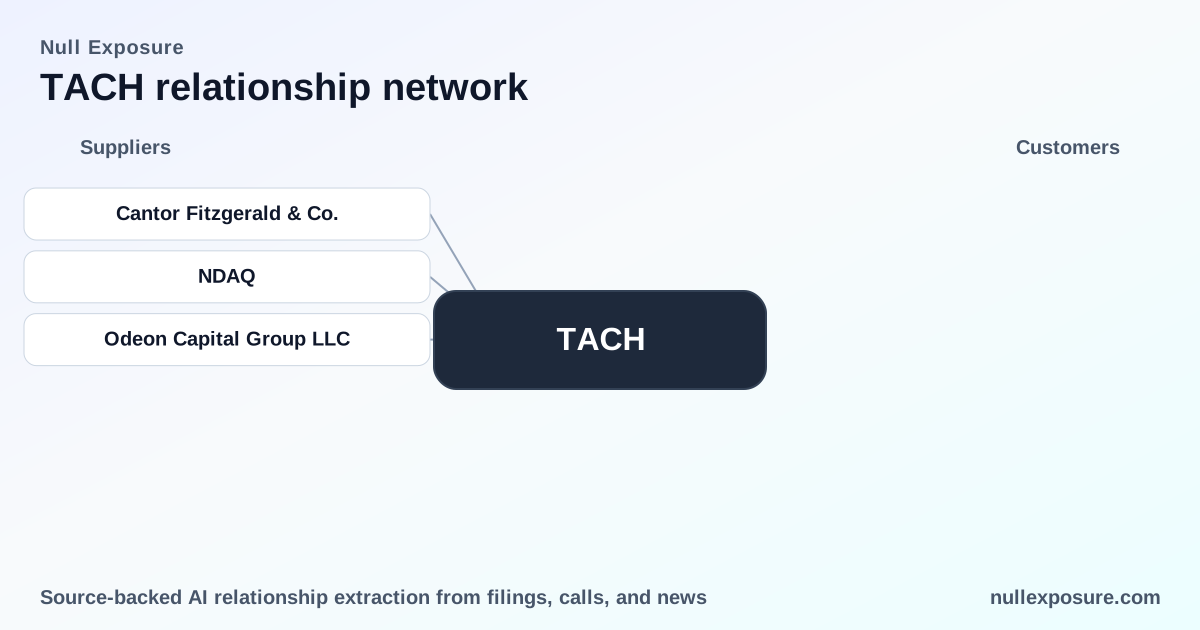
Cantor Fitzgerald & Co. — book-running manager. Cantor Fitzgerald acted as the sole book-running manager in Titan’s offering, leading order allocation and underwriting syndicate responsibilities for the $276 million raise. Source: Futunn report covering Titan’s offering announcement (reported March 10, 2026) and corroborated by Reuters coverage of the April 2025 transaction.
-
Nasdaq — listing venue for units (TACHU). The units began trading on the Nasdaq Global Market under the ticker symbol TACHU on April 9, 2025, establishing the company’s primary public listing and market microstructure. Source: Futunn post referencing the April 9, 2025 Nasdaq listing announcement.
-
Odeon Capital Group LLC — co-manager. Odeon Capital Group served as a co-manager on the offering, supporting distribution and syndicate execution alongside Cantor Fitzgerald. Source: Futunn coverage of the offering (March 10, 2026) and Reuters/TradingView reporting from April 10, 2025.
-
Cantor Fitzgerald & Co. — same role noted in Reuters/TradingView coverage. Independent press (Reuters syndicated via TradingView) also identified Cantor Fitzgerald as the sole book-runner in the offering, confirming the lead-manager relationship documented in the company announcement. Source: Reuters via TradingView, April 10, 2025.
-
Odeon Capital Group LLC — also confirmed by Reuters/TradingView. Reuters’ coverage repeated Odeon’s co-manager role, matching the company-provided distribution roster. Source: Reuters via TradingView, April 10, 2025.
What that lineup tells operators and investors
The underwriting and listing roster is compact and conventional for a SPAC of this size. Cantor Fitzgerald’s role as sole book-runner signals a centralized underwriting posture, which concentrates execution and allocation control in a single lead manager. Odeon’s presence as co-manager provides distribution depth but not structural redundancy.
-
Concentration: The offering relied on a narrow set of capital-market intermediaries rather than a large multi-bank syndicate. That structure reduces coordination friction but increases vendor concentration risk during critical transaction windows (deal pricing, PIPE placement, unit conversion mechanics).
-
Criticality: Cantor Fitzgerald and Nasdaq are functionally critical for Titan’s near-term mission: capital access and tradability. Vendors or counterparties that support listing mechanics, compliance, or sponsor-counsel services will have outsized leverage during a SPAC lifecycle compared with suppliers to an operating company.
-
Maturity and revenue profile: Titan shows no operating revenue (RevenueTTM: 0) and functions as a cash vehicle; its market capitalization (~$356 million) and institutional ownership (97.1%) reflect a heavily investor-driven capitalization, not an operationally diversified business. These are company-level signals about where value and counterparty focus lie.
Constraints and company-level signals for partner evaluation
There are no contract excerpts in the public relationship feed that impose named constraints, so this section reads as a company-level assessment rather than a supplier-specific legal review.
-
Contracting posture: Expect short-term, transaction-focused agreements (underwriting engagement, listing paperwork, and sponsor-related side letters) rather than long-duration supplier contracts. Counterparties should price for episodic, high-criticality work.
-
Counterparty concentration risk: With a small number of named partners controlling underwriting and market access, suppliers that bid for work around a SPAC should plan for tight timelines and single-point escalation paths.
-
Commercial criticality: Services tied to closing the deal (custody, escrow, PIPE placement, legal/compliance) are critical to Titan’s success; non-critical vendors face lower bargaining power.
-
Maturity and predictability: Titan’s model is event-driven—value crystallizes on a successful business combination. Suppliers must underwrite the lack of recurring operating cash flows and plan for payment terms that reflect SPAC cash management practices.
Risk checklist for business partners
- Underwriter concentration: Single-book runner arrangements concentrate execution risk—confirm allocation mechanics and backup plans.
- Liquidity and listing dependencies: Nasdaq listing rules and unit convertibility timelines materially affect trading and secondary demand.
- Sponsor alignment: Sponsor economics determine incentives for deal timing; assess how service fees and potential promote structures influence counterparty outcomes.
- Institutional ownership profile: With institutions holding ~97% of the float, trading and block execution dynamics differ from retail-heavy names.
Actionable takeaways for investors and suppliers
-
If you are a potential supplier: Price for short, high-stakes engagements and secure clear milestone-based payment terms tied to transaction closing events. Given the concentrated underwriting structure, build direct working relationships with the lead manager (Cantor Fitzgerald) and confirm how co-manager responsibilities are split.
-
If you are an investor or operator considering a business combination with Titan: Focus on alignment of sponsor economics and check how underwriting fees and other transaction costs will be funded from the trust. Confirm listing mechanics with Nasdaq early in the process—unit conversion timing has immediate valuation implications.
-
If you provide capital markets services: Use the opportunity to deepen relationships with the lead manager and Nasdaq compliance officers; these are the parties that shape listing timing and investor access.
For a deeper mapping of counterparties, underwriting roles, and the operating implications for suppliers, visit Null Exposure to see how similar SPAC supplier relationships have been structured.
Conclusion: prioritize execution, not operating history
Titan Acquisition is a transaction vehicle: value for counterparties and investors depends on execution—raising capital, listing, and completing a combination—not on organic revenue performance. Cantor Fitzgerald and Nasdaq are the operational fulcrums for that execution, with Odeon providing syndicate support. For vendors and investors, the clear policy is to structure engagements around milestone payments, manage concentration risk, and verify listing mechanics up front. Learn more about supplier risk and counterparty mapping at Null Exposure.