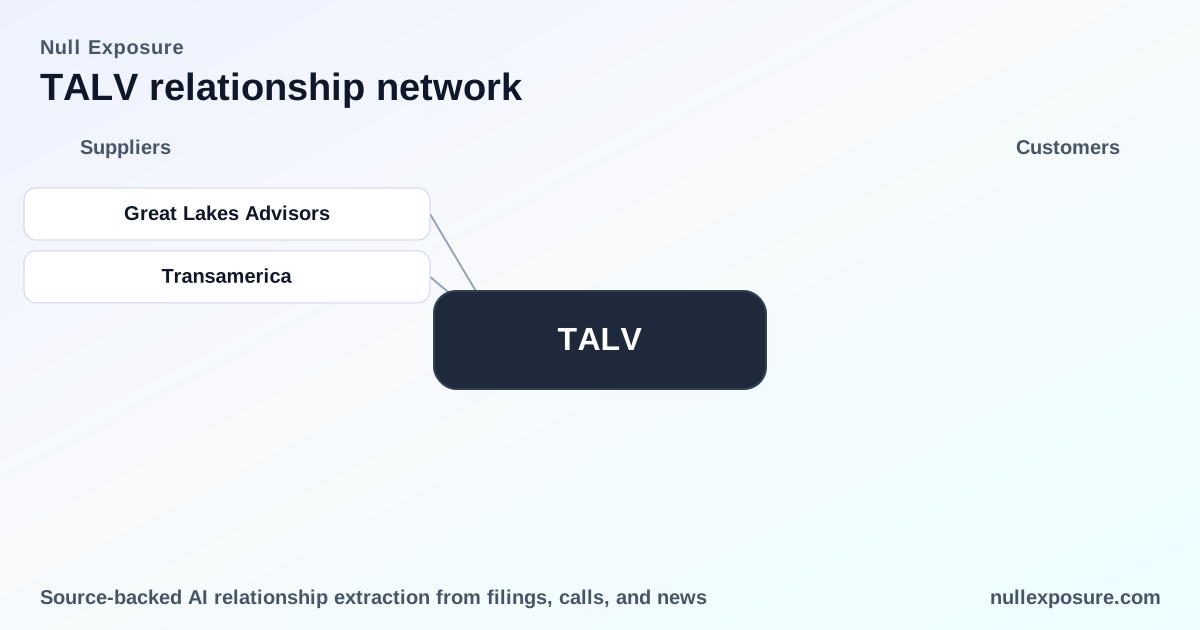
TALV supplier map: who powers Transamerica’s Large Value Active ETF
Transamerica’s TALV (Transamerica Large Value Active ETF) operates as an actively managed ETF product where the issuer monetizes through the ETF’s expense structure and growth in assets under management—collecting management and distribution fees embedded in the fund. The investment strategy execution is outsourced to an established sub-advisor, aligning product economics to the issuer’s scale and the sub-advisor’s portfolio performance. For investors and supplier-risk managers, this is a classic issuer–subadvisor commercial model where service quality, investment capability, and contractual terms directly drive product competitiveness. Learn more about supplier mapping and exposure analysis at https://nullexposure.com/.
What the relationship architecture looks like in plain language
Transamerica acts as the ETF sponsor and distribution platform while delegating day-to-day portfolio management to a professional asset manager. That split delivers two important commercial realities: the issuer captures platform economics and distribution reach, while the sub-advisor provides the investment alpha, process, and personnel that determine investor returns—and therefore long-term flows. Structurally, this means counterparty risk is split between a brand/marketing owner and a boutique investment manager; both roles are material to TALV’s success.
Every recorded supplier relationship (no omissions)
-
Transamerica — sponsor and issuer of TALV. Transamerica launched the Transamerica Large Value Active ETF as part of an expanded ETF lineup intended to make its long-standing strategies accessible in ETF wrapper form. According to a Benzinga report published March 10, 2026, Transamerica introduced TALV alongside another actively managed fund as part of this strategic push. (Benzinga, March 10, 2026)
-
Great Lakes Advisors — sub-advisor responsible for portfolio management. TALV is sub-advised by the Great Lakes Advisors large value team, which supplies the investment management capability underpinning the ETF’s active large-value strategy, per reporting on the ETF launch. (Benzinga, March 10, 2026)
How these relationships translate into operating and contracting characteristics
Available records show the expected two-tier issuer/sub-advisor structure without additional named third-party operational providers. That absence of other recorded constraints or counterparty notes is itself a company-level signal: no documented third-party contractual constraints were captured in the feed, so the principal operational dependencies for TALV are the issuer and its named sub-advisor. From a supplier posture perspective:
- Contracting posture: Standard asset-management contracting where the sponsor retains distribution, regulatory, and shareholder-facing responsibilities while the sub-advisor handles portfolio construction and investment decisions. Contracts typically allocate compliance, custody, and recordkeeping responsibilities to the sponsor or their chosen service providers; those operating-level relationships are not named in the available feed.
- Criticality: The sub-advisor is operationally critical because investment performance drives flows, product positioning, and the ETF’s competitive differential. The sponsor is commercially critical for distribution, brand, and regulatory interface.
- Concentration: The relationship set is narrow—an issuer and a single named sub-advisor—so supplier concentration risk is concentrated in the sub-advisory relationship.
- Maturity and governance: New fund launches imply early-stage product governance dynamics; sponsors commonly maintain escalation paths, termination clauses, and performance reviews in the first 1–3 years to align incentives. No public constraints were recorded to indicate alternative governance outcomes.
What this means for investors and operations teams
- Performance equals platform economics. With investment execution delegated, the ETF’s ability to attract and retain assets depends directly on Great Lakes Advisors’ large value team delivering the strategy investors bought. Operational disruption or team turnover at the sub-advisor would have direct commercial consequences.
- Sponsor controls market access. Transamerica’s role gives it discretion over distribution and product marketing; this positions Transamerica to reposition or reassign mandates if flows or performance justify that action.
- Concentration risk is concentrated and visible. A two-party relationship structure simplifies oversight but increases single-counterparty exposure to the sub-advisor. Institutional investors should treat the sub-advisor as the single most important supplier for operational continuity and investment outcomes.
- Limited public constraint signals. The absence of explicit contractual constraints in the public feed should not be interpreted as contractual robustness; it simply indicates no public constraint excerpts were captured. Active diligence on contract terms, termination rights, SLAs, and key-person protections remains essential.
Explore supplier-level intelligence and issuer mappings for other funds at https://nullexposure.com/.
Practical steps for due diligence and monitoring
- Confirm the sub-advisory agreement terms with Transamerica: compensation basis, termination triggers, key-person clauses, and transition planning. Those clauses materially influence salvageability of the fund if the sub-advisor changes.
- Monitor personnel continuity within the Great Lakes large value team; track announced departures, team restructurings, and investment personnel replacements because they directly affect investment process continuity.
- Track product flows and sponsor behaviour: Transamerica’s distribution choices, fee adjustments, or product packaging decisions signal willingness to invest in the ETF’s growth or to reallocate resources.
- Establish an incident escalation path that treats the sub-advisor as a critical supplier for both investment and operational incident response.
Final takeaways and next steps
- Key takeaway: TALV is a sponsor-subadvisor product where Great Lakes Advisors supplies the investment engine and Transamerica supplies the platform and distribution; investors must evaluate both parties when assessing product risk.
- Risk spotlight: Supplier concentration in the sub-advisor elevates single-counterparty risk; active monitoring of team continuity and contract protections is essential.
- Action: If you are evaluating TALV as a partner or portfolio exposure, begin with contract review and personnel checks, and then layer flow- and performance-monitoring to detect early signs of vendor stress.
For rapid supplier mapping and to compare TALV’s vendor profile across the ETF universe, visit https://nullexposure.com/. For tailored exposure analysis or to request additional supplier intelligence on TALV, the NullExposure platform provides structured reporting and alerting for fund-supplier ecosystems.