TAO Synergies (TAOX): Supplier relationships that define a crypto-treasury play
TAO Synergies operates and monetizes as a concentrated digital-asset treasury: the company holds and manages the TAO token — the native cryptocurrency of the Bittensor network — and supplements direct token exposure with targeted investments in Bittensor subnets and related funds. Revenue and valuation derive almost entirely from token appreciation and yield opportunities within the Bittensor ecosystem, not from traditional product sales or operating cash flow. For investors and operators evaluating supplier relationships, the critical question is how those relationships influence access to the TAO economy, custody and diversification, and counterparty risk. Learn more about supplier intelligence at https://nullexposure.com/.
The business model in one line: a token-first treasury with concentrated counterparties
TAO Synergies is a small-cap, early-stage listed entity whose balance sheet and investment thesis are built around a single digital-asset exposure. The company’s public filings and reporting show very limited operating revenue (Revenue TTM: $3,962) and negative profitability (EBITDA: -$6.9M; Diluted EPS: -21.31), reflecting a corporate model that monetizes through appreciation, staking/yield mechanics, and selective secondary investments rather than recurring product sales. Market capitalization (~$33.5M) combined with a tiny revenue base makes the firm highly sensitive to token market moves and to the operational stability of Bittensor and its service ecosystem.
What the supplier and partner map looks like — who matters and why
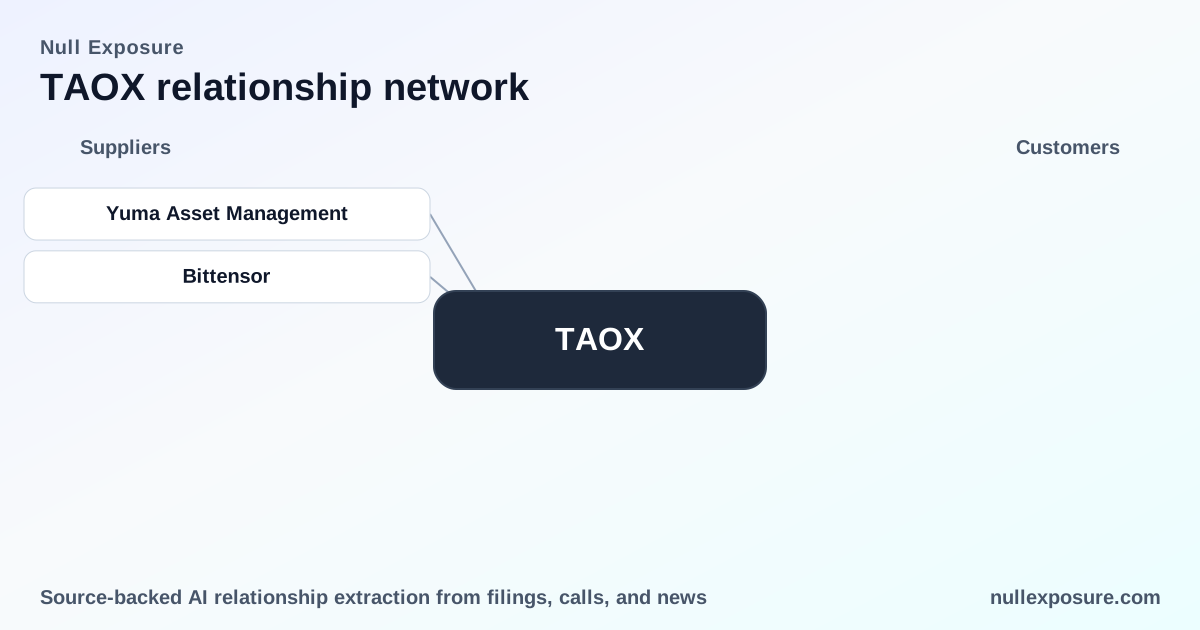
TAOX’s disclosed relationships in the collected reporting fall into two clear categories: the protocol owner and token economy (Bittensor/TAO) and fund managers providing structured exposure to subnets (Yuma Asset Management). Each relationship affects liquidity, access to subnet opportunities, and concentration of exposure.
Bittensor — the protocol and the TAO token (core exposure)
TAO Synergies purchased $10 million of Bittensor’s TAO token and is described as the largest publicly traded holder of TAO, positioning Bittensor as the company’s primary counterparty and economic dependency. According to CoinDesk’s July 19, 2025 report, that $10M purchase established TAOX as the largest public holder of the token; company disclosures summarized on TradingView reiterate the firm’s exclusive treasury strategy centered on TAO. (Sources: CoinDesk, July 19, 2025; TradingView company profile, reporting FY2025.)
Yuma Asset Management — subnet fund exposure
TAO Synergies committed an initial $750,000 to Yuma Asset Management’s Bittensor Subnet Funds to expand exposure beyond the native token into specialized subnet strategies within the Bittensor ecosystem. The company announced the investment in a March 10, 2026 press release carried by Yahoo Finance and reported by CityBiz, framing this as a deliberate move to diversify exposure inside the same protocol economy. (Sources: Yahoo Finance press release, March 10, 2026; CityBiz, March 10, 2026.)
Constraints and what they imply about TAOX’s operating posture
The collected constraints data include several excerpts that describe reliance on third-party licensors, manufacturers, service providers, and even government counterparties. While those specific excerpts reference legacy arrangements (for example, institutional licensors, clinical service agreements and supply contracts), they should be read as company-level signals rather than tied to the Bittensor or Yuma relationships unless explicitly named.
- Contracting posture: The constraint excerpts demonstrate a pattern of reliance on external service providers and licensors to secure critical inputs and IP rights. For a token-centric treasury like TAOX, that implies the company’s operational model tolerates high external dependence for specialized services (custody, fund administration, legal & compliance).
- Concentration and criticality: The company-level evidence suggests high counterparty concentration risk because the core economic asset is a single token and related subnet instruments; service providers that enable custody, liquidity and protocol participation are therefore critical.
- Maturity: The nature of the constraints and the company financials indicate an early-stage maturity profile — limited revenue, negative margins, and a strategy that relies on partnerships to execute token and subnet exposure.
- Counterparty types: One constraint excerpt refers to a government supplier relationship in other reporting, signaling that the company’s broader contract history includes dealings with institutional or government entities; treat this as a signal that TAOX’s contracting universe spans private funds, protocol teams, and institutional suppliers.
Investment and operational implications — what to probe next
TAOX’s supplier map creates a concentrated risk-return profile. Key implications for investors and operators:
- Custody and operational risk are first-order. Verify where TAO is held (custodian vs. self-custody), who provides custody services, and what SLAs and insurance apply.
- Counterparty and concentration risk. The $10M TAO position and the Yuma subnet allocation concentrate protocol exposure; quantify swap, lending, and counterparty exposures tied to Bittensor counterparties.
- Liquidity and exit mechanics. Understand liquidity depth for TAO and subnet instruments under different market scenarios; examine lockups or fund terms with Yuma Asset Management that could restrict flows.
- Governance and protocol dependency. Bittensor’s network governance, upgrade pathways, and economic model are effectively strategic counterparties; evaluate how network-level changes could affect token economics.
Actionable checklist for operator due diligence:
- Confirm custody provider, insurance, and multi-sig arrangements.
- Review fund docs and fee/lock-up schedules for the Yuma subnet investment.
- Stress-test TAO liquidity across several market environments.
- Audit disclosures and reporting cadence on token holdings and valuation methods.
For a provider-grade view into counterparties and supplier risk, see https://nullexposure.com/.
Bottom line and recommended next steps
TAO Synergies is a concentrated crypto-treasury that derives its value from TAO and related Bittensor subnet exposure. The supplier relationships disclosed — a large token position in Bittensor and a smaller, strategic allocation to Yuma’s subnet funds — reinforce a single-protocol reliance that demands rigorous custody, liquidity, and counterparty diligence.
Investors should prioritize operational controls (custody and insurance), contractual transparency (fund and service agreements), and scenario modeling for token stress events. Operators evaluating supplier relationships should insist on explicit SLAs, transparent reporting of holdings, and contingency plans for liquidity interruptions.
For ongoing monitoring and supplier intelligence on TAOX and its ecosystem, visit https://nullexposure.com/.
Final note: the public reporting cited here includes a March 10, 2026 corporate announcement regarding the Yuma investment and a July 19, 2025 CoinDesk piece on the $10M TAO acquisition. These disclosures form the basis for the relationship summaries above and should be reviewed alongside company filings for complete diligence.