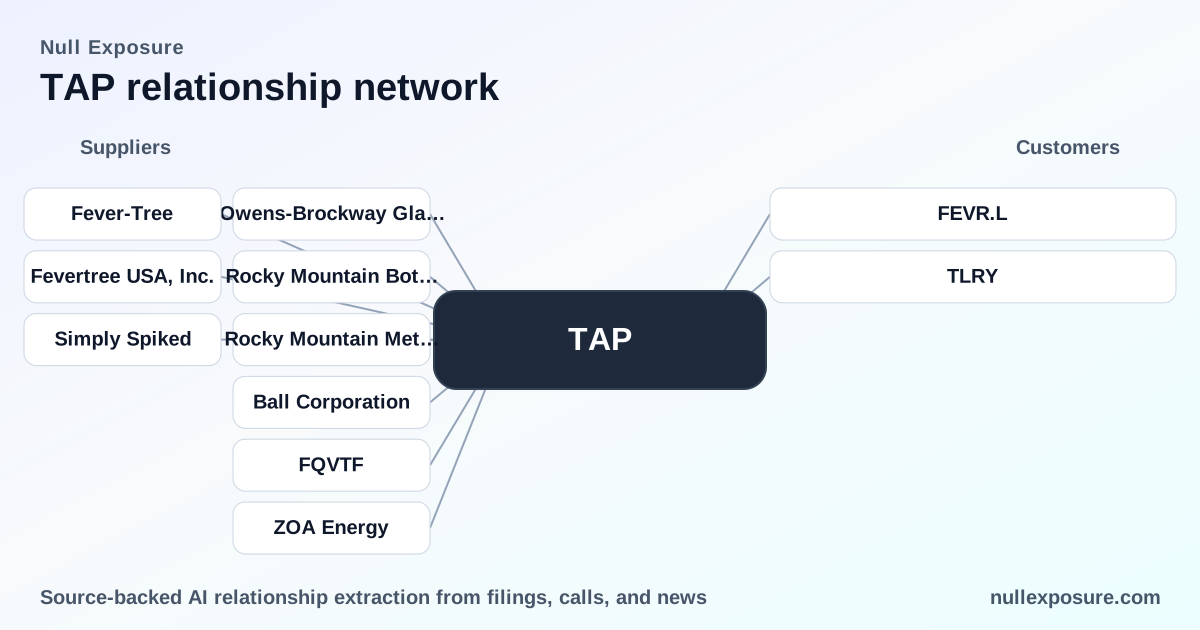
Molson Coors (TAP) — supplier relationships that shape margins and risk
Molson Coors monetizes global beverage brands through manufacturing, licensing and distribution: it brews and packages owned brands, runs joint-ventures for container supply, and extends its shelf presence via license and distribution deals for partner brands. Revenue derives from product sales, licensing fees and margin capture on owned packaging operations, while capital and operating discipline hinge on long-term supply contracts, hedging of commodity inputs and verticalized container manufacturing. For investors evaluating supplier risk, the mix of joint ventures, long-term contracts and strategic brand partnerships is central to margin stability and cash flow predictability. Explore supplier mapping and exposure analysis at https://nullexposure.com/.
How Molson Coors structures supply and why it matters
Molson Coors runs a hybrid procurement posture: long-term contracts and internal joint ventures cover critical packaging and malt needs, while spot purchases fill the remainder of commodity and ingredient demand. The company hedges commodity exposures out to multiple years for inputs such as aluminum, natural gas and diesel, which enforces predictability but creates locked-in cost baselines. At the same time, Molson Coors relies on third-party logistics and managed security providers for distribution and IT security, which transfers operational execution risk to contractors.
- Contracting posture: Predominantly long-term for critical inputs (malt, containers), with spot purchases for other raw materials.
- Vertical integration: Joint ventures that manufacture bottles and cans on-site align supply reliability with operational control.
- Counterparty mix: Includes manufacturers, global packaging players and municipal water suppliers; also brand partners via licenses and distribution.
These operational choices increase resilience and margin control, but concentrated manufacturing partners and multi-year hedges introduce counterparty and commodity risk that investors should monitor. For a deeper look at supplier profiles and legal excerpts, visit https://nullexposure.com/.
Supplier summaries — what the filings and reports show
Below I summarize every supplier relationship flagged in filings and recent reports, in plain English with source cues.
-
Owens-Brockway Glass Container, Inc. Molson Coors has a supply agreement with Owens-Brockway and a 50% ownership stake in a joint venture that supplies glass bottles, indicating strategic alignment on bottle production and capacity. According to Molson Coors’ 2024 Form 10‑K (FY2024), Rocky Mountain Bottle Company is a joint venture with Owens‑Brockway in which Molson Coors holds a 50% interest and has supply agreements for volumes beyond RMBC’s production.
-
Rocky Mountain Bottle Company (RMBC) RMBC is a 50/50 joint venture that manufactures bottles at facilities Molson Coors leases in Wheat Ridge, Colorado; Molson Coors purchases a portion of its bottles from RMBC under an agreed plant capacity arrangement. This is described in the 2024 Form 10‑K (FY2024) and reflects verticalized bottle production located adjacent to Molson Coors’ operations.
-
Rocky Mountain Metal Container (RMMC) RMMC is a joint venture with Ball Corporation that manufactures aluminum cans and ends at facilities Molson Coors leases near its Golden, Colorado brewery, and Molson Coors buys a portion of its cans and ends from RMMC. The 2024 Form 10‑K (FY2024) highlights this arrangement and underscores on-site can manufacturing to control supply and logistics.
-
Ball Corporation In addition to RMMC output, Molson Coors maintains supply agreements with Ball Corporation to buy aluminum containers beyond the joint venture’s output, reflecting redundancy for can supply through an established packaging supplier. This is noted in Molson Coors’ 2024 Form 10‑K (FY2024).
-
Fevertree Drinks plc (FQVTF) Molson Coors took an equity stake in Fevertree Drinks plc during Q1 2025 and now holds a minority interest; this is positioned as a strategic brand investment to broaden premium mixer offerings. The company disclosed the investment in a corporate report posted on Yahoo Finance (March 2026, covering FY2026).
-
ZOA Energy ZOA Energy is listed among partner brands that Molson Coors brings to market through license, distribution or partnership agreements, signaling non‑manufacturing revenue streams via brand partnerships. This partnership mention appears in Molson Coors’ investor report on Yahoo Finance (March 2026, FY2026).
-
Fever-Tree Fever‑Tree (referred to both as a partner brand and in the Fevertree corporate family) is a partner brand distributed or licensed by Molson Coors; the company frames Fever‑Tree within license, distribution and partnership arrangements. This is reported on Yahoo Finance in March 2026 (FY2026).
-
Fevertree USA, Inc. Following the Fevertree USA acquisition, Molson Coors disclosed approximately $30 million of integration and transition costs that are recoverable through net sales over three years beginning Q2 2025—an earnout-style integration recovery that affects near-term reported earnings. This detail is in Molson Coors’ investor communication on Yahoo Finance (March 2026, FY2026).
-
Simply Spiked Simply Spiked is listed as a partner brand distributed by Molson Coors under licensing, distribution and partnership agreements, indicating strategic expansion into spiked seltzer and ready-to-drink segments through non‑owned brands. This appears in the March 2026 investor report on Yahoo Finance (FY2026).
Constraints and operating-model implications
Molson Coors’ supplier constraints reveal a deliberate operating posture:
- Long-term contracting is material. The firm has multiple supplier agreements for key inputs (for example, malt through 2027) and hedges commodities up to 60 months out, which creates cost visibility and protects gross margins against short-term price swings—but also locks the company into market prices relative to competitors.
- Spot purchases coexist with multi‑year hedges. Many raw materials are bought on the open market, creating working-capital and margin exposure to price volatility that is mitigated—but not eliminated—by hedging.
- Government and municipal counterparties are part of the supply picture. Molson Coors both owns and leases water rights and purchases water from local municipalities, adding a regulatory and resource-security dimension to operations.
- Manufacturer roles are embedded and on-site. The filings explicitly name RMBC and RMMC as joint-venture manufacturers operating at Molson Coors‑leased sites, indicating high criticality of these relationships to packaging continuity.
- Service providers are integral. Third‑party logistics and managed security providers handle distribution and IT security, respectively, shifting execution risk to external vendors.
Collectively, these signals point to a mature, vertically integrated supply model with concentrated manufacturing relationships that deliver cost control and operational resilience but concentrate counterparty risk where joint ventures and a small set of major suppliers operate.
If you want an actionable supplier risk scorecard or to map exposure lines to cash-flow scenarios, start here: https://nullexposure.com/.
Investment takeaways and next steps
- Strength: Verticalized bottle and can manufacturing through joint ventures secures packaging supply and reduces logistics friction, which supports gross margin stability.
- Risk: Concentration in on-site manufacturing partners and long-dated hedges creates counterparty and commodity lock‑in risks that deserve monitoring in stress scenarios.
- Opportunity: Brand partnerships and the Fevertree investment expand premium, higher-margin channels that can offset core-beer category softness.
For a tailored supplier exposure assessment or to integrate these supplier relationships into financial models, visit https://nullexposure.com/ for tools and full-text sourcing.