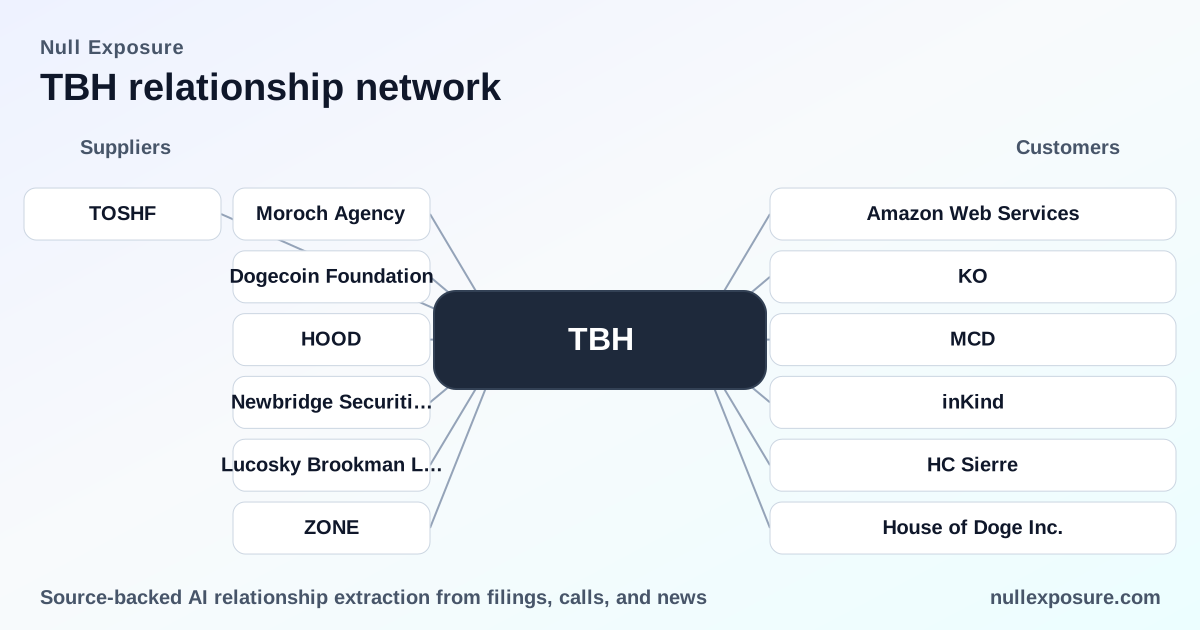
Brag House Holdings (TBH): supplier map, partner risks, and what investors should price in
Brag House Holdings operates an integrated electronic video game and esports platform targeting casual gamers and monetizes through platform activity, sponsorship-backed tournaments, and strategic partnerships that expand distribution and yield-bearing product initiatives. The company runs a lean, partnership-driven operating model—outsourcing marketing, cloud infrastructure, and specialized development while pursuing high-profile licensing and crypto-economy agreements to scale revenue channels. For deeper supplier due diligence and relationship tracking, visit https://nullexposure.com/.
How Brag House makes money and why supplier relationships matter
Brag House reports Revenue TTM of 50 with negative operating metrics and small public capitalization (Market Capitalization: 5,797,200). The contrast between a nascent revenue base and a partnership-heavy growth plan means third-party suppliers and strategic counterparties are de facto growth enablers and concentration risks: platform uptime, payments, and marketing feeds directly into user acquisition and retention economics. The company’s use of MSAs and supplier agreements shows a deliberate externalization of non-core functions while leaning on branded alliances to bootstrap scale and credibility.
The supplier and partner landscape you need to read fast
Below I cover every named relationship flagged in public disclosures and press commentary. Each relationship is summarized in plain English with the source provided.
Moroch Agency
Brag House has an agency supplier agreement with Moroch that supported hosted tournaments sponsored by McDonald’s and Coca‑Cola, indicating reliance on external marketing and sponsorship activation to drive platform engagement. Source: the company’s FY2024 10‑K filing noting a “Moroch Agency Supplier Agreement.”
Dogecoin Foundation
Brag House (through its House of Doge initiative) signed a 20‑year exclusive agreement with the Dogecoin Foundation to build a scalable, yield‑producing Dogecoin economy aimed at institutional and retail crypto investors—this is central to the company’s planned expansion into crypto-enabled financial products. Source: March 2026 news coverage noting the 20‑year exclusive agreement (StockTwits and AsianetNews reports, March 2026).
Robinhood (HOOD)
Robinhood is cited as a partner forming part of the institutional backbone for the Dogecoin economy House of Doge intends to implement, positioning the company to access retail brokerage distribution and potentially regulated investment rails. Source: March 2026 market coverage referencing partnerships including Robinhood (StockTwits article, March 2026).
Newbridge Securities Corporation
Newbridge Securities delivered a fairness opinion valuing the proposed merger transaction at approximately $1.09 billion, providing an independent valuation stamp on the deal economics the market is pricing. Source: Brag House press release via GlobeNewswire (December 4, 2025) describing the Fairness Opinion from Newbridge Securities.
Lucosky Brookman LLP
Lucosky Brookman LLP is serving as legal advisor to Brag House in connection with transactional activity, signaling that the company retained outside legal counsel for corporate and securities matters related to the merger and public listing processes. Source: MarketScreener coverage noting Lucosky Brookman LLP’s advisory role (March 2026).
CleanCore Solutions (ZONE)
CleanCore Solutions is listed alongside other institutional partners supporting the House of Doge initiative, implying CleanCore’s services will be part of the regulated infrastructure for yield‑bearing strategies. Source: March 2026 reporting that cites CleanCore as a partner in the House of Doge institutional stack (StockTwits, March 2026).
21Shares (TOSHF)
21Shares is referenced as a partner in the institutional backbone for the Dogecoin economy, which suggests Brag House is lining up asset managers and product issuers to facilitate regulated crypto investment vehicles. Source: March 2026 market commentary identifying 21Shares among listed partners (StockTwits, March 2026).
Operational constraints and the vendor posture investors should price
Public excerpts and filings reveal specific supplier relationships and broader company‑level signals that determine operational risk:
-
Contracting posture: Brag House uses a mix of MSAs, SaaS agreements and agency supplier contracts, indicating a standard vendor management approach that externalizes complex development, marketing, and licensing work rather than building those capabilities fully in‑house. The company’s FY2024 filing documents an agency supplier agreement with Moroch and an MSA with Artemis for ML development, and a SaaS license with EVEMeta for platform functionality.
-
Concentration: The company relies on a limited number of third‑party payment processors and on third‑party cloud infrastructure (AWS) for hosting. That concentration creates a single‑point dependency on payments and cloud uptime for the platform’s core transaction flows.
-
Criticality: Marketing suppliers, cloud hosts, and payments processors are mission critical—loss of any materially contracted supplier would directly impair revenue generation and customer experience given the company’s small revenue base (Revenue TTM: 50) and outsized reliance on partner-driven growth.
-
Maturity and governance: Use of fairness opinions and external legal counsel (Newbridge, Lucosky Brookman) is consistent with an early‑stage public company that is still establishing internal governance and transactional experience; supplier relationships are therefore compensatory for internal capacity gaps but simultaneously increase execution risk.
These signals together make supplier management a first‑order investment variable for TBH: operational execution depends on effective external partnerships, and concentration amplifies downside.
Visit https://nullexposure.com/ for a supplier risk briefing tailored to TBH if you require transaction‑level diligence.
What investors should price into the stock right now
Three balance points drive valuation risk and upside:
-
Transformation upside: The 20‑year Dogecoin Foundation agreement and partner list (Robinhood, 21Shares, CleanCore) create a pathway to scaleable crypto‑financial products; if executed, this transforms a small gaming operator into an institutional crypto distribution conduit. News coverage and the company’s commercial statements anchor that strategic pivot.
-
Execution and concentration risk: Current reported revenue (Revenue TTM: 50) and market capitalization (5,797,200) are small relative to the ambitions implied by the proposed transaction value (Fairness Opinion at ~$1.09 billion). That gap places heavy weight on flawless execution of partnerships, regulatory approvals, and integration of third‑party services.
-
Governance and diligence signals: Use of external fairness opinions and legal advisors is prudent but also highlights lifecycle immaturity; investors must prioritize supplier contracts, payment‑processor diversity, and cloud service SLAs in due diligence.
Actionable next steps for investors
- Obtain and review the underlying supplier agreements (Moroch, EVEMeta, Artemis) for termination, SLAs, and exclusivity clauses that could affect continuity and margins.
- Validate payment‑processor coverage and failover strategies given limited processor reliance.
- Reconcile the fairness opinion valuation with reported financials and carve‑out sensitivities for the House of Doge plan.
If you need a structured supplier risk memo or contract‑level tracker for TBH, order a tailored report at https://nullexposure.com/.
Bottom line
Brag House is a small, partner‑heavy operator with high optionality through its House of Doge strategy, but its current financial base and concentrated supplier posture make execution risk the primary valuation lever. Investors should underwrite both the upside of the Dogecoin ecosystem partnerships and the structural dependency on external suppliers when setting price targets or sizing positions. For a deeper supplier audit or a transactional diligence pack, see https://nullexposure.com/.