Theravance Biopharma (TBPH): supplier posture and what investors should price in
Theravance Biopharma discovers, develops, and commercializes organ-selective medicines and monetizes through product sales, co-promotion partnerships, and licensing arrangements. The firm's commercial execution for marketed products—most notably YUPELRI—relies on partner-operated sales channels and single-source manufacturing arrangements, concentrating operational risk even as analysts value the company on growth of marketed assets and pipeline progress. For investors evaluating supplier exposure, the essential frame: commercial partnerships drive go-to-market reach while supplier concentration creates a critical operational dependency that can convert into near-term revenue disruption or margin pressure. Learn more and track counterparties at https://nullexposure.com/.
How Theravance runs the business and where suppliers sit in the economics
Theravance’s revenue base is a mix of net product sales and partner-derived economics. The company’s reported TTM revenue is roughly $80.3 million, with positive reported profit margins reflecting current commercialization, but the operating margin is negative on a TTM basis, indicating ongoing R&D and SG&A investment to support pipeline and commercial expansion.
Suppliers and third-party relationships are central to two components of the business model:
- Manufacturing concentration: Theravance relies on contract manufacturing organizations for API and finished dosage production. Supply bottlenecks translate directly into product shortfalls and revenue risk.
- Commercial partnerships: The company amplifies market reach through co-promotion and distribution agreements that convert partner sales infrastructure into revenue without the fixed cost of a full proprietary sales force.
These characteristics produce a contracting posture that is partner-dependent rather than fully integrated: Theravance outsources manufacturing and leans on alliances for sales. That structure lowers fixed cost but heightens vendor concentration and counterpart risk—factors that should be priced into operational and insurance assessments.
The relationships you need on your diligence checklist
Below I catalog the supplier and counterparty signals surfaced in the records and explain immediate investor implications.
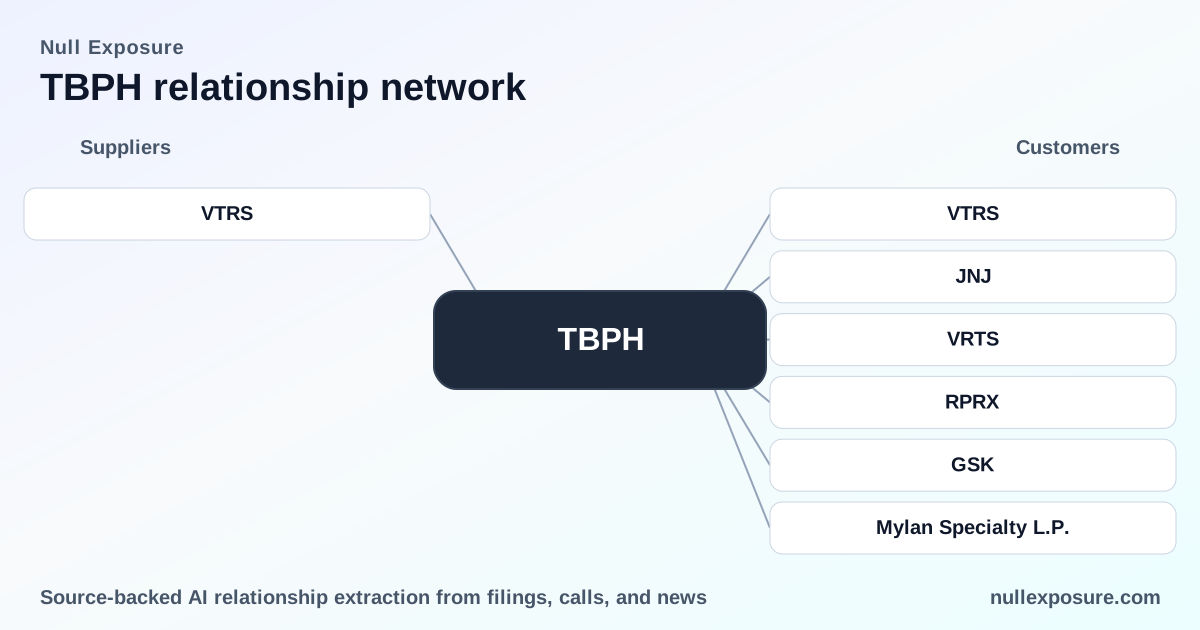
Viatris — co-promotion partner on YUPELRI
Theravance co-promotes YUPELRI (revefenacin) in the US together with Viatris, leveraging combined sales resources to target COPD clinicians and expand patient uptake; this is an active commercial relationship that drives near-term revenue exposure to partner execution. According to a PR Newswire release announcing a YUPELRI Phase 4 enrollment update (March 10, 2026), the firms co-promote YUPELRI in the US and share responsibilities for field sales targeting COPD prescribers. (PR Newswire, March 2026: https://www.prnewswire.com/news-releases/theravance-biopharma-inc-announces-enrollment-of-first-patient-in-yupelri-phase-4-study-301456902.html)
Supplier constraint signals and what they imply for risk and pricing
Theravance discloses several supplier and third-party constraints that are central to evaluating counterparty exposure. Presenting these as company-level signals clarifies where operational leverage sits.
- Single-source manufacturing is explicitly called out as “critical.” The company states there is a single source of supply for certain product candidates and for YUPELRI; loss of that source or inability to secure alternatives would harm the business. This creates an acute supplier concentration risk that directly links manufacturing continuity to revenue realization. (Company regulatory filings — supplier disclosures.)
- Contract manufacturing dependency is structural. Theravance relies on third-party contract manufacturing organizations for API and final drug product required for clinical trials and commercialization. That relationship model reduces in-house capital needs but increases exposure to third-party capacity and quality control. (Company regulatory filings — manufacturing arrangements.)
- Data protection and service-provider controls are embedded in vendor contracts. The company requires contract terms and guarantees for vendors processing EU personal data, reflecting GDPR-driven contractual discipline and potential compliance costs or restrictions in vendor selection. (Company regulatory filings — data protection controls.)
- Active vendor oversight and cybersecurity posture are formalized: the company applies a risk-based approach to third-party cybersecurity risk identification and oversight, recognizing vendors as a vector for systemic operational impact. That formalization is a sign of mature vendor governance but also underscores the materiality of third-party operational risk. (Company regulatory filings — cybersecurity oversight.)
Collectively, these constraints indicate a supplier profile that is highly concentrated and operationally critical, governed by formal contractual safeguards but vulnerable to single-point failures that cannot be mitigated instantaneously.
Strategic and investment implications for operators and acquirers
For investors and operators assessing TBPH supplier relationships, the calculus should emphasize three items:
- Operational continuity is the primary supply-side risk. With single-source supply explicitly cited for YUPELRI, contract disputes, capacity constraints, quality incidents, or extended lead times at key CMO partners would rapidly translate into lost revenue and missed market opportunity. This elevates the importance of contingency planning and supplier diversification in valuation models.
- Contractual counterparty performance matters as much as product demand. The co-promotion with Viatris amplifies sales reach but transfers elements of execution risk to the partner; investors should monitor partner call points, co-promotion metrics, and any public disclosures from Viatris on commercial activity. (PR Newswire, March 2026.)
- Regulatory and compliance obligations impose hidden operational cost. GDPR and cybersecurity requirements mean that vendor changes or cross-border manufacturing shifts entail contractual rework and potential compliance expenses, slowing alternative sourcing decisions.
Investors should stress-test cash flow models for one-off production interruptions and run scenarios where manufacturing downtime reduces marketed product throughput for one or two quarters. Under current market capitalization and forward multiples, operational disruptions have a disproportionate impact on short-term valuation because revenue is concentrated and margins are sensitive to sales interruptions.
If you want a structured view of counterparties and supplier risk exposure for TBPH, see the company profile at https://nullexposure.com/ and request a tailored report.
Practical diligence checklist for counterparty risk
When evaluating TBPH supplier exposure, operational partners, or potential acquisition targets, confirm the following:
- Existence of second-source qualifications for critical APIs and finished products and the timelines to scale them.
- Contractual remedies, SLAs, and supply continuity clauses with CMOs and commercial partners.
- Co-promotion KPIs and governance with Viatris, including sales coverage maps and incentive alignment.
- Evidence of third-party cybersecurity assessments and GDPR-compliant data processing agreements.
These items separate a resilient partner network from one that is operationally fragile.
If you are advising on a transaction or underwriting exposure for Theravance, obtain the latest manufacturing agreements and co-promotion terms and review contingency plans for YUPELRI specifically at https://nullexposure.com/.
Conclusion — where to focus capital and operational attention
Theravance Biopharma’s model converts scientific assets into commercial revenues largely through partnerships and third-party manufacturing. The company’s supplier posture is concentrated and operationally critical; that is the dominant counterparty risk for investors. The Viatris co-promotion is commercially necessary to maximize US COPD coverage, but that coupling increases dependence on partner field execution while single-source manufacturing for YUPELRI heightens supply-side fragility. Active monitoring of manufacturing continuity, co-promotion metrics, and vendor compliance is essential for accurate risk-adjusted valuation.
For deeper counterparty mapping and to monitor supplier exposures across therapeutics firms, explore additional resources at https://nullexposure.com/.