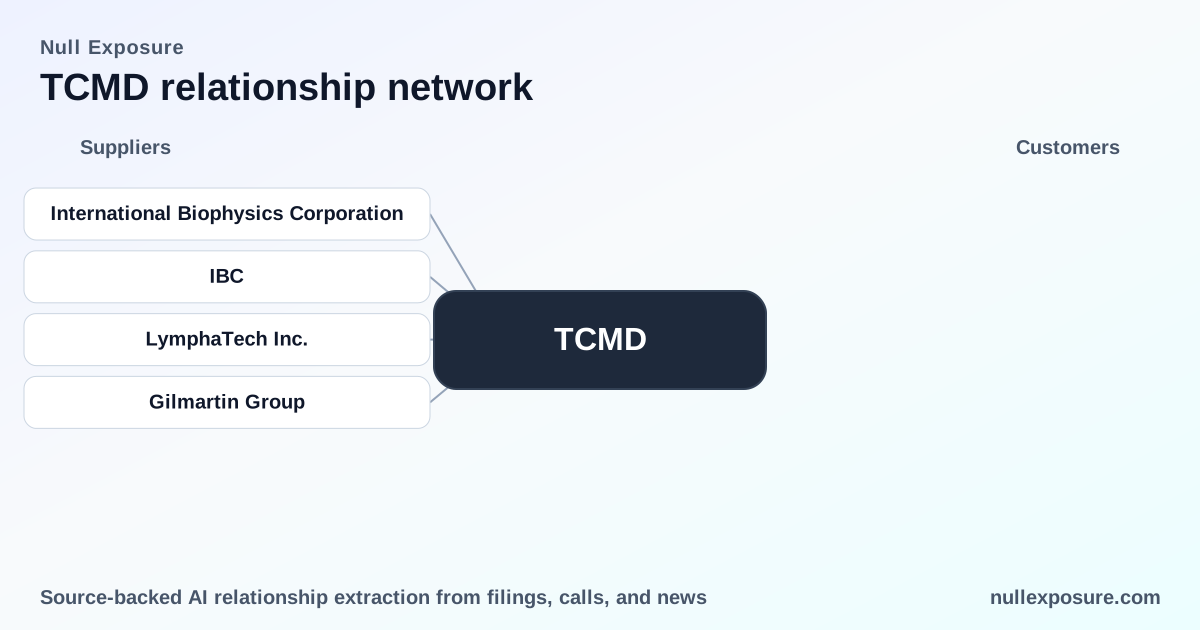
Tactile Systems (TCMD) — supplier map, recent M&A, and what procurement- and investor-facing teams must watch
Tactile Systems Technology builds and sells medical devices for chronic conditions and monetizes through product sales and related therapeutic services, supported by a mix of in-house R&D and outsourced manufacturing and clinical services. The company’s go-forward revenue base sits near $330 million TTM with healthy gross margins, and its supplier choices and bolt‑on acquisitions directly reshape both cost structure and product breadth. For investors and procurement leaders, the question is simple: do the supply relationships and recent deals reduce cost and operational risk or concentrate it? Visit the NullExposure homepage for the full supplier mapping and documentation: https://nullexposure.com/.
How recent transactions rewire the supply chain
Tactile has used acquisition as a tool to fill product gaps and extend clinical reach, and its deal activity is actionable for suppliers and buyers. The company’s public filings and press releases show a pattern of acquiring therapy lines and smaller technology firms to internalize products previously sourced from outside vendors. That strategy reduces dependence on external intellectual property but increases integration and manufacturing demands that sit with third‑party contract manufacturers.
International Biophysics Corporation — AffloVest asset purchase
Tactile acquired the AffloVest respiratory therapy business from International Biophysics Corporation via an Asset Purchase Agreement dated September 8, 2021, integrating that therapy line into its portfolio. According to the company’s FY2024 10‑K filing, the AffloVest business was purchased under an Asset Purchase Agreement, and industry coverage at the time framed the move as a purchase of the business assets. (See the FY2024 10‑K and a respiratory‑therapy.com report from 2021.)
LymphaTech Inc. — small strategic tuck‑in
In early 2026 Tactile announced the acquisition of LymphaTech for an upfront cash payment of $6.8 million plus potential milestone consideration, a targeted move to add lymphatic technology and IP to its product set. The company presentation and press coverage characterize this as a focused, low‑cost tuck‑in aimed at expanding therapy offerings rather than a transformational deal (press coverage published March 2026 via industry outlets).
Gilmartin Group — investor relations and communications partner
Tactile lists the Gilmartin Group (contact: Sam Bentzinger) as its investor relations provider across its 2025–2026 earnings communications and press releases; investor‑facing communications are routed through that firm for quarterly and annual reporting. The company’s February 2026 financial release and related investor notices list Gilmartin Group for investor inquiries, underscoring a formal external IR relationship (see the GlobeNewswire release and related distribution in early 2026).
What the supplier constraints signal about operating posture
Tactile’s public disclosures include a small set of meaningful constraints that explain how the company contracts and where operational risk concentrates:
- Supplier concentration is material. The filing shows purchases from a single vendor accounted for 25% of purchases in 2023 and 20% in 2024. This is a company‑level signal of concentration risk — a meaningful negotiating lever for that vendor and a tangible operational vulnerability for Tactile if that relationship is disrupted (FY2023–FY2024 disclosures).
- Outsourced manufacturing is core to operations. Management discloses reliance on third‑party contract manufacturers for parts, controller assembly, and the garments used with its systems, indicating the company’s product manufacturing is substantially outsourced rather than vertically integrated. This is a structural element of their cost base and supply risk profile (company 10‑K disclosure).
- Clinical and development work is sourced externally. Tactile depends on contract research organizations, medical institutions, clinical investigators, and contract laboratories for trials and pre‑clinical development, which positions clinical timelines and regulatory risk outside of sole internal control.
Taken together, these signals define a contracting posture that is outsourced and acquisition‑augmented, with material supplier concentration and operational criticality resting on a small number of manufacturing and clinical partners. That posture reduces fixed manufacturing overhead but increases supply chain fragility and creates integration risk after acquisitions.
Visit NullExposure for an interactive supplier breakdown and sourcing risk matrix: https://nullexposure.com/.
Financial and strategic implications for investors and operators
Tactile’s recent activity sits against a backdrop of solid profitability metrics and market valuation that investors and procurement teams must reconcile with supply risk:
- The company reports Revenue TTM of $329.5M and Gross Profit TTM of $250.1M, signaling strong product margins that depend on reliable manufacturing and product availability.
- Market metrics (Market Cap ≈ $612.6M, EV/EBITDA ≈ 13.6, Trailing PE ≈ 33.3) suggest the market prices in growth and margin stability; supplier disruptions that increase COGS or delay product launches would have a clear valuation impact.
Actionable monitoring items for investors and supply managers:
- Track the top‑vendor relationship that supplied 20–25% of purchases in 2023–2024. Any change in that relationship materially affects procurement leverage and margin stability.
- Confirm contract‑manufacturing capacity and geography after the AffloVest and LymphaTech integrations to evaluate lead times and contingency options.
- Monitor milestone structure on tuck‑ins such as LymphaTech for contingent liabilities and future cash outflows that could shift procurement budgets.
- Use investor relations contact (Gilmartin Group) for direct queries on integration timelines and supplier risk remediation plans; the company provided that IR contact in its 2026 release.
Quick checklist for diligence teams before underwriting exposure
- Validate whether the large vendor that accounted for 20–25% of purchases is contract manufacturing, key component supplier, or a logistics/service provider.
- Request updated supplier concentration data post‑AffloVest and LymphaTech integrations.
- Obtain copies of key manufacturing agreements and any single‑source clauses or exclusivity terms.
- Confirm clinical outsourcing timelines and budgets for any trials supporting newly acquired product lines.
Bottom line and next steps
Tactile pursues a clear playbook: acquire complementary therapy assets and rely on outsourced manufacturing and clinical services to scale. That model delivers strong margins today but embeds material supplier concentration and third‑party operational risk that investors must underwrite. For sourcing teams and buyers, the priority is reducing single‑vendor exposure, securing contingency manufacturing routes, and vetting integration timelines for AffloVest and LymphaTech product flows.
For a full supplier map, risk scoring, and document links to the filings and press releases referenced here, go to NullExposure: https://nullexposure.com/.
Sources referenced: company FY2024 10‑K filing for the AffloVest APA, industry reporting on the AffloVest asset purchase (respiratory‑therapy.com, 2021), a March 2026 press posting on the LymphaTech acquisition, and GlobeNewswire/Futunn investor communications in early 2026 listing Gilmartin Group for investor inquiries.