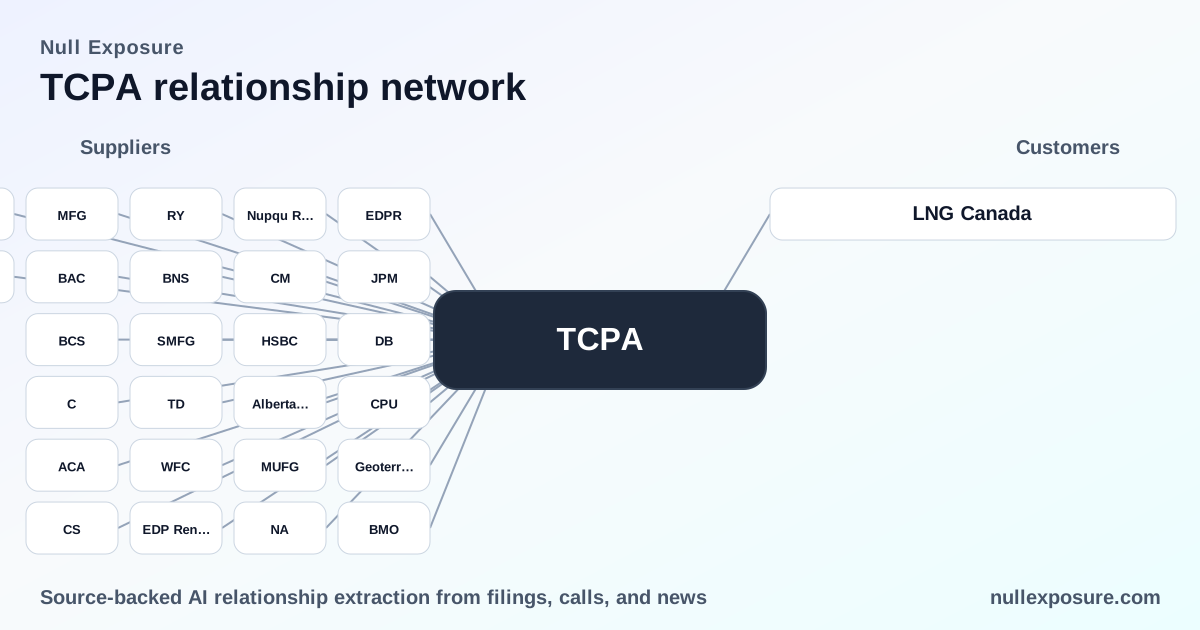
TCPA supplier map: what investors should know before underwriting exposure
TCPA is a cloud‑software and digital communications vendor that monetizes through recurring subscriptions, professional services and compliance modules sold to enterprise marketing and customer‑engagement teams. The business centers on SaaS licenses, analytics/AI feature upsells and long‑term service contracts, which together create predictable revenue and a supplier footprint focused on infrastructure, payments and sector partnerships. For investors evaluating counterparty risk, the supplier set in these records signals a capital‑intensive, contract‑driven operating model where long tenors and diversified financing partners are meaningful credit and operational levers.
Explore a full supplier audit at https://nullexposure.com/.
Why supplier relationships matter for a software‑centric supplier like TCPA
TCPA’s growth profile and margin stability depend on three supplier vectors: cloud and hosting partners, payment and investor services, and large institutional counterparties that underwrite project finance or long‑dated customer arrangements. When long‑dated counterparties and major banks appear in the supplier list, that elevates both the operational criticality and the reputational risk profile—and it changes how underwriters should think about covenant language, service continuity clauses and concentration limits.
If you want a consolidated, investor‑grade counterparty heatmap, visit https://nullexposure.com/ for a structured report.
The counterparties listed in the records (concise, source‑backed)
EDP Renewables SA (EDPR)
TCPA’s records reference a 15‑year power purchase agreement for output from a 297 MW wind farm, indicating long‑tenor commercial relationships that link energy buyers and project developers. Source: TC Energy announcement, Sept. 20, 2021.
EDP Renewables Canada Ltd.
The Canadian subsidiary is named specifically as the counterparty in the same 15‑year PPA for the Sharp Hills Wind Farm, reinforcing a long‑dated commercial contract in the supplier footprint. Source: TC Energy announcement, Sept. 20, 2021.
JPMorgan Chase
Industry reporting identifies JPMorgan Chase as a primary backer of pipeline financing tied to the same corporate group referenced in the supplier records, representing a major institutional finance relationship. Source: Rainforest Action Network, “Who’s banking the Coastal GasLink?” (FY2019).
Deutsche Bank
Deutsche Bank acted as a lead manager alongside JPMorgan on multiple bond transactions totaling billions, highlighting institutional underwriting support for long‑dated debt issuance. Source: Rainforest Action Network, “Who’s banking the Coastal GasLink?” (FY2019).
Computershare Investor Services, Inc.
Computershare is cited as the plan agent for dividend and optional cash payment processing, signalling a standard investor‑services relationship for shareowner payments and registry operations. Source: TC Energy investor information page (stock information).
Geoterra IRS Ltd
TCPA’s records include a contracted 15‑person field crew from Geoterra IRS Ltd to perform tree‑conservation fieldwork, indicating use of specialized environmental services contractors for project‑level obligations. Source: TC Energy story, Dec. 3, 2021.
Nupqu Resource Limited Partnership
Nupqu is referenced as a local partner in habitat restoration and nursery capacity work, showing community‑partner supplier engagement on conservation and land‑use tasks. Source: TC Energy story, Dec. 3, 2021.
Bank of Montreal (BMO)
BMO is listed as lead agent on sizable loan facilities, which points to significant syndicated lending relationships within the financing base. Source: Rainforest Action Network, “Who’s banking the Coastal GasLink?” (FY2019).
Canadian Imperial Bank of Commerce (CIBC)
CIBC appears as a sole manager on bond issuance and as a lender across current loans, evidencing prominent placement roles in capital markets transactions. Source: Rainforest Action Network, “Who’s banking the Coastal GasLink?” (FY2019).
HSBC
HSBC is among multiple global banks named as supporting credit lines and bond sales, reflecting broad international banking involvement. Source: Rainforest Action Network, “Who’s banking the Coastal GasLink?” (FY2019).
Alberta Treasury Branches
ATB is listed among regional and global banks providing support across loans and bond roles, identifying provincial government–linked finance participation. Source: Rainforest Action Network, “Who’s banking the Coastal GasLink?” (FY2019).
MUFG
MUFG is included in the lender and bond support roster, adding Japanese megabank exposure to the financing syndicate. Source: Rainforest Action Network, “Who’s banking the Coastal GasLink?” (FY2019).
National Bank of Canada
National Bank is named as part of the lending group and underwriter mix, underscoring domestic banking exposure. Source: Rainforest Action Network, “Who’s banking the Coastal GasLink?” (FY2019).
Royal Bank of Canada (RBC)
RBC appears within the syndicate of banks supporting lines of credit and bond issuance, signaling high domestic bank participation. Source: Rainforest Action Network, “Who’s banking the Coastal GasLink?” (FY2019).
Scotiabank
Scotiabank is among the banks referenced for lending and underwriting roles, contributing to a diversified creditor base. Source: Rainforest Action Network, “Who’s banking the Coastal GasLink?” (FY2019).
SMBC (Sumitomo Mitsui Banking Corporation)
SMBC is identified as one of the global banks in the financing mix, reinforcing diversified international bank exposure. Source: Rainforest Action Network, “Who’s banking the Coastal GasLink?” (FY2019).
TD Bank
TD is included as a participant in lines of credit and bond transactions, representing another major domestic bank counterparty. Source: Rainforest Action Network, “Who’s banking the Coastal GasLink?” (FY2019).
Wells Fargo
Wells Fargo is listed among the banking supporters on credit and bond roles, adding US regional bank exposure to the borrower’s capital stack. Source: Rainforest Action Network, “Who’s banking the Coastal GasLink?” (FY2019).
Mizuho
Mizuho is among the international banks named in the financing roster, which broadens the cross‑border banking footprint. Source: Rainforest Action Network, “Who’s banking the Coastal GasLink?” (FY2019).
Bank of America
Bank of America is listed among global banks supporting bond sales and credit facilities, reflecting US investment‑bank participation. Source: Rainforest Action Network, “Who’s banking the Coastal GasLink?” (FY2019).
Barclays
Barclays is cited as part of the underwriting and lending network, adding UK global‑bank exposure to the capital structure. Source: Rainforest Action Network, “Who’s banking the Coastal GasLink?” (FY2019).
Citi
Citi appears among the international banks supporting bonds and loans, further diversifying the vendor financing base. Source: Rainforest Action Network, “Who’s banking the Coastal GasLink?” (FY2019).
Crédit Agricole
Crédit Agricole is referenced as one of the banks participating in recent transactions, indicating Continental European bank involvement. Source: Rainforest Action Network, “Who’s banking the Coastal GasLink?” (FY2019).
Credit Suisse
Credit Suisse is named in the financing roster, representing Swiss banking participation in bond underwriting and loans. Source: Rainforest Action Network, “Who’s banking the Coastal GasLink?” (FY2019).
Desjardins
Desjardins is listed among the financial institutions supporting credit facilities and bonds, reflecting cooperative‑bank participation. Source: Rainforest Action Network, “Who’s banking the Coastal GasLink?” (FY2019).
Export Development Canada
Export Development Canada is included in the list of supporting institutions, indicating export‑credit and sovereign‑linked financing channels. Source: Rainforest Action Network, “Who’s banking the Coastal GasLink?” (FY2019).
Operational and credit implications for investors
The record set shows long‑term commercial contracts and a broad, institutional finance syndicate. That combination signals: (1) contractual maturity—multi‑year PPAs and long‑dated debt; (2) finance concentration managed through diversification—many major banks versus reliance on a single lender; (3) operational criticality—specialist contractors for environmental and field services; and (4) institutional service dependencies—computershare‑style investor services for cash flows to securityholders.
These patterns imply underwriting must prioritize covenant strength around long‑term cashflow protection, counterparty replacement terms for critical field contractors, and reputational risk clauses tied to large bank counterparties.
For a deeper counterparty risk model and exposure dashboard, see our investor tools at https://nullexposure.com/.
Bottom line for portfolio managers
TCPA’s supplier footprint in these records reflects a mix of long‑dated commercial contracts and a heavy institutional banking syndicate—attributes that raise both predictability and systemic exposure. Position sizing should consider the structural linkage to major banks and the operational necessity of specialist field providers. For tailored counterparty briefings and portfolio‑level heatmaps, visit https://nullexposure.com/ and request the investor package.