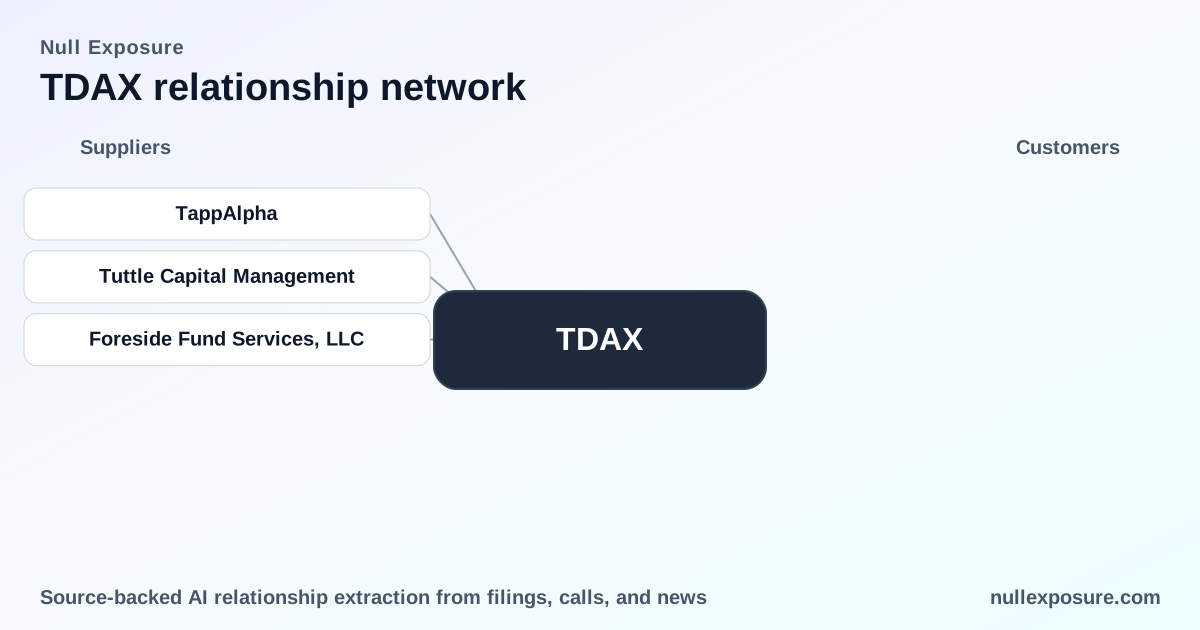
TDAX supplier relationships — what investors should price into the roll-up
TDAX operates as a tradable investment product anchored in third‑party issuer and distribution relationships; it monetizes through asset‑based management fees and distribution arrangements tied to product launches and investor flows. Investor focus should be on the supplier network that enables product design, distribution, and fee capture, because incremental launches and distribution partners will drive AUM growth and fee revenue more than standalone brand recognition. For an immediate view into counterparties and structural risk, review the supplier links below and consider how concentration and product complexity affect execution. Explore more on the firm’s partner map ›
A short headline: a light‑leverage roll‑out shifted the supplier map in FY2026
In January 2026, TDAX was announced as one of two underlying tickers for a new T² Lift™ series of funds described as “light‑leverage” versions of existing strategies — an explicit productization move that depends on external partners for issuance and distribution. The launch positions TDAX in a product strategy aimed at delivering incremental exposure to growth and income through a 30% leverage overlay, which increases the importance of the issuer and distributor roles for both marketing and operational execution. According to ETFGI coverage of the January 2026 launch, TappAlpha and Tuttle Capital led the initiative that created TSYX and TDAX Light, and Foreside was identified as the distributor for the series (ETFGI, Jan 2026).
Who TDAX is working with — the full roster from the FY2026 release
Below are every supplier relationship disclosed in the FY2026 reporting window for the TDAX supplier scope, with concise, plain‑English summaries and source notes.
TappAlpha
TappAlpha partnered on the T² Lift™ Series that includes TSYX and TDAX Light, contributing to the product design and go‑to‑market positioning for the levered/light‑leveraged strategy. This partnership was described in the ETFGI announcement covering the January 2026 launch. (ETFGI, Jan 2026)
Tuttle Capital Management
Tuttle Capital Management co‑launched the T² Lift™ Series with TappAlpha, effectively placing TDAX within Tuttle’s product ecosystem and linking TDAX to Tuttle’s distribution and investment management capabilities. The launch headline and product positioning were reported by ETFGI in January 2026. (ETFGI, Jan 2026)
Foreside Fund Services, LLC
Foreside Fund Services is listed as the distributor for the T² Lift™ Series that includes the TDAX Light product, indicating Foreside’s role in placing the fund with broker‑dealers and platforms that drive initial flows. The distributor role was explicitly noted in the same ETFGI coverage of the January 2026 launch. (ETFGI, Jan 2026)
What these relationships reveal about TDAX’s operating model
The supplier list is short but strategic, and that concentration communicates structural characteristics investors must price:
- Contracting posture: The product is built through alliance agreements with established asset managers and a distributor; TDAX relies on partner contracts for product design, compliance wrapper, and distribution, rather than vertically integrated manufacturing.
- Concentration risk: With a small number of named suppliers supporting launch and distribution, counterparty concentration is material — a disruption at one partner (issuer or distributor) would have immediate consequences for marketing and asset gathering.
- Criticality of partners: The distributor and asset management partners are operationally critical — they handle investor outreach, platform placement, and day‑to‑day fund management that directly affect AUM and fee collection.
- Maturity signal: The relationships reflect a product in growth mode as of FY2026 — the T² Lift™ launch is an expansion rather than a long‑standing, diversified supplier ecosystem, implying early‑stage commercialization dynamics and revenue volatility tied to product take‑up.
These are company‑level signals drawn from the supplier roster and launch disclosure, not relationship‑specific contract excerpts.
Assess supplier concentration and product risk further on the homepage ›
How investors should think about risk and opportunity
The partnership configuration creates a clear set of risks and upside levers that are actionable for investors and operators:
- Upside: product differentiation and fee capture. Light‑leverage ETFs target investors seeking incremental exposure with restrained leverage, which can broaden addressable market and accelerate AUM if distribution is effective.
- Execution risk tied to distributor reach. Foreside’s role as distributor means placement on key broker‑dealer platforms is a gating factor for flows; distribution agreements directly affect ramp speed.
- Operational and counterparty risk. With few suppliers named, operational failures or strategic shifts at TappAlpha or Tuttle Capital would have outsized impact; counterparty diligence and contractual protections should be top priorities for underwriters and investors.
- Regulatory and complexity risk. Leveraged or “lifted” products have additional disclosure and operational plumbing demands; compliance and investor communication quality will influence litigation and reputational exposure.
Practical next steps for due diligence
- Request the underlying prospectus and distributor agreements for the T² Lift™ Series to confirm fee splits, soft dollar arrangements, and platform placement commitments.
- Model AUM sensitivity to platform onboarding timelines for Foreside distribution to bound near‑term revenue trajectories.
- Confirm escalation and contingency clauses with TappAlpha/Tuttle in the event of adverse market conditions or distribution drag.
Bottom line: TDAX is a product‑centric issuer with concentrated supplier risk
TDAX’s economics will be driven by partner execution — specifically how TappAlpha and Tuttle convert the light‑leverage concept into scalable AUM and how Foreside places the product across distribution channels. Investors should treat the supplier set as a primary driver of upside and a concentrated point of failure for downside. For ongoing monitoring and supplier mapping, use dedicated partner tracking and prioritize contractual visibility on distribution commitments and operational SLAs.
For a deeper breakdown of supplier concentration and tailored counterparty diligence checklists, visit the site and request a brief: NullExposure home ›