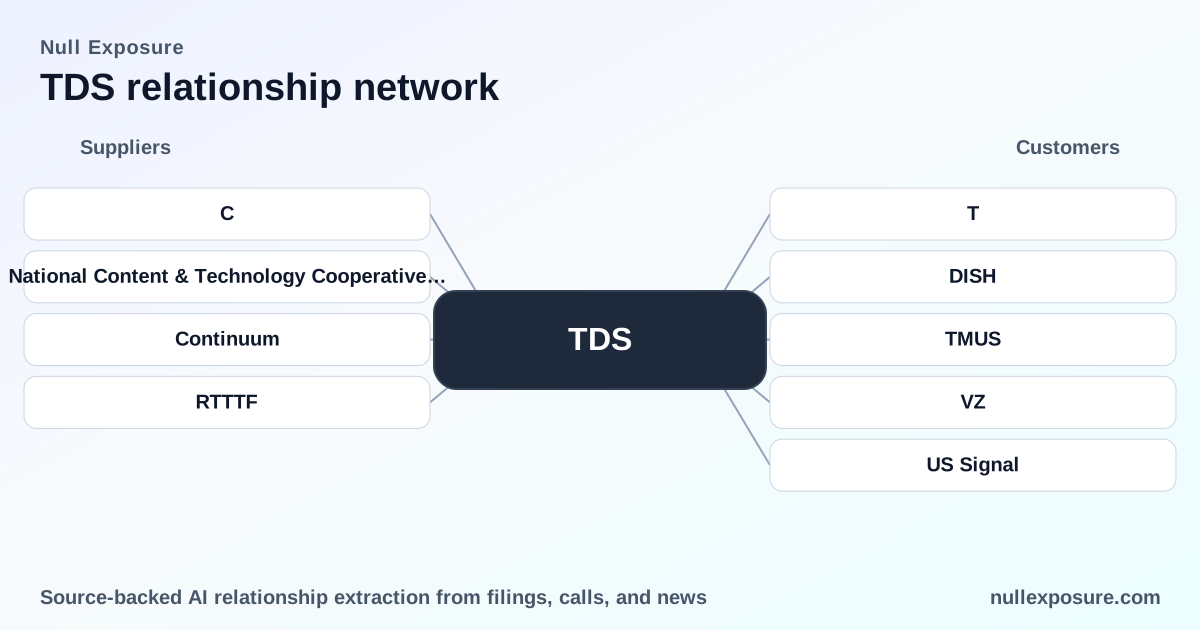
TDS supplier relationships — what investors and operators should know
Telephone and Data Systems, Inc. (TDS) runs a diversified U.S. telecommunications platform that monetizes through retail and wholesale telecommunications services, broadband and cable assets, and device sales/fulfillment tied to its wireless interests (including strategic oversight of UScellular). The firm’s revenue mix combines subscription-style recurring cash flow from broadband and wireless service with capital-intensive network and leasing obligations; margin expansion depends on scale and distribution efficiency. For a concise, research-ready snapshot of TDS’s supplier posture, visit https://nullexposure.com/.
How TDS operates and gets paid
- TDS generates revenue from subscription services (wireline broadband, cable, and wireless service delivery) and ancillary device and fulfillment revenue. Revenue TTM is $1.228B with EBITDA of $289.9M, indicating a mid-cap telecom with modest operating leverage to expand margins through scale and product bundling.
- The company’s balance between owned network assets and third‑party arrangements is central: TDS controls critical customer relationships while outsourcing elements of device procurement, distribution and service-enablement to partners. Market capitalization is ~$4.87B, providing the scale to execute portfolio-level strategic actions such as asset reviews and targeted acquisitions.
If you want an organized intelligence view of TDS counterparties and contract posture, start here: https://nullexposure.com/.
Key supplier, partner and advisor relationships that matter Below are the counterparties surfaced in recent coverage and how each relationship functions in plain English.
Citi — financial advisor for UScellular strategic review
TDS retained Citi as its financial advisor and legal counsel to run a review of strategic alternatives for UScellular, signaling shareholder-focused options analysis at the asset level. According to Inside Towers reporting on March 10, 2026, Citi is advising TDS on UScellular strategic options.
National Content & Technology Cooperative (NCTC) — MVNO platform partner for national mobile service
TDS Telecom is launching a nationwide MVNO branded offering using the NCTC partnership program, enabling TDS to offer mobile service without owning the national radio network. Telecompetitor reported this development on March 10, 2026, and PR Newswire confirmed that the MVNO will be covered by a national 5G mobile network under the NCTC arrangement (PR Newswire, March 10, 2026).
Continuum — broadband and cable asset acquisition that expanded footprint
TDS Broadband Service LLC acquired substantially all of Continuum’s cable, broadband and business assets in Mooresville, North Carolina, for $80 million as part of its regional expansion strategy. Telecompetitor documented that transaction in coverage tied to fiscal-period reporting for 2019.
Reach — SaaS partner for rapid service launches and product enablement
TDS has contracted with Reach to access a software-as-a-service platform that accelerates the launch of network-based services, underpinning the company’s go-to-market speed for new product introductions. PR Newswire and Telecompetitor noted TDS’s agreement with Reach when announcing the MVNO and product rollout (PR Newswire and Telecompetitor, March 10, 2026).
Operational constraints and what they signal about risk and rigidity
- Long-term leasing posture. TDS reports a weighted-average remaining lease term of roughly 13 years (2024), which indicates long-term fixed obligations for operating leases and contributes to capital rigidity and predictability of fixed costs. This is a company-level constraint that affects cash flow flexibility and the economics of network repositioning.
- Material supply and fulfillment roles tied to UScellular. Excerpts in TDS filings document that UScellular purchases devices and accessory products from OEMs and distributors and contracts third parties for warehousing, distribution, and device service programs. Those statements are explicit to the UScellular relationship and reveal TDS’s reliance on external distribution and service providers for device economics and post-sale support.
- Role diversity in third-party relationships. Company-level signals show TDS both distributes and sources devices (distributor/manufacturer relationships) and contracts third-party logistics and device service providers; this hybrid posture reduces capital expenditure on in-house fulfillment but increases counterparty concentration and operational dependency.
What these constraints mean in practice
- Positive: Long leases stabilize occupancy and network site costs, improving predictability for cash flow models and supporting long-run returns on network investments. Using SaaS partners like Reach and cooperative MVNO arrangements through NCTC accelerate market entry while controlling capital outlay.
- Negative: Long-term lease commitments and outsourced device procurement/fulfillment create operational concentration risk—if key suppliers or logistics partners underperform, service economics and churn protection will be affected. The UScellular-related procurement posture concentrates device supply chains and service logistics under third-party execution.
Middle take: institutionally minded investors should weigh TDS’s subscription revenue stability and asset-light product launches against the fixed obligations from leases and concentrated third-party dependencies. For a structured counterparty intelligence package, see https://nullexposure.com/.
Implications for investors and operators
- For equity investors: TDS’s valuation will pivot on execution of UScellular strategic reviews, MVNO rollout economics, and the company’s ability to reduce per-customer cost through scale. Monitor device margins, fulfillment costs, and churn trends as primary drivers of operating leverage.
- For strategic partners and suppliers: TDS represents a mid-sized buyer with long-term commitments and an appetite for SaaS enablement and MVNO-style wholesale relationships, meaning partners that can offer predictable, scalable fulfillment and software orchestration will capture share of wallet.
- For risk managers: Counterparty concentration (device OEM/distributors, logistics providers), long-term leases, and the operational centrality of UScellular activities are the principal risks to model in downside scenarios.
Final takeaways and next step
- TDS combines recurring telecom cash flow with capital intensity and third-party dependency. The company uses strategic advisors (Citi) to optimize asset value, leverages NCTC to expand mobile reach, acquires footprint via cable/broadband deals like Continuum, and uses Reach to accelerate product launches.
- Key monitoring points: UScellular strategic outcome, MVNO customer economics, lease-service cost trends, and device procurement/fulfillment performance.
If you want detailed supplier scoring and a concise risk/impact matrix for TDS counterparties, start here: https://nullexposure.com/. For tailored intelligence or portfolio-level monitoring of telecom supplier relationships, visit https://nullexposure.com/ and request a briefing.