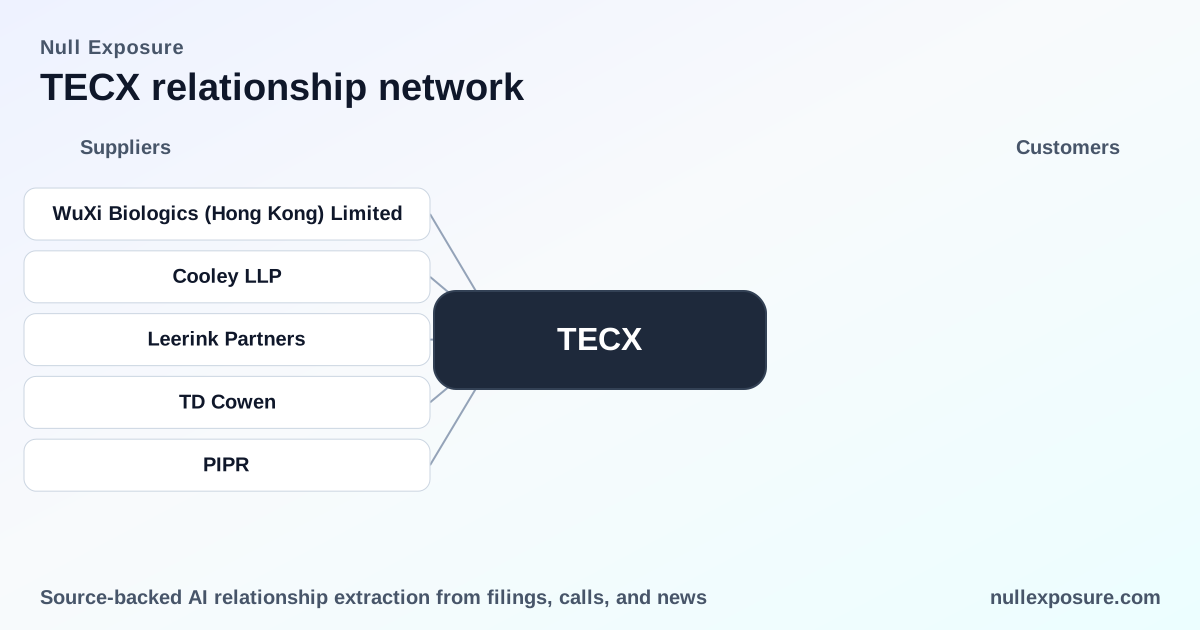
Tectonic Therapeutic (TECX): supplier map, concentration risks, and what investors should price in
Tectonic Therapeutic is an early-stage biotech that discovers and advances antibody and biologic candidates against GPCR targets; it does not generate product revenue today and monetizes through licensing, strategic partnerships, capital markets activity and, ultimately, product commercialization or out-licensing once candidates advance. The company outsources nearly all clinical development and manufacturing to third parties and funds operations through equity and financing transactions rather than product cash flow. For investors evaluating supplier risk and counterparty exposure, the combination of sole-source manufacturing for lead candidate TX45 and a portfolio of master service agreements creates an operational profile with high supplier concentration but conventional contractual maturity. Learn more on the NullExposure homepage: https://nullexposure.com/
Why the supplier footprint matters for valuation
Tectonic’s operating model is built on discovery-plus-outsourcing: internal early-science and target selection, externalized manufacturing and clinical execution. This structure compresses fixed-cost investment in facilities while transferring scale and regulatory execution risk to partners. Two attributes drive financial sensitivity:
- Concentration of manufacturing: a single CDMO producing TX45 is a binary operational risk that can delay clinical programs and escalate costs if replacement sourcing is required. The company explicitly identifies WuXi Biologics as a sole source for TX45, which is material to near-term program delivery.
- Framework agreements, not spot buys: Tectonic uses master agreements and statements of work with CROs, CDMOs and discovery partners, giving it predictable scopes but multi-year contractual timelines that affect flexibility and exit options.
These characteristics translate into a valuation adjustment for program delivery risk, forecasting volatility in time-to-proof and potential capex substitution costs should supply disruptions occur.
The full relationship list you need to know
Below are every counterparty cited in the supplier-oriented results for TECX, each given a concise investor-ready takeaway and a source reference.
WuXi Biologics (Hong Kong) Limited
Tectonic currently uses WuXi Biologics as the sole manufacturer for its lead candidate TX45, exposing clinical timelines to that single supplier’s operational and geopolitical risk. According to Tectonic’s 2024 Form 10‑K, the company states it “currently have[s] a sole source relationship with WuXi Biologics for our supply of TX45.” (Tectonic 10‑K, FY2024)
Cooley LLP
Cooley is serving as legal counsel to Tectonic in the announced merger activity with Avrobio, providing deal and regulatory counsel during the transaction process. CityBiz reported Cooley’s role in the March 2026 merger announcement. (CityBiz, March 10, 2026)
Leerink Partners
Leerink Partners is acting as exclusive financial advisor to Tectonic in the Avrobio merger, which centralizes strategic and financing advice for the transaction. CityBiz noted Leerink’s exclusive advisory role in the same transaction coverage. (CityBiz, March 10, 2026)
TD Cowen
TD Cowen is acting as a joint placement agent to Tectonic in connection with the private placement tied to the merger, sharing capital markets execution responsibilities with Leerink. CityBiz listed TD Cowen among placement agents in its coverage of the deal. (CityBiz, March 10, 2026)
Piper Sandler (PIPR)
Piper Sandler is engaged as capital markets advisor to Tectonic, adding an additional institutional advisor layer for equity and market communications around the merger and private placement processes. CityBiz included Piper Sandler in its March 2026 report. (CityBiz, March 10, 2026)
Contracting posture, geography and materiality — what the constraints show
Tectonic’s public disclosures and contract excerpts present a coherent operating posture:
- Framework contracting dominates. Multiple master agreements govern the firm’s external work: a WuXi Manufacturing Agreement (entered May 6, 2022), a Novotech master clinical services agreement, a QPS master contract services agreement, and an Arensia CSA for early phase work; each governs work orders or statements of work that define project scope and timelines. These are multi‑year constructs that give Tectonic operational continuity but reduce short-term agility.
- Concentration is explicit and critical. The company identifies WuXi as a sole source for TX45; the filing warns that any disruption would negatively affect clinical development, a clear critical supplier tag that investors should price into program risk.
- Geographic exposures are real. Manufacturing for TX45 is located in China, creating APAC geopolitical and supply-chain considerations, and trial activity has included EMEA sites (Moldova and Georgia) which the company cites in relation to regional instability. These are company-level geographic risks tied to regulators, logistics and political stability.
- Stage and spend signal early development. Contracts are described as active and project-based for Phase 1–2 work; disclosed payments in the low‑hundreds of thousands indicate early-stage spend levels consistent with a pre‑revenue biotech ($100k–$1m spend references). The company also holds a Harvard license agreement established in February 2022 for worldwide rights, signaling reliance on licensed foundational IP for its discovery engine.
Operational and financial implications for investors
The supplier map implies four investment-grade observations investors should incorporate into modeling and diligence:
- Program delivery is binary and timing-sensitive: the WuXi sole-source relationship means any supply interruption pushes timelines materially, compressing optionality for near-term financing or partnering windows.
- Contractual maturity reduces renegotiation leverage: framework agreements with work orders that extend through fixed expiration windows make unilateral course changes costly or slow, creating path dependency for program execution.
- Regulatory/geopolitical risk is priced into sourcing: Asian manufacturing provides cost and capacity benefits but adds jurisdictional risk; investors should assume a risk premium relative to fully US‑based CDMOs.
- Advisory stack indicates capital-market readiness: Leerink exclusive advisory engagement, joint placement agents and Piper Sandler involvement point to an active capital markets and transactional strategy tied to the announced Avrobio merger, which changes financing and execution dynamics for counterparties and suppliers.
For a deeper map of counterparties and how supplier concentration impacts timelines, visit the NullExposure homepage: https://nullexposure.com/
What to do next as an investor or operator
- Stress-test model timelines for a 12–18 month delayed manufacturing scenario for TX45 and quantify the capital impact of bridging that delay.
- Require counterpart due diligence on WuXi operational continuity, alternative qualification timelines and transfer costs before underwriting program milestones.
- Include geopolitical scenario analysis for APAC manufacturing and EMEA trial sites in risk-adjusted valuation work.
If you want a tailored supplier-risk brief or portfolio screening against these counterparty dimensions, start here: https://nullexposure.com/
Conclusion: Tectonic’s discovery upside is real, but near-term valuation should reflect concentrated manufacturing exposure, multi-year framework contracts, and an active capital markets agenda that is reshaping counterparty obligations. That combination creates both asymmetric upside if trials proceed and concentrated execution risk that will determine short‑to‑medium-term value realization.