Telecom Argentina (TEO): Supplier relationships that reshape the competitive map
Telecom Argentina (TEO) operates as Argentina’s integrated telecom provider, monetizing through fixed and mobile voice, broadband and pay-TV subscriptions, plus wholesale and corporate services. The company expands value by acquiring assets and rolling them into its national footprint while extracting synergies across network and customer bases—revenues come from recurring subscriber fees and wholesale access, with incremental upside from consolidation and asset sales. For investors and operators, the critical question is whether recent deal activity and capital markets behavior improve cash conversion or introduce regulatory and concentration risk. Learn more about supplier risk and counterparty exposure at https://nullexposure.com/.
What recent headlines mean for counterparty exposure
Telecom’s positioning shifted materially in early 2026 as the company pursued acquisitions and executed a secondary ADS sale that touches placement banks and large shareholders. These moves change the counterparty map: Telecom is simultaneously integrating an acquired business, managing regulatory attention, and using the U.S. ADR market to provide liquidity for a controlling shareholder. That combination raises both upside (scale, cross-sell) and near-term integration and regulatory risk.
Who Telecom is doing business with — the commercial relationships that matter
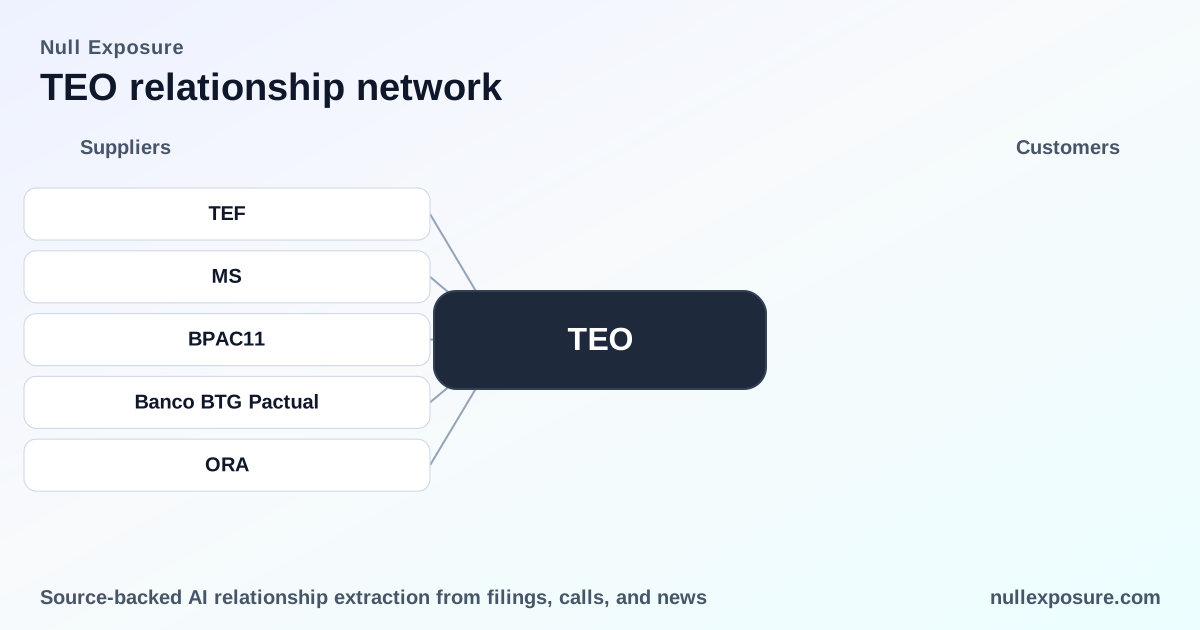
Below are the counterparties the coverage linked to Telecom’s supplier and transaction footprint. Each entry is concise and tied to the public reporting that established the relationship.
-
Telefónica — Telecom purchased Telefónica’s Argentina business for roughly $1.245 billion, consolidating the domestic market and increasing Telecom’s subscriber and network scale; the transaction prompted public commentary about market concentration in Argentina (ARA Catalonia, March 2026; Capacity Global, March 2026). Source: https://en.ara.cat/... and https://capacityglobal.com/...
-
Morgan Stanley — Morgan Stanley acted as an underwriter on a February 10, 2026 secondary ADS offering conducted by shareholder Fintech Telecom LLC, facilitating the sale of up to 23,290,655 Class B ADSs; this placement mobilizes institutional liquidity into Telecom’s ADRs (Form 6‑K disclosure reported via The Globe and Mail, March 2026). Source: https://www.theglobeandmail.com/.../telecom-argentina-files-form-6-k-for-secondary-ads-offering-by-fintech-telecom/
-
Banco BTG Pactual — BTG Pactual joined Morgan Stanley as a co‑underwriter on the February 2026 secondary ADS arrangement for Fintech Telecom LLC, supporting the capped block sale and potential overallotment; BTG’s role signals regional capital markets distribution for the ADR bookbuild (Form 6‑K reporting, February 2026 / press republished March 2026). Source: https://www.theglobeandmail.com/.../telecom-argentina-files-form-6-k-for-secondary-ads-offering-by-fintech-telecom/
-
Orange (histor vendor/partner context) — Telecom’s history of strategic stakes and prior transactions includes purchases from Orange (notably a prior 2014 stake acquisition), which contextualizes Telecom’s playbook of growing via targeted M&A and asset swaps in Latin America (Capacity Global, March 2026). Source: https://capacityglobal.com/news/telefonica-sells-argentina-unit-for-1-25-billion/
Transaction mechanics and what they imply for suppliers and investors
The Telefónica acquisition is a transformational market event: scale increases Telecom’s negotiating leverage with equipment vendors and content providers, but it also concentrates market share in Argentina, which elevates regulatory scrutiny. The February 2026 ADS secondary offering—underwritten by Morgan Stanley and BTG Pactual—satisfies shareholder liquidity needs and passes supply-side risk into global capital markets rather than Argentina-only channels.
- Operational implication for vendors: consolidation can centralize procurement and drive larger, multi‑year contracts with Telecom, increasing contract criticality for suppliers that win those bids.
- Capital markets implication: the underwriting syndicate signals the company’s access to international distribution, which reduces funding risk for near-term working capital but increases investor focus on corporate governance and free float.
For more granular counterparty profiles and how to prioritize supplier diligence, see our research hub at https://nullexposure.com/.
Contracting posture, concentration and maturity — company-level signals
The data feed included no explicit contractual excerpts or constraint clauses, which itself is a signal: there are no vendor-level constraints captured here that would flag specific negotiation terms or dispute-level covenants. From a company-level perspective:
- Contracting posture: Telecom’s recent M&A activity and use of ADR markets indicate an assertive, growth-oriented contracting posture—management is consolidating assets and centralizing capital flows.
- Concentration: The Telefónica transaction increases domestic concentration; that both improves telecom pricing power and raises antitrust/regulatory risk.
- Criticality: As an integrated provider, Telecom is a critical counterparty for national vendors of network equipment and content rights; winning contracts could mean multi-year revenue streams.
- Maturity: Telecom’s engagement with global underwriters and its listed ADRs show a mature cap‑markets strategy, although operational execution risk remains in integration.
Risk and upside: the investor checklist
- Upside: Scale-driven synergies from the Telefónica purchase and improved capital access from the ADS underwriting support margin expansion and liquidity for controlling shareholders. Telecom’s recent quarterly revenue growth (+60.6% YoY in the latest period) validates the demand side for consolidation.
- Risk: Regulatory intervention and integration execution are immediate risks; a report quoted national policymakers scrutinizing the Telefónica sale for monopoly formation (ARA Catalonia, March 2026). For suppliers, concentration increases counterparty exposure to Telecom’s fortunes.
- Balance-sheet signals: Telecom shows strong top-line figures in local currency; leverage and cash flow conversion will decide whether the company funds network upgrades organically or through vendor financing and staged payments.
If you are evaluating supplier exposure or preparing for RFPs with Telecom, our platform provides prioritized counterparty intelligence—start here: https://nullexposure.com/.
What operators and investors should do next
- For vendors: treat Telecom as a strategic, high-value client—expect competitive procurement and the potential for multiyear master services agreements; model scenarios for longer payment terms during integration.
- For investors: monitor regulatory filings and integration KPIs (churn, ARPU, capex trajectory) as early indicators of transaction success or friction.
- For both: track underwriting outcomes from the Morgan Stanley/BTG placement to understand shareholder composition changes that can influence strategic direction.
Learn more about how counterparty shifts affect supplier strategy and investor risk at https://nullexposure.com/.
Final read: positioning for the next 12 months
Telecom Argentina has converted a near-term acquisition opportunity into an expanded operational footprint and accessed global capital markets to provide shareholder liquidity. That combination elevates both strategic upside and regulatory exposure; counterparties should price for integration risk and increased negotiation leverage from Telecom. Investors will find the story compelling if management delivers on cash conversion and regulatory clearance; operators should assume longer, more complex procurement cycles and a single-counterparty dependency for scale work.
For continuous updates and supplier risk dashboards that track these evolving relationships, visit our homepage at https://nullexposure.com/.