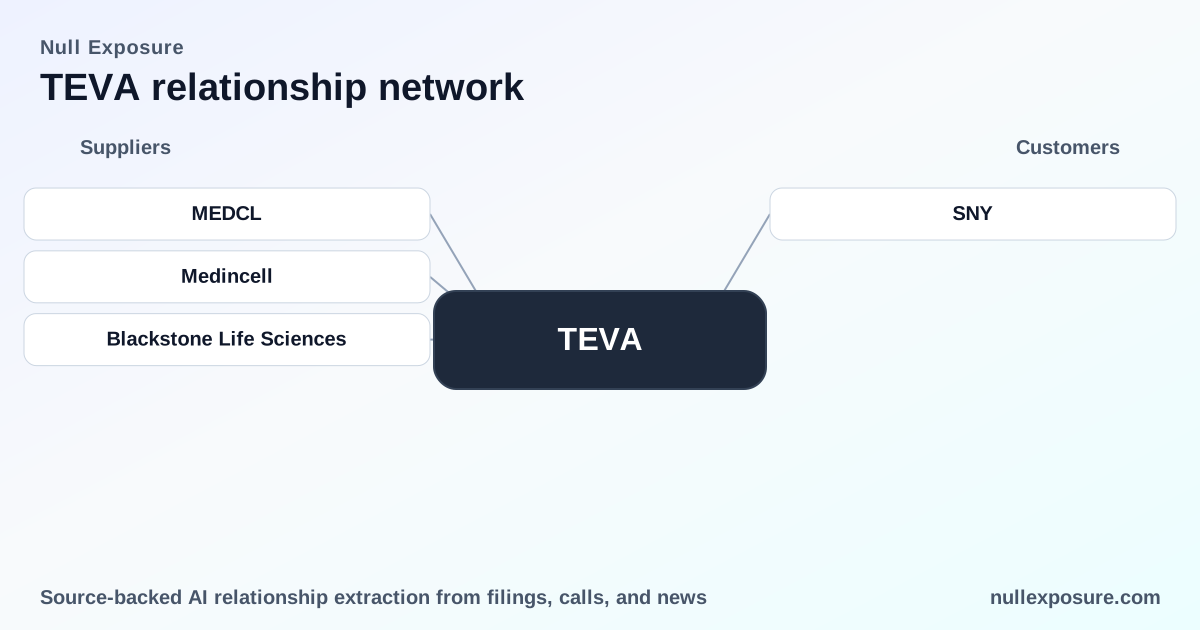
Teva Pharma: supplier relationships, concentration signals, and what investors should price in
Teva Pharmaceutical Industries monetizes by developing, manufacturing and marketing a broad portfolio of generic pharmaceuticals, specialty drugs and biopharmaceuticals sold globally through direct commercial channels and partner/licensing arrangements. Revenue is driven by scale in generics, recurring supply contracts, and episodic upside from specialty product launches — a model that depends heavily on external manufacturing partners, controlled active pharmaceutical ingredient (API) sourcing, and capital partnerships to fund late-stage development. For a gate‑level view of counterparty exposure and supplier risk, visit https://nullexposure.com/.
How Teva sources the inputs that make its P&L scalable
Teva operates with a contracting posture that favors external manufacturing and supplier finance programs to manage working capital and scale production. The company uses multiple external contract manufacturers for operational and cost benefits, while also maintaining significant purchase obligations and supplier finance activity that exceed the high‑hundreds of millions. Corporately, this produces a mix of leverage: scalable cost structure when supply is stable, and acute disruption risk where single‑source inputs exist.
- Teva’s reported financials show scale: Revenue TTM roughly $17.3 billion with market capitalization near $34.3 billion, which contextualizes the size of supplier commitments and why Teva engages supplier finance programs.
- The company reported $225 million outstanding in accounts payable to suppliers participating in supplier finance programs as of December 31, 2025, up from $158 million a year earlier — a clear signal of meaningful, ongoing counterparty finance activity.
These facts indicate a supplier model with high spend concentration and material single‑source risk for certain raw materials, offset by mature contracting relationships with large external manufacturers.
Direct relationship reads investors need on their radar
Below are the specific counterparties surfaced in recent reporting and news. Each entry is concise and tied to a public source.
Medincell — partnership on a controlled‑release injectable for olanzapine
Teva’s once‑monthly olanzapine product (TEV‑749) uses Medincell’s SteadyTeq™ copolymer controlled‑release technology to deliver sustained olanzapine levels for schizophrenia treatment; the relationship is commercial and technical, linking Teva’s development and regulatory pathway with Medincell’s delivery platform (GlobeNewswire, Feb 2026). A follow‑up market note reiterated that the treatment leverages Medincell’s proprietary copolymer for steady release (StockTwits, March 2026).
Blackstone Life Sciences — multi‑year funding commitment to support growth
Teva secured a multi‑year funding commitment of up to $400 million from Blackstone Life Sciences to support pipeline and growth initiatives, a strategic financial partnership that injects non‑dilutive or structured capital to advance assets and de‑risk development spend (SimplyWall.St analysis, March 2026).
What the constraint signals mean for Teva’s operating model
The relationship constraints extracted from filings and public commentary paint a coherent company‑level picture:
- Geographic sourcing is global (APAC and EMEA): APIs and raw materials are procured across Europe, Asia and the Americas, which diversifies geographic risk but also creates multi‑jurisdictional supply‑chain dependencies and regulatory complexity.
- Material single‑source exposure: Teva explicitly discloses that certain key raw materials have a single source of supply, which creates high criticality for those inputs and elevates the operational risk profile if a supplier disruption occurs.
- Manufacturer role is outsourced: Use of external contract manufacturers is an intentional operating lever to capture cost and capacity benefits; this raises concentration and counterparty‑performance risks if a contract manufacturer fails audits or cannot meet demand.
- Large spend and supplier finance activity: Supplier finance payables in the $100M+ band, combined with purchase obligations, indicate sizable ongoing cashflow relationships with third parties that are important to working capital management.
Together these constraints describe an operating model that is mature in scale but structurally exposed: Teva has established supplier channels and financial backstops, yet retains meaningful concentration and single‑source risk that will determine short‑term volatility and long‑term reliability of supply.
For deeper exposure mapping and counterparty analytics, explore more at https://nullexposure.com/.
Investment implications: risk, upside, and what to monitor
- Regulatory and commercial upside: The FDA acceptance of an NDA for TEV‑749 (using Medincell technology) is an immediate revenue and pipeline catalyst; approval and successful commercialization would validate a tech/licensing model that leverages outside delivery platforms.
- Funding and de‑risking through private capital: The Blackstone Life Sciences commitment up to $400 million provides balance‑sheet relief and targeted funding for growth assets, reducing near‑term cash strain for development programs.
- Supply concentration is a value lever and a vulnerability: Single‑source inputs and reliance on contract manufacturers create asymmetric downside if provenance, quality or logistics slip. Watch supplier audit outcomes, alternate sourcing actions, and suppliers’ geographic resilience.
- Working capital signals are actionable: Rising supplier finance payables (from $158M to $225M year‑over‑year) are consistent with active use of supplier funding; investors should track this line item for liquidity shifts or structural changes in supplier terms.
Practical watchlist for operators and investors
- FDA approval milestones and commercial launch timing for TEV‑749 tied to Medincell technology.
- Execution specifics and tranche timing of the Blackstone Life Sciences commitment and any use‑of‑proceeds disclosures.
- Changes in accounts payable to supplier finance programs and public disclosure of alternate sourcing for single‑source inputs.
- Any shifts in the roster of contract manufacturers or adverse inspection findings that would affect production continuity.
If you want tailored counterparty mapping or a supplier‑risk scorecard for TEVA, start here: https://nullexposure.com/.
Bottom line
Teva balances scale and financial engineering to monetize a broad generics and specialty portfolio, but supplier concentration and single‑source raw material exposure are the primary operational risks that will determine near‑term earnings stability. The Medincell delivery partnership is a clear product‑level catalyst, while the Blackstone Life Sciences commitment reduces development funding risk; together they illustrate a company pursuing external technology and capital partnerships to accelerate growth. For investors and operators, the critical question is not whether Teva uses third parties — it is whether those third parties are stable, auditable and replaceable when needed.
For ongoing monitoring, model updates, or to commission a counterparty risk profile for TEVA, visit https://nullexposure.com/.