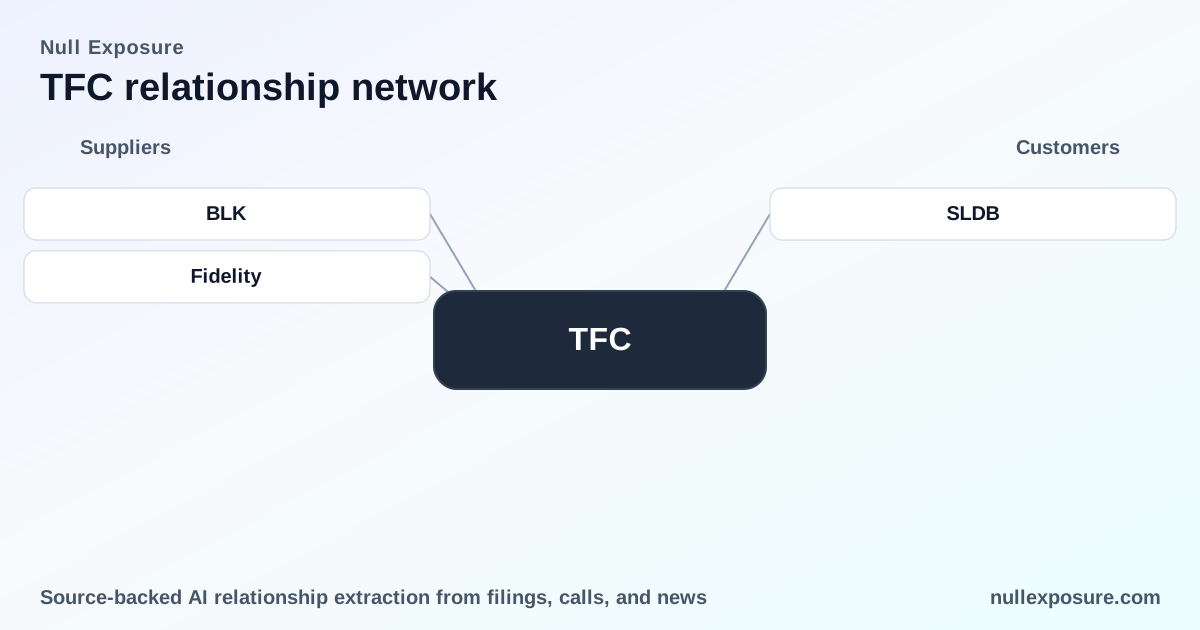
Truist Financial (TFC): Where wealth access, third‑party platforms, and supplier risk intersect
Truist Financial operates as a diversified regional bank that monetizes through a mix of consumer and commercial banking, wealth management, brokerage fees, mortgage origination, and insurance products. Recent product changes position Truist Wealth as a distribution channel for major ETF issuers, creating fee and cross‑sell opportunities while simultaneously increasing its operational dependence on external asset managers. If you evaluate bank‑supplier relationships, the firm’s move to surface SEC‑registered spot bitcoin ETFs through third‑party issuers is a strategic extension of its advisory and brokerage franchise. Learn more at https://nullexposure.com/.
Why BlackRock and Fidelity matter to Truist's product economics
Truist is not manufacturing new ETFs; it is leveraging third‑party asset managers to expand product breadth inside its wealth platform, which generates incremental brokerage and advisory fees, preserves client relationships, and supports stickier deposit and cash‑management balances.
-
BlackRock — A Simply Wall St article (March 10, 2026) reports that Truist Wealth now allows clients to access BlackRock’s SEC‑registered spot bitcoin ETF, reflecting Truist’s use of BlackRock as an external provider of digital‑asset exposure to its customers. This distribution arrangement extends Truist’s wealth offering without requiring in‑house ETF creation. (Simply Wall St, 2026-03-10)
-
Fidelity — The same Simply Wall St item (March 10, 2026) notes that Fidelity’s spot bitcoin ETF is also available to Truist Wealth clients, giving Truist access to multiple leading ETF issuers and offering clients choice across major providers. That choice increases the platform’s competitiveness in the race for advisory and execution flows. (Simply Wall St, 2026-03-10)
Both relationships are distribution linkages rather than vendor integrations for core clearing or custody services; they are revenue‑accretive on a per‑client basis and functionally important to Truist’s wealth growth strategy.
What the supplier signals say about Truist’s operating model
Truist’s public disclosures classify third parties as integral service providers and describe an active relationship posture with suppliers. Its regulatory risk language emphasizes that suppliers and service providers present cyber and operational exposure. These are company‑level signals that shape how investors should think about dependency and control:
-
Contracting posture: Truist relies on standardized supplier agreements for wealth distribution and platform access, but its disclosures stress limited direct control over third‑party operations. That implies a classic financial‑services outsourcing posture: contractual rights exist, operational control is delegated.
-
Concentration and criticality: The inclusion of leading ETF issuers such as BlackRock and Fidelity broadens product access and reduces single‑provider concentration risk for the wealth platform; however, Truist’s reliance on external asset managers for key product categories makes those relationships mission‑critical to wealth revenue growth.
-
Maturity and stage: The extracted constraints label supplier relationships as active service providers, indicating these arrangements are operational (not exploratory). The wealth integrations are deployed in client flows rather than being pilot projects.
-
Control limits and risk governance: Truist discloses supplier cyber risk as a material consideration—this is a structural constraint on the business model that requires robust vendor risk management, insurance, and incident response capabilities embedded in the bank’s operating model.
Operational and risk implications for investors
Truist’s use of external ETF providers accelerates product offering breadth with minimal capital investment, but it also shifts certain operational and reputational risks onto third parties. Investors should weigh the reward profile against the governance burden.
-
Revenue upside: Distribution of high‑interest products like spot bitcoin ETFs drives commission, advisory, and custody fee capture while encouraging account consolidation. This is a clear, fee‑driven monetization vector.
-
Operational exposure: Suppliers and service providers are identified in filings as a cybersecurity and operational risk source, and the company acknowledges it does not control third‑party businesses. This elevates model risk—a vendor breach, trading outage, or regulatory problem at an ETF issuer can cause direct customer loss and reputational impact for Truist.
-
Regulatory sensitivity: Selling digital‑asset products through third‑party ETFs concentrates regulatory scrutiny on the bank’s suitability, disclosure, and KYC/AML processes. Regulatory remediation costs and compliance investments are an ongoing margin pressure.
-
Mitigation posture: Truist has a supplier risk management program, but the firm’s disclosures flag residual exposure. For operators and investors, the key metric is not simply whether a program exists but how it scales with product complexity and new providers.
If you want a deeper supplier analysis across Truist’s partner roster, visit https://nullexposure.com/ for standardized vendor intelligence and comparables.
Practical checklist for relationship diligence
Investors and operators should prioritize the following actions when evaluating Truist’s supplier exposure and wealth distribution model:
- Confirm the economic terms: how Truist captures fees (execution, advisory, wrap fees) and whether revenue is recurring or one‑time.
- Assess operational dependency: identify which functions (trade execution, custody, settlement, pricing) are outsourced versus kept in‑house.
- Review vendor risk controls: evidence of penetration testing, contractual SLAs, insurance coverage, and escalation procedures.
- Monitor regulatory posture: filings and disclosures about digital‑asset product suitability and compliance program enhancements.
- Track concentration metrics: market share of underlying providers on Truist’s platform and backup arrangements.
These actions translate the strategic benefit of expanded product access into measurable governance criteria for risk‑adjusted valuation.
Final takeaways and next steps
Truist’s distribution agreements with major ETF issuers like BlackRock and Fidelity convert third‑party product innovation into immediate wealth revenue opportunities, while simultaneously amplifying supplier governance requirements and operational risk. The company’s own filings flag supplier cybersecurity as a material concern and classify third parties as active service providers—this is a permanent operating constraint that must be priced into any investment thesis.
For practitioners who underwrite bank supplier risk or build counterparty playbooks, this is a classic trade‑off: rapid product expansion at the cost of higher vendor dependency and compliance spend. For a structured, comparative view of Truist’s supplier relationships and risk signals, explore the platform at https://nullexposure.com/.
Contact the team for a tailored supplier risk briefing or to access benchmarking across regional banks and wealth platforms.