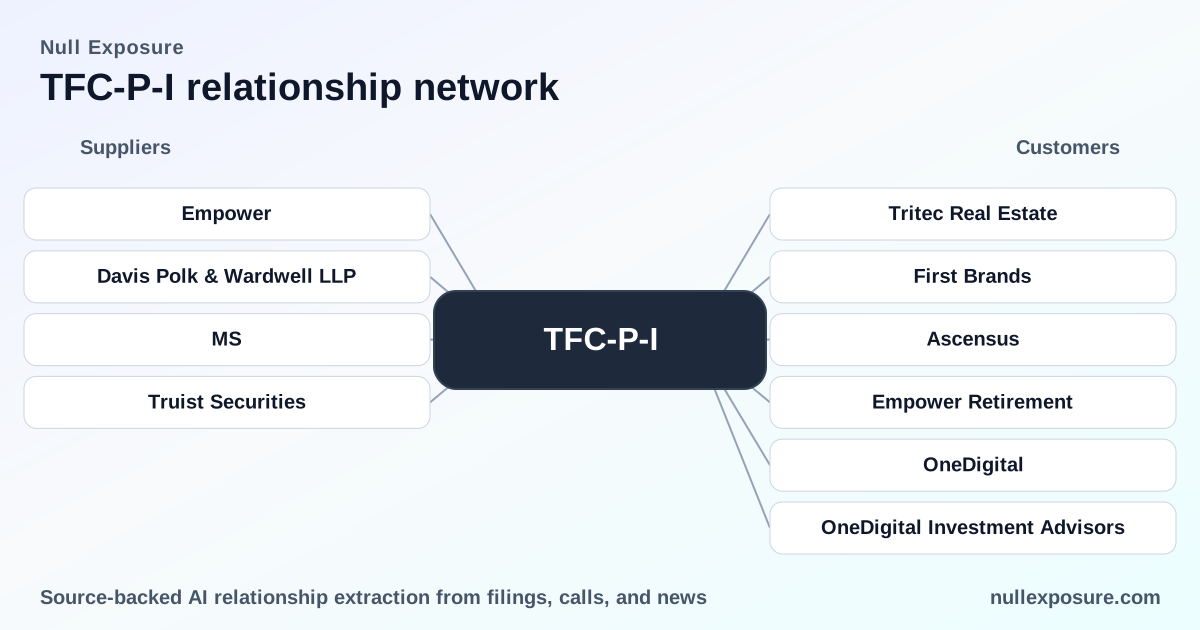
Truist (TFC-P-I): Supplier relationships that shape credit and operational risk
Truist Financial Corporation operates as a diversified bank holding company that monetizes through deposit capture, lending, fees, wealth and asset-management services, and insurance underwriting; holders of TFC-P-I are exposed to the preferred-stock claim on that franchise and the income it generates. For investors and operators evaluating supplier relationships, the most relevant channels are vendor arrangements that affect client-facing products (retirement recordkeeping), capital and transaction execution (investment bank advisors), and legal/regulatory support — all of which influence operational resilience and execution risk. For an actionable supplier-risk view and comparative scoring, visit https://nullexposure.com/ to see how this profile maps to peers.
How Truist’s operating model makes supplier relationships material
Truist is a large regional bank with a broad retail footprint (2,781 branches across 15 states and D.C.) and diversified product set. That operating footprint creates several structural supplier dynamics:
- Contracting posture: As an integrated bank, Truist balances in-house capabilities (branches, lending platforms) with outsourced specialist services for scalability — particularly in asset servicing and complex transactions. This produces long-term vendor agreements for mission-critical services and shorter engagements for advisory roles.
- Concentration and criticality: Client-facing platforms such as retirement-plan recordkeeping and investment-banking advisory services are highly critical because disruption directly affects deposits, fee income, and client retention; counterparty concentration in those buckets is a measurable credit and operational risk.
- Maturity and governance: Truist’s scale and regulated status create mature vendor governance and legal oversight, including engaging top-tier law firms and investment banks for material transactions, which reduces but does not eliminate execution and reputational risk.
These company-level signals matter for preferred-holders because supplier disruptions can influence earnings stability, regulatory capital treatment, and the bank’s ability to execute strategic divestitures. For more on supplier risk frameworks and scoring, see https://nullexposure.com/.
Supplier snapshots: who Truist is using and why it matters
Empower — recordkeeping for retirement plans
Empower provides private‑label retirement plan recordkeeping to Truist through Empower Institutional, supporting Truist’s retirement product distribution and custody flows. This is a client‑facing, operationally critical relationship because recordkeeping underpins fee revenue and client retention for workplace retirement assets (reported in FY2021). Source: NAPA Net, January 2021 (https://www.napa-net.org/news/2021/1/truist-deals-retirement-business-onedigital-ascensus-and-empower/).
Davis Polk & Wardwell LLP — legal counsel on insurance sale
Davis Polk served as legal counsel to Truist and Truist Insurance Holdings in the transaction selling a minority stake in Truist Insurance Holdings, reflecting the firm’s role on high‑stakes corporate and regulatory matters. Legal counsel of this caliber signals Truist’s use of top-tier law firms for complex capital and asset-management transactions (FY2023 coverage). Source: CityBiz, FY2023 (https://www.citybiz.co/article/383132/truist-to-sell-minority-stake-in-truist-insurance-holdings-to-stone-point-capital-for-14-75-billion/?abkw=citybizatlanta).
Morgan Stanley & Co. LLC — financial adviser on strategic sale
Morgan Stanley acted as a financial advisor to Truist in the minority-stake sale of Truist Insurance Holdings, demonstrating reliance on premier investment banks for valuation, syndication, and deal execution. This relationship influences transaction economics and the speed of capital deployment (FY2023). Source: CityBiz, FY2023 (https://www.citybiz.co/article/383132/truist-to-sell-minority-stake-in-truist-insurance-holdings-to-stone-point-capital-for-14-75-billion/?abkw=citybizatlanta).
Truist Securities — internal advisory capacity on the same transaction
Truist Securities served alongside Morgan Stanley as a financial advisor to Truist and Truist Insurance Holdings, indicating the company deploys its in‑house capital markets unit for material strategic work while supplementing external expertise. This dual advisory structure can preserve margins while accessing external distribution and advisory scale (FY2023). Source: CityBiz, FY2023 (https://www.citybiz.co/article/383132/truist-to-sell-minority-stake-in-truist-insurance-holdings-to-stone-point-capital-for-14-75-billion/?abkw=citybizatlanta).
What these relationships signal for investors and operators
Collectively, these supplier engagements show a clear pattern: Truist outsources specialized operational and transaction functions to established market leaders while retaining in‑house capability where scale and margin matter.
Key takeaways:
- Operational concentration risk is elevated where a single third party (e.g., Empower for retirement recordkeeping) supports client-facing platforms; disruption or contract re‑pricing could compress fee revenue or force migration costs.
- Transaction execution and valuation quality benefit from pairing Truist Securities with global banks like Morgan Stanley, which can improve deal economics but also raise questions about split incentives and fee-sharing.
- Regulatory and legal governance is robust, given the use of top-tier counsel such as Davis Polk for transformative deals, which reduces legal execution risk on large disposals.
For a deeper vendor-exposure assessment tied to capital and earnings sensitivity, review our supplier scoring at https://nullexposure.com/.
Operational and credit implications you should monitor
- Track any expansions or renewals of the Empower relationship as rebid cycles or platform migrations are the most likely triggers of near-term operational cost and client attrition.
- Watch fee-splitting disclosures and transaction economics on asset sales where Morgan Stanley and Truist Securities collaborate; adviser mixes affect net proceeds and timing, which ultimately flow to retained earnings.
- Legal contingencies or post‑transaction covenants tied to the Davis Polk engagement warrant monitoring because contractual indemnities and regulatory conditions can create contingent liabilities.
Investors should prioritize counterparty resilience, contract termination clauses, and transition planning in diligence, because these levers most directly affect income durability for holders of preferred instruments like TFC-P-I.
Bottom line and next steps
Truist’s supplier footprint is a mix of internal capability and selective outsourcing to market leaders; that configuration supports scale and execution but concentrates operational dependency in a few critical suppliers. For preferred-stock investors, supplier health maps into fee stability and execution risk — both of which influence credit and dividend coverage over time.
To assess how these supplier relationships affect comparative credit and operational risk across the banking sector, start with a structured supplier-risk review at https://nullexposure.com/. For bespoke scoring and peer benchmarking, contact the team through the same homepage: https://nullexposure.com/.
Sources referenced in this note: NAPA Net (January 2021 reporting on Empower’s role) and CityBiz coverage of Truist’s FY2023 minority-stake insurance sale (listing Morgan Stanley, Truist Securities, and Davis Polk & Wardwell LLP as advisers and counsel).