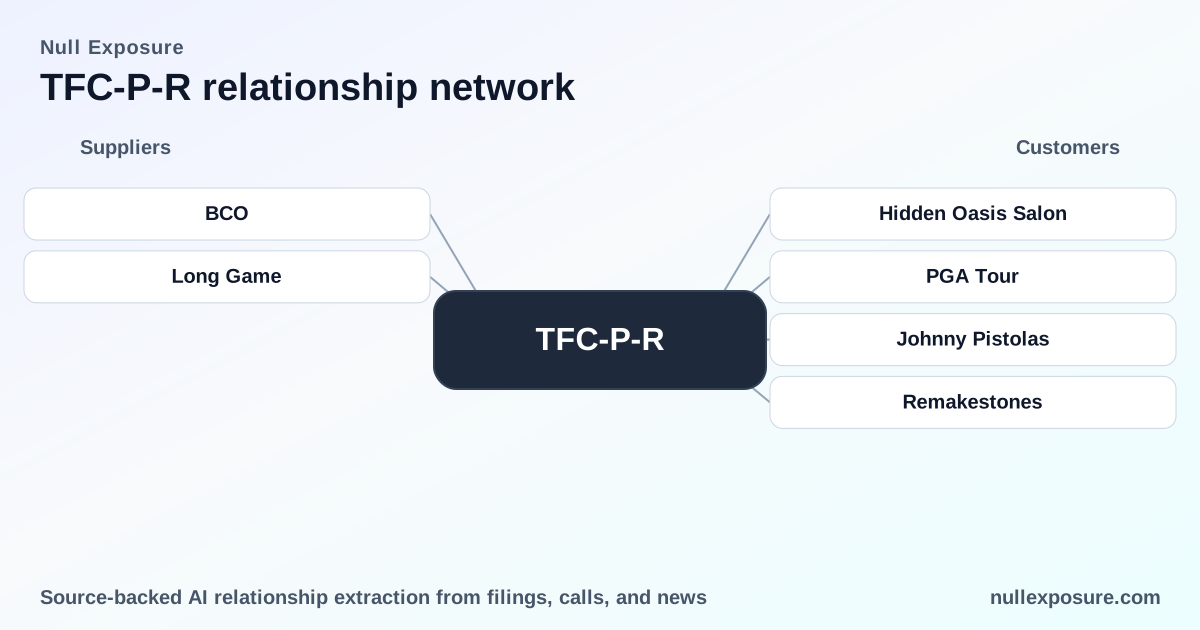
Truist (TFC-P-R) supplier snapshot: what Brinks and Long Game reveal about operational exposure
Truist Financial Corporation operates as a full-service bank holding company with a broad retail and commercial footprint—2,781 branches across 15 states and Washington, D.C.—and monetizes through traditional banking spreads, fee income from brokerage and asset management, mortgage origination and servicing, and insurance and advisory fees. Investor focus should be on how third-party suppliers and strategic acquisitions shift operational risk, cost structure, and customer-facing capabilities rather than headline equity metrics for the preferred stock. For a consolidated view of supplier relationships and implications for portfolio risk, visit https://nullexposure.com/.
What these supplier items mean for an investor evaluating operational risk
Truist runs a diversified financial services platform that requires both legacy operations vendors (cash logistics, branch services, custodial and payment processors) and modern fintech partners to sustain growth in deposits and fee income. The supplier landscape is therefore a two-speed model: mature, contractually stable vendors for back-office and physical services and higher-innovation, integration-sensitive partners for digital customer acquisition and engagement. No supplier constraints are recorded in the available records for this ticker, which is a company-level signal rather than a zero-risk endorsement.
Key company-level operating signals:
- Contracting posture: Centralized procurement with long-term, performance-based contracts for core infrastructure, supplemented by acquisition and partnership for digital capabilities.
- Concentration: Supplier concentration is moderate — many commodity services are widely sourced, while a small set of vendors deliver mission-critical functions.
- Criticality: Operational exposures that directly affect customer experience (ATM cash-handling, deposits, payments, digital onboarding) are high priority.
- Maturity mix: The vendor base includes highly mature security/logistics firms and early-stage fintechs requiring active integration management.
For deeper supplier intelligence and monitoring across banking counterparties, see https://nullexposure.com/.
Relationships disclosed in the record — the short investor read
This section covers every supplier relationship captured in the available results.
-
Brinks (BCO) — A local news report documented an ATM incident and noted the ATM was owned by Brinks and that the bank manager said the machine’s account balanced for the day, which directs operational scrutiny to cash-handling logistics and contract performance for machines located on bank premises. Read the ActionNewsJax report from March 2026: https://www.actionnewsjax.com/news/local/send-ben-money-hungry-atm-truist-bank-ate-their-cash/6IDHAJVROJDERLMX7JQ2JC5C24/.
-
Long Game — Truist acquired the savings gamification app Long Game to accelerate customer financial wellness offerings and enhance engagement through gamified savings mechanics, a deliberate move to monetize deposit growth and cross-sell opportunities via richer digital customer experiences (reported in coverage of the FY2022 acquisition). See the FinTech Magazine coverage: https://fintechmagazine.com/digital-payments/truist-acquires-savings-gamification-app-long-game.
What each relationship implies for risk and upside
The two relationships in the record highlight the dual nature of vendor exposure for Truist:
-
Operational risk in physical services. The Brinks item is a reminder that cash logistics and ATM ownership arrangements are operationally material; failures can create immediate customer-facing incidents and localized reputational fallout even if the bank’s internal reconciliations are intact. Investors should monitor contract terms for liability, SLA enforcement, and incident remediation responsibilities.
-
Strategic digital expansion via acquisition. The Long Game transaction signals an active strategy to acquire capability rather than just license it, accelerating product roadmaps for deposit growth and financial-wellness initiatives. Acquisitions deliver differentiated customer engagement but impose integration, retention, and regulatory-compliance workstreams that pressure IT and operations budgets in the near term.
Actionable implications for portfolio managers and operators
- Conduct targeted operational due diligence on any banking partner that handles physical cash or installs on-premise hardware; verify indemnities and SLAs for ATM ownership and cash services.
- Require post-acquisition integration milestones and measurable KPIs when assessing fintech tuck-ins, with a focus on customer retention, cost-per-acquisition, and cross-sell lift.
- Track regulatory and reputational signals from localized incidents as they can escalate into broader brand impacts in regional retail banking.
If you want a continuous feed of supplier-level signals mapped to operational exposures, check the platform at https://nullexposure.com/.
Final takeaway: watch the seams between legacy and digital
Truist’s supplier profile in the public record shows two consistent themes that investors and operating executives should prioritize: operational resilience for legacy, mission-critical services and rigorous integration governance for digital acquisitions. The Brinks episode underscores that physical-service failures produce immediate customer friction; the Long Game acquisition underscores the strategic payoff and integration risk of buying innovation. Both require active supplier governance to protect deposit franchise value and fee-income trajectories.
For ongoing monitoring of supplier relationships that matter to banks and financial operators, visit https://nullexposure.com/ for a consolidated view and alerts.