Triumph Financial (TFIN-P): Supplier posture and what investors should price in
Triumph Financial is a Dallas-based financial holding company that monetizes through banking interest margins, factoring fee income, payments processing fees, and packaged intelligence services tied to its commercial finance platforms. Its payments and factoring businesses are platform businesses: uptime, data integrity, and capital structure stability directly drive revenue. For investors and operator-level procurement teams, the critical questions are which external vendors the company relies on, how concentrated those vendor relationships are, and whether Triumph’s capital actions signal changes to supplier economics or priority. Learn more about supplier intelligence and relationship risk at https://nullexposure.com/.
How Triumph’s operating model drives supplier exposure
Triumph runs capital-intensive financial services built on a small number of operational pillars. The company outsources core infrastructure and engages third-party security specialists, which creates a classic tradeoff: lower fixed-cost operations and faster product iteration in exchange for concentration and vendor-criticality risks.
- Contracting posture: Triumph shows a preference for commercial cloud infrastructure and external security assessments, implying standard enterprise-level contracting rather than bespoke on-prem service agreements. This posture simplifies scalability but places negotiating leverage with large cloud providers.
- Concentration: Reliance on a primary cloud vendor creates single-vendor concentration risk for the payments and factoring platforms that generate core fee income.
- Criticality: Infrastructure and security suppliers are mission-critical—disruption to either would directly affect transaction flow and customer confidence, making supplier SLAs and contingency planning strategic.
- Maturity: Engagement of third-party penetration testing and formal security evaluations signals enterprise maturity in risk management, which reduces operational risk relative to peers without such programs.
These dynamics translate into precise supplier diligence priorities for investors: examine cloud SLAs, contractual exit and failover clauses, security assessment cadence, and insurance and liquidity buffers that protect payment flows. For ongoing monitoring tools and supplier mapping, visit https://nullexposure.com/.
What the public relationships in our coverage reveal
The dataset returns one media-carried relationship that is material from a capital-markets perspective.
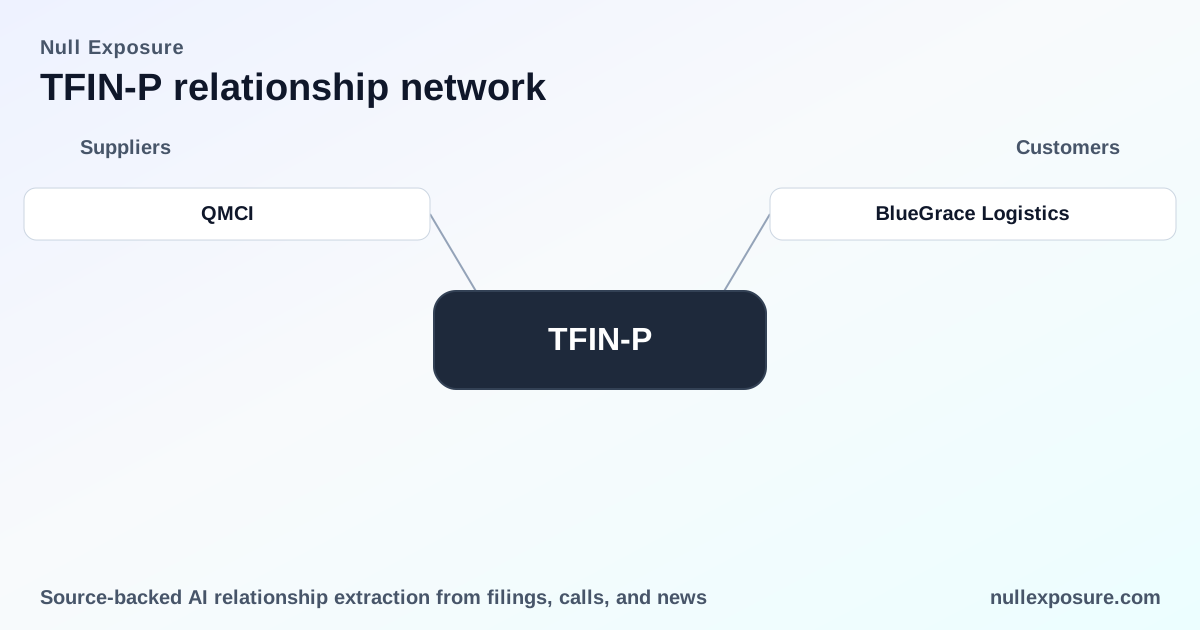
QuoteMedia (inferred symbol QMCI): QuoteMedia published Triumph’s investor news release announcing a dividend on the 7.125% Series C fixed-rate non‑cumulative perpetual preferred stock; the release was posted on Triumph’s investor relations site on March 10, 2026. This action signals continued capital allocation to preferred holders and is relevant to supplier stakeholders because preferred dividends affect available capital for operational contingencies. The press release is available on Triumph’s IR site via QuoteMedia: https://ir.triumph.io/news-events/press-releases/detail/308/triumph-announces-dividend-for-7-125-series-c-fixed-rate-non-cumulative-perpetual-preferred-stock (March 2026).
Supplier risk signals drawn from Triumph’s disclosures
Triumph’s public risk statements contain two clear supplier-related signals that shape vendor due diligence and procurement strategy.
- Triumph discloses that it primarily relies on Amazon Web Services to deliver its Payments and Factoring platforms. This is a company-level dependency that creates a concentrated infrastructure risk: an AWS disruption would have immediate operational impact on revenue-generating services. Treat AWS as a strategic single point of failure when modeling downtime scenarios and supplier transition costs.
- Triumph states it engages third-party services to conduct penetration testing and regular evaluations of its security protocols. This indicates structured security governance and an ongoing relationship with security vendors, which is positive from a controls perspective but creates operational dependence on the effectiveness and timeliness of those external providers.
Both statements are company-level disclosures and should be incorporated into vendor concentration stress tests and counterparty exposure models.
Practical implications for investors and operators
Triumph’s supplier profile leads to a focused set of operational, legal, and investment implications.
- Operational resilience is a valuation input. The dependence on AWS elevates the value of documented failover, multi-region deployment, and tested disaster recovery plans. Procurement should insist on contractual evidence of cross-region redundancy and runbook testing.
- Security third parties are control points. Regular penetration testing indicates stronger defenses; however, investors should request evidence of remediation timelines and third-party attestations to translate that into reduced breach probability.
- Capital actions affect supplier economics. The March 2026 dividend on Series C preferred is a capital allocation that influences the firm’s liquidity profile and therefore the buffer available for supplier payments, technology refreshes, or incident response. Monitor dividend cadence alongside operating cashflow.
- Contract negotiation posture. Triumph’s reliance on large, mature vendors suggests the company negotiates commercial terms at scale but with limited leverage versus hyperscalers; concentrate due diligence on exit costs, data egress fees, and SLA credits.
These are actionable points for procurement teams and analysts building exposure models: insist on documented contingency plans, require evidence of third-party security program outcomes, and include preferred dividend obligations in short-term liquidity stress tests.
If you want structured supplier risk scoring and continuous monitoring of Triumph and peer relationships, explore our platform at https://nullexposure.com/.
Bottom line and recommended next steps
Triumph runs a modern, cloud-backed financial services business that outsources key infrastructure and relies on external security partners—a setup that accelerates scalability but concentrates vendor risk. The recent preferred dividend announcement is a capital allocation event that influences liquidity dynamics relevant to supplier performance guarantees.
Actionable recommendations:
- Request Triumph’s AWS architecture and failover documentation as part of vendor diligence.
- Seek third-party penetration test summaries and remediation timelines to validate security posture.
- Model preferred dividend obligations in near-term liquidity scenarios before underwriting long-term supplier agreements.
For operator-level playbooks, monitoring templates, and supplier negotiation checklists tailored to financial-platform vendors, visit https://nullexposure.com/.