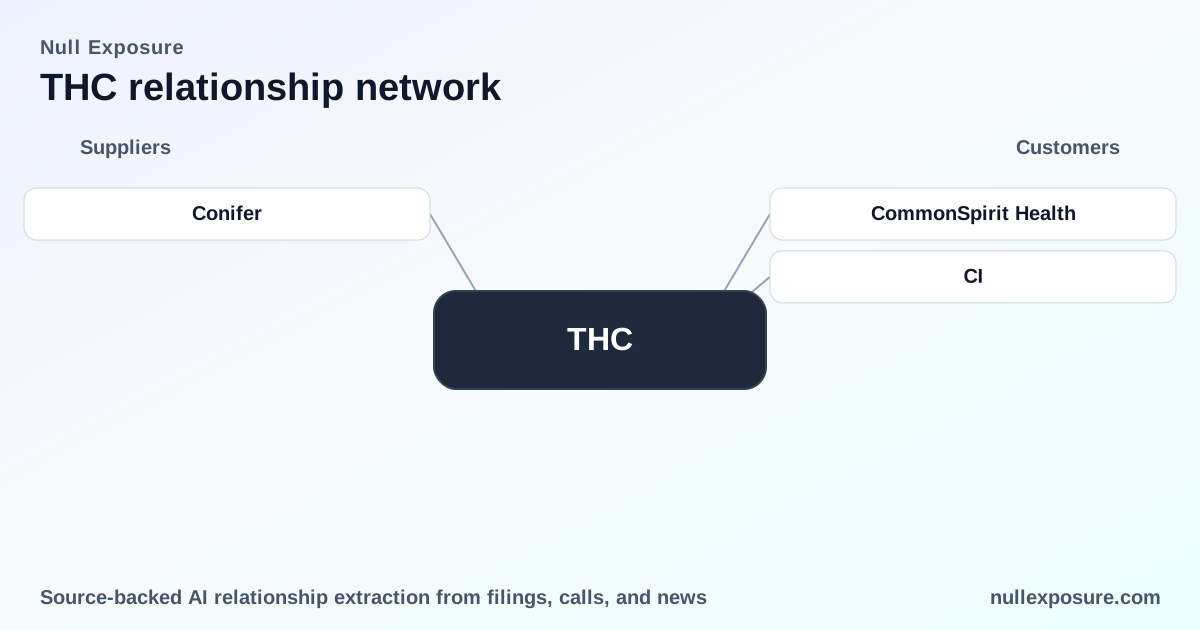
Tenet Healthcare (THC) — supplier relationships and what they mean for investors
Tenet Healthcare operates a network of hospitals, outpatient centers and related health services and monetizes by delivering patient care and facility-based services while capturing downstream revenue through insurance reimbursements and facility fees. Revenue collection and the cost base of supplies and leased facilities are central to free cash flow, and Tenet’s supplier relationships — specifically vendors that touch revenue cycle and long-term facility leases — directly influence operating leverage and capital allocation.
Explore more supplier intelligence at https://nullexposure.com/ to inform sourcing and counterparty diligence.
How Tenet’s supplier posture shapes operating economics
Tenet’s business model is capital- and service-intensive. The company reports trailing revenue of $21.31 billion and EBITDA of $4.635 billion, with an operating margin of 17.5% and profit margin of 6.6% as of the latest quarter ending 2025-12-31. Those margins are sensitive to two supplier-driven factors:
- Facility lease commitments are long-term and structurally embedded. Company filings describe leases with initial terms of five to ten years and common extension options, which fixes a significant portion of occupancy cost into the medium term (company filing language in fiscal disclosure).
- Supplies are a material cost center. Tenet discloses supplies representing roughly 17.5%–17.6% of net operating revenues, a persistent and measurable drag on margins that scales with patient volumes (company consolidated operating table).
Those contract and cost characteristics make Tenet both a large buyer of supplies and services and a provider that depends on third-party service integrations for patient-facing functions such as insurance verification and collections.
One flagged supplier relationship — what the record shows
Conifer
Tenet indicated it will leverage Conifer’s capabilities to assist patients with their insurance coverage, a disclosure recorded during the company’s Q4 2025 commentary. This signals an operational relationship where Tenet uses Conifer’s services to influence patient access, pre-authorizations and insurance handling, with implications for revenue capture and patient billing efficiency (InsiderMonkey transcript of Tenet’s Q4 2025 earnings call, published March 10, 2026: https://www.insidermonkey.com/blog/tenet-healthcare-corporation-nysethc-q4-2025-earnings-call-transcript-1694445/).
Why Conifer deserves active monitoring
Conifer’s involvement in insurance coverage and patient assistance is directly connected to revenue cycle performance, which in turn affects Days Sales Outstanding and cash conversion. For investors and operators:
- Operational leverage: Outsourced insurance verification and billing workflows can reduce internal headcount volatility but introduce vendor dependency for collections performance.
- Cash-flow signaling: Changes in the scope or effectiveness of Conifer’s work will show up in receivables trends and quarterly cash conversion metrics.
For immediate supplier diligence and counterparty mapping, see https://nullexposure.com/ — it compiles relationship footprints relevant to cash-flow sensitivity.
Company-level constraints that shape supplier risk
Several constraints disclosed in Tenet’s public documents provide context for supplier strategy and risk appetite:
- Long-term contracting posture: Filings state that many leases have initial terms of five to ten years with extension options, signaling a preference for multi-year occupancy commitments and predictable facility footprints. This is a company-level signal indicating capital and occupancy risk is locked into multi-year horizons.
- Material supplier cost: The company’s operating schedules show supplies consistently taking about 17.5% of net operating revenues, classifying supplies as a material operating expense and a lever for margin improvement initiatives.
- Dual relationship roles: Tenet functions both as a buyer (acquiring ambulatory surgery centers and other assets) and as a service provider that must integrate and share data with third-party vendors; corporate disclosures emphasize interaction of Tenet systems with third parties and associated data risk. These are company-level signals that influence vendor selection and contracting rigor.
These constraints should be treated as governing characteristics of Tenet’s supplier ecosystem rather than attributes of any single vendor, unless a filing names that vendor explicitly.
Investment implications and a concise risk checklist
Given the operating profile and disclosed supplier relationships, investors should weigh the following:
- Cash-flow sensitivity to revenue cycle execution. Outsourced partners that handle insurance coverage and collections exert outsized influence on working capital.
- Supply-cost inflation exposure. With supplies at ~17.5% of revenues, procurement cost control and supplier negotiations are meaningful levers for margin improvement.
- Lease-related fixed costs. Long-term leases constrain flexibility; adverse demand shocks could pressure margins because occupancy costs are not quickly adjustable.
- Execution and data risk. Integration with third-party service providers introduces operational and compliance risks that can affect patient experience and reimbursement.
Financial snapshots to anchor valuation views: market capitalization ~$19.27B, trailing EBITDA ~$4.635B, trailing P/E ~14.2, EV/EBITDA ~6.7 (company financials through latest quarter ending 2025-12-31). These metrics show a valuation consistent with healthcare operators that carry meaningful operational leverage and steady cash flows.
Practical next steps for analysts and operators
- Validate revenue-cycle KPIs (AR days, collection rates) before and after any vendor scope changes with Conifer.
- Track procurement RFPs and supply-cost initiatives given supplies’ materiality to operating margins.
- Model lease obligations explicitly in scenario analyses because of multi-year commitments described in filings.
Access supplier intelligence and counterparty profiles at https://nullexposure.com/ to accelerate due diligence and risk remediation planning.
Bottom line
Tenet’s supplier landscape is defined by material supply costs, long-term lease commitments, and targeted use of third-party service providers like Conifer to manage insurance coverage and revenue capture. For investors and operators, the critical signals are cash-flow sensitivity to revenue cycle execution and the structural inflexibility introduced by long-term facility contracts. Active monitoring of Conifer’s performance and supplier cost trends should be part of any ongoing diligence on Tenet’s operating model and margin trajectory.
For deeper supplier mapping and relationship analytics tailored to healthcare operators, visit https://nullexposure.com/.