TH International (THCHW): supplier relationships that shape Tim Hortons China’s path
TH International Limited operates Tim Hortons coffee shops across mainland China, Hong Kong and Macau and monetizes through retail cafe sales, store-level services and brand extensions tied to the Tim Hortons franchise network. The business generates top-line through in-store beverage and food sales and leverages co-marketing partnerships and product sourcing agreements to control customer acquisition costs and incremental margin. Recent partner activity points to a dual focus on brand promotions (travel and loyalty tie-ins) and sustainable packaging innovations, both of which materially affect supplier spend and execution risk.
Explore deeper supplier intelligence at https://nullexposure.com/.
How the company’s economics look in one view
TH International is currently operating with substantial top-line and negative operating leverage. Latest disclosed metrics show Revenue TTM $809.97M, EBITDA -$429.5M, and operating margin -65.1%, reflecting aggressive expansion and cost pressure during scale-up. These figures define supplier negotiation power, cash runway sensitivity and the strategic need for promotional partnerships that drive foot traffic.
Key operating signals:
- High revenue but deeply negative profitability, which increases the importance of cost-efficient supplier contracts and promotional ROI.
- Rapid quarter-over-quarter revenue growth (QoQ shown positive), signaling that supplier capacity and logistics are currently critical to sustaining same-store growth.
- Concentrated international roll-out (China/HK/Macau) creates geography-specific supplier risk and regulatory exposure.
The partnership map and what each relationship delivers
Below are the relationships surfaced in recent coverage, each summarized in plain English with source attribution.
-
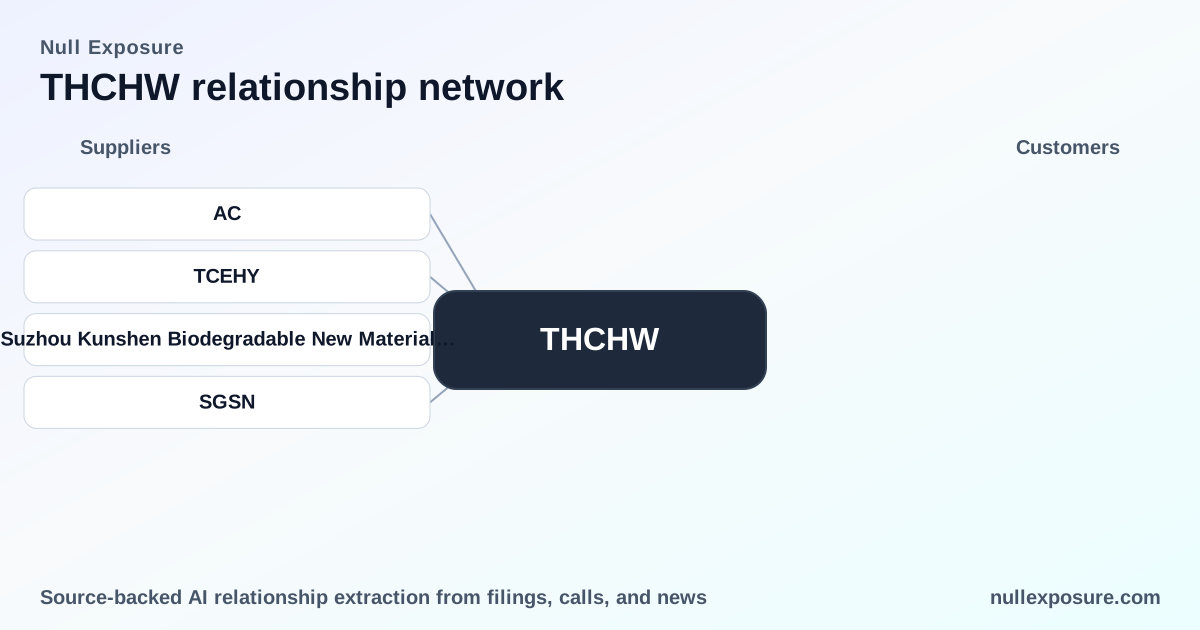
Air Canada — Tims China ran a co-marketing promotion called “Maple Journey,” offering four round-trip tickets between Shanghai and a Canadian city to celebrate its 7th anniversary, reflecting experiential marketing to drive club membership and in-store traffic. (SahmCapital news report, Feb 27, 2026 — https://www.sahmcapital.com/news/content/tims-china-marks-7th-anniversary-partners-with-air-canada-to-celebrate-a-club-members-only-maple-journey-promotion-2026-02-27)
-
Tencent’s CarbonXmade program — Tims China partnered with Tencent’s CarbonXmade initiative to develop an eco-friendly straw produced using captured CO₂ feedstock, illustrating a push toward sustainability-driven supplier innovation tied to high-profile tech partners. (SahmCapital, Dec 3, 2025 — https://www.sahmcapital.com/news/content/tims-china-and-tencents-carbonxmade-launch-innovative-eco-friendly-straw-made-with-captured-co-2025-12-03)
-
Suzhou Kunshen Biodegradable New Material Co., Ltd. — The company collaborated with Suzhou Kunshen on the same straw project, indicating direct sourcing relationships with specialty materials manufacturers for sustainable packaging components. (SahmCapital, Dec 3, 2025 — https://www.sahmcapital.com/news/content/tims-china-and-tencents-carbonxmade-launch-innovative-eco-friendly-straw-made-with-captured-co-2025-12-03)
-
Société Générale de Surveillance (SGS) — SGS provided certification on the captured-CO₂ content of the eco-straw, confirming third-party verification of claims and increasing the commercial credibility of the sustainable packaging initiative. (SahmCapital, Dec 3, 2025 — https://www.sahmcapital.com/news/content/tims-china-and-tencents-carbonxmade-launch-innovative-eco-friendly-straw-made-with-captured-co-2025-12-03)
Why these relationships matter for suppliers and investors
The Air Canada tie-in demonstrates TH International’s use of co-marketing with blue-chip travel brands to monetize brand loyalty and drive membership activation without proportionally increasing store CAPEX. The Tencent and Suzhou Kunshen collaborations show supply-side innovation where the company sources differentiated materials rather than commoditized plastics — a strategy that trades higher per-unit input costs for brand value and regulatory alignment. SGS certification reduces reputational and regulatory risk on sustainability claims, which in turn affects shelf placement, procurement approvals and institutional buyer confidence.
- Commercial takeaway: Partnerships are both marketing vehicles and procurement levers — suppliers that can bundle marketing activation with product innovation will win share.
- Risk takeaway: Elevated supplier complexity (material innovation + third‑party certification) increases program management burden during rollouts and elevates vendor concentration risk for specialty inputs.
If you need a concise supplier exposure map and procurement risk scorecard for TH International, get targeted intelligence at https://nullexposure.com/.
Operational constraints and company-level signals
Even though there are no specific contractual constraints disclosed in the sourced results, the company-level signals are clear and actionable:
- Contracting posture: Transactional but promotional-heavy — TH International executes time-limited co-marketing and product launches, suggesting short-term vendor engagements with fast procurement cycles rather than long-term, fixed supply contracts.
- Concentration: Geographic concentration in Greater China increases reliance on regional suppliers and logistics partners; specialty materials suppliers like Suzhou Kunshen are high-impact single points of failure for sustainable-product initiatives.
- Criticality: High for specialty inputs and certification partners — SGS-like third-party validators are critical to the commercial acceptance of sustainability claims and downstream retail partnerships.
- Maturity: Commercial programs are at growth-stage maturity: campaigns with multinationals (Air Canada, Tencent) reflect established marketing capabilities, while new-material sourcing signals evolving supply-chain sophistication.
Investment implications and recommended actions
TH International is executing a dual strategy of customer-facing promotional partnerships and supplier-driven sustainability innovation. The financial profile—strong revenue but deep negative margins—makes supplier terms, cost pass-through and promotional ROI strategic priorities for investors and operators evaluating exposure.
Top actionable points:
- Monitor supplier concentration around sustainable-material providers; a single-material failure could interrupt rollout and damage brand momentum.
- Evaluate partner economics on a per-promotion basis: airline and loyalty tie-ins can generate high incremental traffic with limited CAPEX impact if revenue uplift per promotion exceeds promotion costs.
- Require ongoing third-party verification for ESG-linked claims; SGS certification is a useful precedent and a baseline demand for procurement contracts.
For tailored supplier diligence and competitor benchmarking related to TH International, visit https://nullexposure.com/ to order a focused report.
Bottom line
TH International’s supplier relationships are strategically aligned to drive brand activation and embed sustainable product claims into the core customer experience. Air Canada brings marketing reach, Tencent and Suzhou Kunshen deliver product innovation, and SGS provides the verification that turns claims into commercial assets. Given the company’s negative EBITDA and aggressive expansion, supplier agreements that control cost while amplifying traffic are decisive to the path back to profitability.
Final recommendation: treat supplier partners as operational levers rather than ancillary support — they are central to TH International’s near-term ability to convert revenue growth into sustainable margins. For a deeper supplier-risk assessment, visit https://nullexposure.com/.