Instil Bio (TIL): Supplier relationships, contract risks, and what investors should price in
Instil Bio is a clinical‑stage oncology company that builds value by acquiring and developing antibody and cell‑therapy candidates and monetizing them through licensing, partnerships, and eventual product commercialization. The firm currently has no material product revenue, a small market capitalization (~$55.7M) and negative EBITDA; its near‑term value hinges on pipeline rights, external funding and the productivity of third‑party suppliers and licensors. Investor focus should be on how Instil sources clinical supplies, the concentration of those supplier relationships, and the contractual terms that control downstream rights. Learn more at https://nullexposure.com/.
How Instil operates and where the economics come from
Instil pursues growth primarily through in‑licensing and development of biologics — taking candidate rights into its portfolio, progressing clinical programs through outsourced development, and positioning assets for later‑stage deals or commercialization. With no reported product revenue and negative operating metrics, the company monetizes value through upfront/ milestone receipts from licensing, potential future royalties, and equity appreciation tied to pipeline progress. The business model is structurally dependent on external partners for manufacturing and regional licensing arrangements, which creates both leverage (low fixed cost base) and supplier risk (concentration, counterparty execution). For more context on supplier exposures and deal history, visit https://nullexposure.com/.
The single supplier ecosystem that matters: ImmuneOnco and the AXN/IMM series
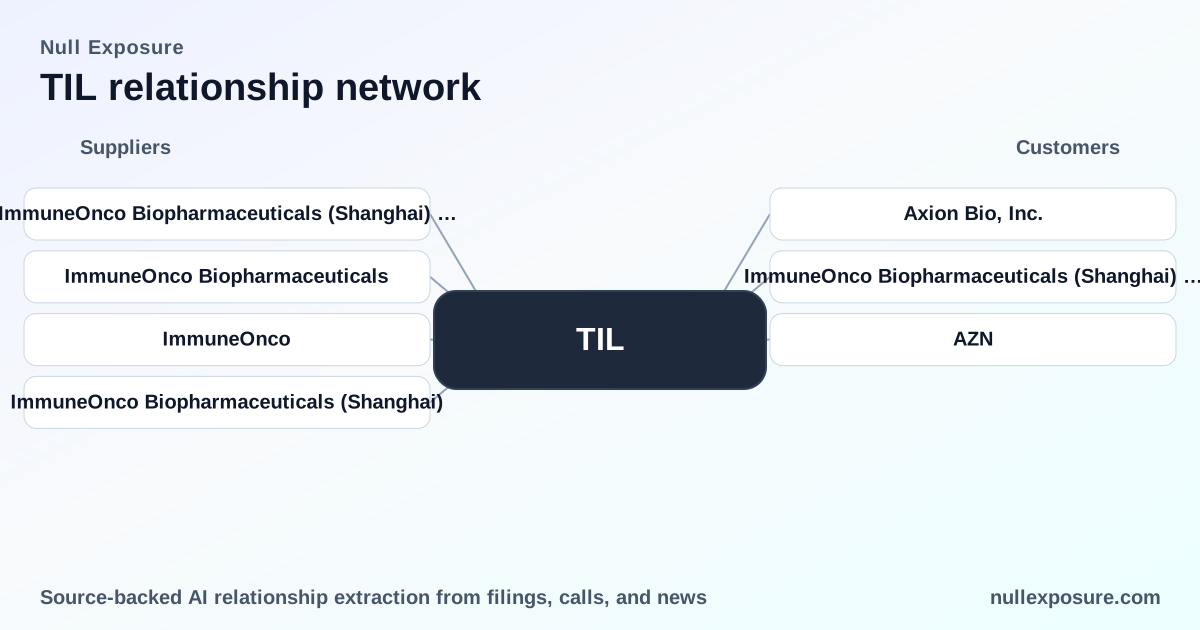
All supplier records in the public results point to a single counterparty cluster: ImmuneOnco Biopharmaceuticals (Shanghai) Inc. — the originator of the IMM/AXN assets Instil took on for ex‑China development and commercialization. Below I list each reported relationship item drawn from public coverage with a plain‑English line on what it states and where that statement was reported.
-
Instil announced an in‑license of ex‑China rights to ImmuneOnco’s PD‑L1xVEGF bispecific IMM2510 and next‑generation anti‑CTLA‑4 IMM27M, bringing those programs into Instil’s development portfolio. This was reported in a press release covered by Yahoo Finance in March 2026: https://finance.yahoo.com/news/instil-bio-immuneonco-announce-license-100000154.html.
-
A commentary reported the termination of the licensing and collaboration agreement for AXN‑2510 and AXN‑27M between Axion (Instil’s subsidiary) and ImmuneOnco, noting impacts to Instil’s pipeline and R&D allocation. Intellectia covered this implication in a March 2026 article: https://intellectia.ai/news/stock/instil-bio-faces-investigation-after-axn2510-discontinuation-stock-plummets-4581.
-
Instil’s subsidiary publicly discontinued clinical development of AXN‑2510 and executed a Termination Agreement returning rights to ImmuneOnco, with a limited license to wind down Axion’s activities. GlobeNewswire reported the formal termination and reversion of rights on January 6, 2026: https://www.globenewswire.com/news-release/2026/01/06/3213459/0/en/Instil-Bio-s-Subsidiary-Discontinues-Clinical-Development-of-AXN-2510-and-Terminates-License-and-Collaboration-Agreement-with-ImmuneOnco.html.
-
Oncology industry coverage summarized Instil’s disclosure that it had discontinued palverafusp alfa (AXN‑2510) and returned rights to ImmuneOnco, describing the program as removed from Instil’s pipeline. OncologyPipeline ran this summary in March 2026: https://www.oncologypipeline.com/apexonco/instils-bispecific-dream-over.
-
Fierce Biotech noted that Instil had secured ex‑China rights from ImmuneOnco in August 2024 to refill its pipeline after prior lead assets were scrapped, and reported that Instil later returned the two ImmuneOnco assets, prompting a stock decline. Fierce Biotech covered these developments in March 2026: https://www.fiercebiotech.com/biotech/instils-stock-sinks-after-clearing-out-clinical-pipeline-handing-2-drugs-back-immuneonco.
-
TradingView aggregated the announcement that Instil, via wholly‑owned Axion, terminated the License and Collaboration Agreement with ImmuneOnco effective January 5, 2026, confirming the formal termination date. See TradingView’s March 2026 post: https://www.tradingview.com/news/tradingview:5cd94e4dda6bd:0-instil-bio-terminates-license-and-collaboration-agreement-with-immuneonco-biopharmaceuticals/.
What the constraint language reveals about operational posture
Instil’s constraint disclosures explicitly name ImmuneOnco in a manufacturing role: the company intended to rely on ImmuneOnco in China for clinical supplies of AXN‑2510/IMM2510 and to use third parties for any commercial supply. That excerpt establishes several actionable signals:
-
Contracting posture: Instil pursues in‑licensing and relies on originators for clinical manufacturing in regionally constrained geographies (China). This points to contractual dependence rather than vertical ownership of manufacturing capacity.
-
Concentration: Reliance on ImmuneOnco for clinical supply creates concentrated supplier exposure for those programs, raising single‑counterparty execution risk while development is ongoing.
-
Criticality: The supplier role is critical — manufacturing shortfalls or termination of rights directly halt clinical programs, as the events in early 2026 demonstrate.
-
Maturity: The relationship was transactional and developmental (clinical supplies and licensing), not a longstanding commercial manufacturing agreement, underscoring the early stage and limited redundancy of supply arrangements.
Because the constraint explicitly names ImmuneOnco, these inferences apply to that relationship; more general company‑level signals include the broader reliance on third parties for commercial manufacturing if any asset reaches approval.
Investment implications and risk‑adjusted view
The ImmuneOnco episode crystallizes three investment realities for Instil:
-
Execution risk is partner‑driven. Instil’s ability to sustain a development program depends on counterparties performing on manufacturing and licensing covenants; the termination of AXN‑2510 shows how quickly asset economics can reverse.
-
Pipeline volatility is high and directly affects valuation. With no product revenue and thin cash buffers implied by a small market cap, the loss or reversion of in‑licensed assets materially reduces the company’s near‑term optionality.
-
Concentration demands active counterparty monitoring. Investors should watch contractual termination clauses, escrow or wind‑down licenses, and any transition‑supply arrangements that preserve optionality or create successor manufacturing pathways.
Key tactical takeaways for investors:
- Re‑read license and termination terms in public filings to assess residual value and run‑off rights.
- Track any announcements about alternative manufacturers or new in‑licenses that replace returned assets.
- Price a higher probability of negative pipeline surprises and dilution until Instil secures durable, diversified supplier arrangements.
For a concise supplier risk score and monitoring alerts tailored to Instil’s counterparty exposures, visit https://nullexposure.com/ — we track these contract events in real time.
Final read: what to watch next
Monitor three items over the coming quarters: (1) whether Instil secures replacement assets or new licensing deals to replace the returned ImmuneOnco programs; (2) any announcements on alternative manufacturing partners for remaining programs; and (3) disclosure on wind‑down costs, indemnities or milestone refunds tied to the terminated agreement. Each of these will directly affect cash runway and the company’s ability to execute.
For ongoing coverage and deeper supplier due diligence on Instil and comparable clinical‑stage names, see our analysis hub at https://nullexposure.com/. Investors looking to model counterparty risk into valuation should prioritize contractual language and supplier concentration above headline pipeline counts.