Tiptree Inc (TIPT): Supplier Relationships and Operational Constraints — what investors and operators need to know
Tiptree Inc underwrites and manages specialty insurance products across the U.S., monetizing through underwriting margins, investment income on insurance float, and fees tied to specialty program administration. The company’s economics depend on steady premium flow, reinsurance capacity, and access to short-term credit facilities that smooth capital demands, while capital returns are amplified by a modestly leveraged balance sheet and profitable underwriting in select niches. For investors evaluating supplier and advisor exposures, the focus is twofold: counterparty solidity in reinsurance and legal/advisory partners that execute transactions and capital raises.
For an actionable supplier-risk snapshot, visit the NullExposure homepage: https://nullexposure.com/
Quick business snapshot — scale, margins, and governance signals
Tiptree presents as a mid‑cap specialty insurer with TTM revenue of about $2.07 billion and a market capitalization near $720.5 million, which frames how supplier relationships translate to commercial scale. Return on equity (12.7%) and operating margin (11.4%) indicate an established underwriting platform that generates positive returns without the scale of major carriers, making reinsurance and capital markets access operationally critical. Insider ownership is material (roughly 38.5%), and institutional holders are similarly significant (about 38.6%), aligning management incentives with operational continuity.
According to filed financials through 2025-09-30, Tiptree’s margin profile and capital metrics position supplier performance as both a cost and a strategic lever: reinsurance pricing and counsel on strategic transactions materially affect net income and capital flexibility.
Who’s on the map: advisors and legal counsel you’ll see in filings
Tiptree’s latest public reporting and news coverage show a small but meaningful set of advisor relationships. Every relationship surfaced in the recent sweep is listed below.
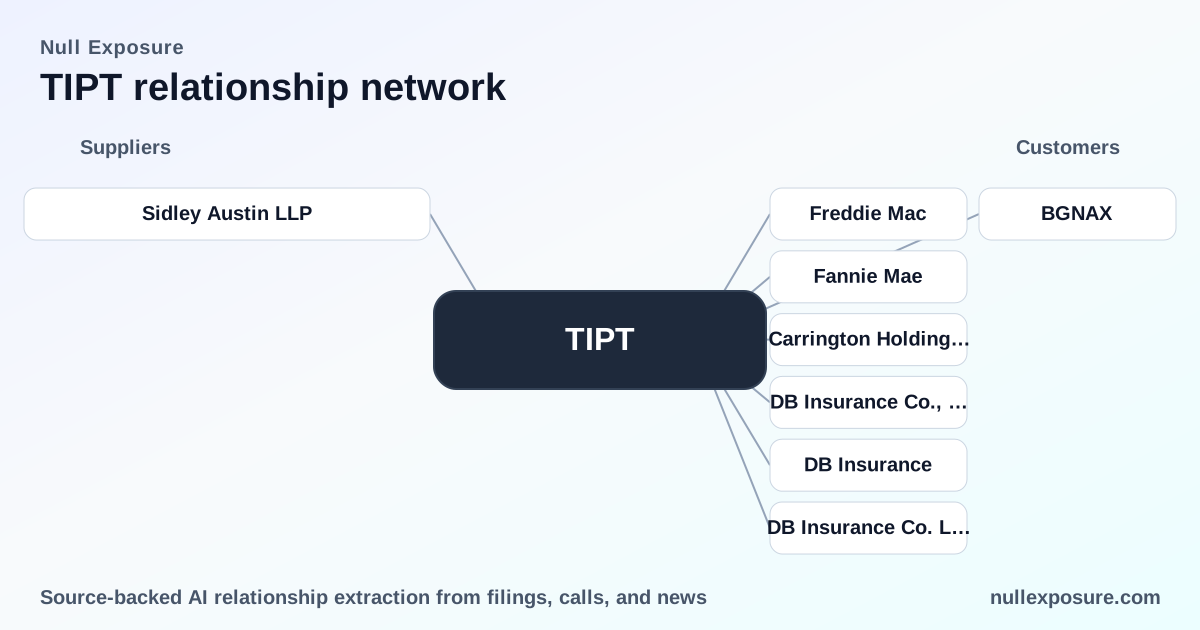
- Sidley Austin LLP: Attorneys from Sidley Austin LLP based in New York and the firm’s Chicago headquarters represented Tiptree Inc. and The Fortegra Group in a strategic investment transaction. According to a news report on IIReporter dated March 10, 2026, Sidley acted as legal counsel on that deal. (IIReporter, March 2026)
That is the complete relationship set surfaced in the supplier-scope results provided.
What those relationships imply for operators and investors
Legal counsel like Sidley Austin functions as a transactional enabler—it is not a recurring operating supplier but a high-impact advisor when capital events occur. The IIReporter note pointing to Sidley’s role in a strategic investment shows Tiptree’s reliance on top-tier transactional counsel to execute capital and strategic moves. For investors, that translates to lower execution risk on discrete deals but little recurring cost visibility; for operators, it signals the use of established external expertise for governance and capital markets access.
Mid‑article resource: if you want structured exposure and supplier risk intelligence for TIPT and peers, see https://nullexposure.com/
Contracting posture and operational constraints — what the filings disclose
Company disclosures through late‑2024 and related commentary reveal two high‑confidence operating constraints that shape supplier strategy:
-
Short-term contracting cadence: Tiptree’s disclosures note multiple short‑dated credit lines and annual reinsurance renewals, including mortgage warehouse lines with maturities clustered in 2025 and reinsurance facilities that renew annually. That contracting rhythm increases rollover risk and elevates the importance of active relationship management with credit and reinsurance counterparties. (Company filings as of December 31, 2024)
-
Service-provider dependency: Tiptree emphasizes reliance on third‑party service providers for information systems and reinsurance relationships with large professional reinsurers; a substantial portion of reinsurance recoverables sits with counterparties where collateral or letters of credit back exposures. The company is operationally dependent on both high‑quality reinsurers and external IT/service vendors for claims processing and data management. (Company disclosures, FY2024)
These constraints are presented as company‑level signals: they shape how Tiptree contracts with suppliers broadly rather than pointing at any single advisor. The excerpts in filings underline a contracting model that is short-term and renewal-driven, and a supplier posture that blends high-quality reinsurer counterparties with outsourced service reliance.
Concentration, criticality, and maturity — framing supplier risk
Several practical takeaways for decision-makers:
-
Concentration risk is moderate but material. While reinsurance relationships skew toward highly rated reinsurers (A or better per A.M. Best in disclosures), substantial reinsurance recoverables and collateralized captive arrangements create pockets of counterparty concentration that require active monitoring.
-
Operational criticality is high for a handful of suppliers. Reinsurers and IT/service providers are essential to day-to-day underwriting and claims flows; legal counsel is critical at discrete junctions (capital transactions, M&A, regulatory matters). Failure or disruption in those relationships would produce outsized operational impact relative to their cost line.
-
Maturity and market position reduce certain risks. Positive ROE and operating margin suggest a mature underwriting platform; however, the short-term renewal cadence creates recurring funding and pricing exposure.
Investment and remediation checklist for supplier diligence
For investors and corporate operators assessing TIPT supplier relationships, prioritize these actions:
-
Validate the credit quality and diversification of reinsurance counterparties, and obtain detail on collateral terms and concentration limits disclosed to counterparties.
-
Request an inventory of service providers for critical IT and claims platforms, with SLA and business continuity specifics.
-
Monitor material advisor engagements (legal, investment banks) around capital events; counsel like Sidley indicates use of first‑tier firms for strategic transactions—confirm scope and fee structures.
Each of these steps translates directly into how fast Tiptree can replace or renegotiate suppliers during market stress.
Final read and next steps
Tiptree is an established specialty insurer with profitable underwriting and a business model that relies on annual reinsurance renewals and short‑dated credit facilities, making supplier management a front‑line risk control. The presence of top‑tier legal counsel on strategic transactions demonstrates access to capital markets and deal execution capacity, while the company disclosures highlight operational dependence on reinsurers and service providers. Investors should treat supplier relationships not as peripheral contracts but as levers that materially affect underwriting economics and capital flexibility.
For a deeper supplier-risk profile and ongoing monitoring of TIPT and peers, visit https://nullexposure.com/
Concluding takeaway: short-term contracting and concentrated, critical supplier roles drive both operational vulnerability and upside execution capacity — active diligence on counterparties and SLAs is essential for accurate risk-weighted valuation of TIPT.