TJX Supplier Relationships: What Investors Need to Know
TJX monetizes an opportunistic, off-price retail model by buying merchandise at scale from global suppliers and selling it through a dense network of stores and distribution centers. The company drives margins through inventory agility, a high-turn buying posture, and centralized distribution that lowers per-unit logistics cost. For investors, supplier relationships are less about exclusive long-term contracts and more about supply flexibility, sourcing reach, and distribution efficiency—factors that directly influence gross margin and inventory turns. Learn more at https://nullexposure.com/.
The investment thesis in one paragraph
TJX extracts value by acting as a high-volume, low-cost buyer that captures branded and non-branded merchandise on short notice and funnels it through an efficient distribution footprint to discount-seeking consumers. Revenue and margin upside depend on the company’s ability to source desirable merchandise quickly and at favorable prices, and on its distribution network to process heterogeneous product flows. Given TJX’s scale and off-price positioning, supplier relationships are strategic for assortment and quality but are executed under a predominantly short-term, opportunistic contracting posture.
What the reported supplier links mean for portfolio decisions
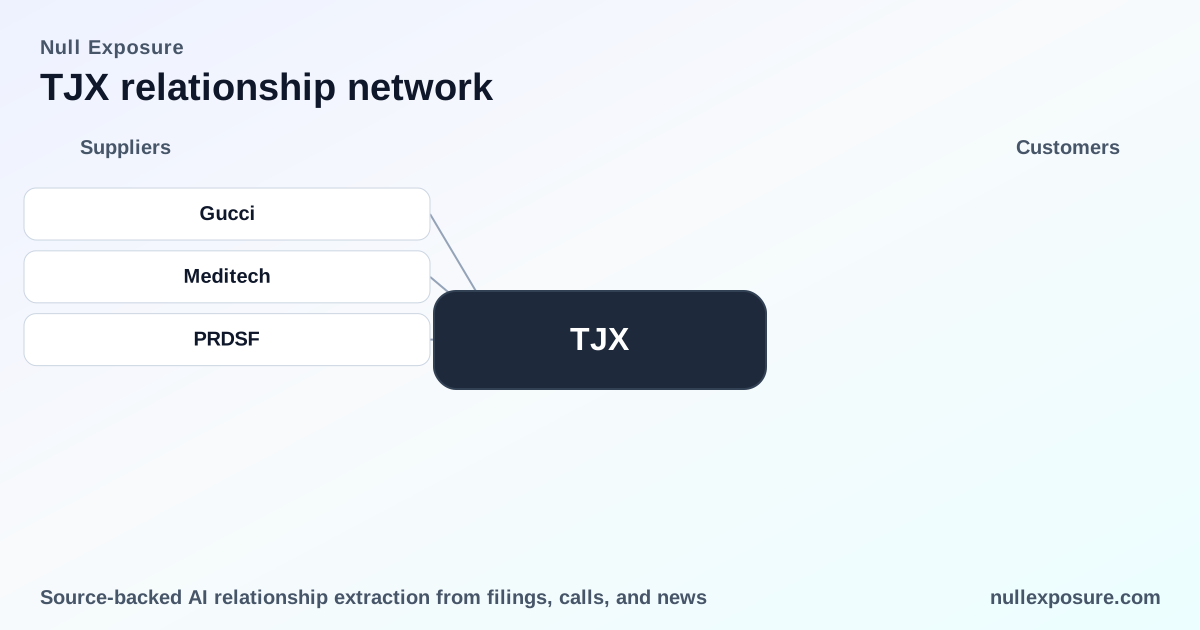
Investors should treat the named supplier or brand interactions as indicators of assortment strategy and real estate or logistical arrangements rather than classic vendor-customer lock-ins. Branded relationships like Gucci and Prada reinforce TJX’s ability to traffic in elevated merchandise that expands customer demographics, while property transactions such as the Meditech sale highlight capital deployment and corporate real estate strategy. These relationships increase brand cachet and operational complexity without creating material single-supplier concentration risk.
Read detailed supplier relationship signals and analysis at https://nullexposure.com/.
Gucci — designer product in “The Runway”
TJX has integrated Gucci merchandise into a curated high-end section called “The Runway” within select T.J. Maxx stores, a format designed to attract more affluent shoppers by offering luxury labels at discount prices. This merchandising strategy reinforces TJX’s capacity to buy and resell designer goods opportunistically and drive traffic through perceived value. The arrangement is mentioned in a March 2026 profile of TJX’s merchandising initiatives by FinancialContent.
Prada — luxury assortment featured in-store
Prada is cited alongside Gucci as part of the same “The Runway” merchandising initiative, demonstrating TJX’s access to premium brands that broaden its customer base and improve basket mix. FinancialContent’s March 2026 coverage highlights Prada as an example of the high-end labels appearing in select T.J. Maxx locations, supporting TJX’s move to capture higher-margin customers within the off-price channel.
Meditech — real estate disposition history
TJX acquired 550 Cochituate Road, a 450,000-square-foot building, from Meditech for $120 million in 2019, a transaction noted in local reporting on the company’s fiscal results. This transaction underscores TJX’s active management of corporate real estate and strategic consolidation of its Framingham campus, reflecting capital allocation choices that influence cash flow and operating infrastructure. The purchase was reported by MetroWest Daily News in February 2026 coverage of TJX earnings and local operations.
Constraints and the operating model investors should internalize
Company-level disclosures and filing excerpts paint a clear operating posture that shapes supplier risk and opportunity:
-
Short-term contracting posture: Company filings indicate that merchandise purchase commitments primarily cover the current or immediately upcoming selling season and that contracts outstanding at February 1, 2025 cover commitments over the next several months. This confirms a high-frequency, tactical buying model that limits long-term price lock-ins but increases exposure to near-term sourcing competition and volatility.
-
Global sourcing reach: TJX runs buying offices worldwide and reports purchasing from more than 100 countries. That global breadth provides supply diversity and the ability to capture cross-border arbitrage in inventory costs and styles, supporting assortment flexibility.
-
Buyer role and merchant-driven sourcing: The company emphasizes a merchant organization of over 1,300 associates who decide what and when to buy. This internal merchant control makes supplier relationships operationally driven by merchandising judgment rather than rigid procurement programs.
-
Service-provider interactions and hedging: TJX uses financial instruments to hedge portions of merchandise purchase commitments and relies on third-party logistics providers for portions of its shipping and warehousing network. These facts indicate an integrated buyer-provider dynamic where banks and logistics vendors function as critical service partners.
-
Distribution scale and specialization: The company operates roughly 30 million square feet of distribution capacity across six countries with automated systems tailored to the off-price model, indicating mature, capital-intensive distribution that supports high inventory throughput.
Collectively, these constraints signal a mature, high-frequency sourcing model that prioritizes flexibility and scale over vendor lock-in. Investors should factor in inventory turn volatility and the capex intensity of distribution when modeling free cash flow and margin resilience.
Risk and opportunity framework for operators and investors
TJX’s supply-side signals create a predictable risk/reward profile:
-
Upside: Access to high-end brands in off-price channels lifts transaction sizes and customer mix, and global sourcing allows margin capture via favorable buys. Distribution scale supports volume economics.
-
Downside: Short-term contracts increase exposure to spot market price swings and inventory misreads, while heavy reliance on third-party logistics can create operational chokepoints during peak seasons.
Considerations for risk management and monitoring:
- Track quarter-to-quarter inventory turns and gross margin trends as early indicators of sourcing effectiveness.
- Monitor distribution utilization and any reported disruptions from third-party logistics partners.
- Watch for changes in merchant staffing and global buying office footprint as signals of sourcing capacity.
Actionable next steps
- For active investors: integrate supplier-signal monitoring into your model to detect shifts in merchandise mix or concentration in premium-brand sourcing that could compress or expand margins.
- For operations managers: prioritize visibility into third-party logistics SLAs and hedging coverage for foreign-currency denominated merchandise purchases.
Explore deeper supplier relationship analytics and real-time monitoring tools at https://nullexposure.com/.
Final takeaway
TJX leverages a flexible, merchant-led buying engine and substantial distribution infrastructure to convert opportunistic purchases—ranging from luxury brands like Gucci and Prada to company real estate transactions—into retail margin and scale advantages. The business is built on short-term contracts and global sourcing, which supplies both agility and exposure that investors must actively monitor. For ongoing research and supplier risk monitoring, visit https://nullexposure.com/.