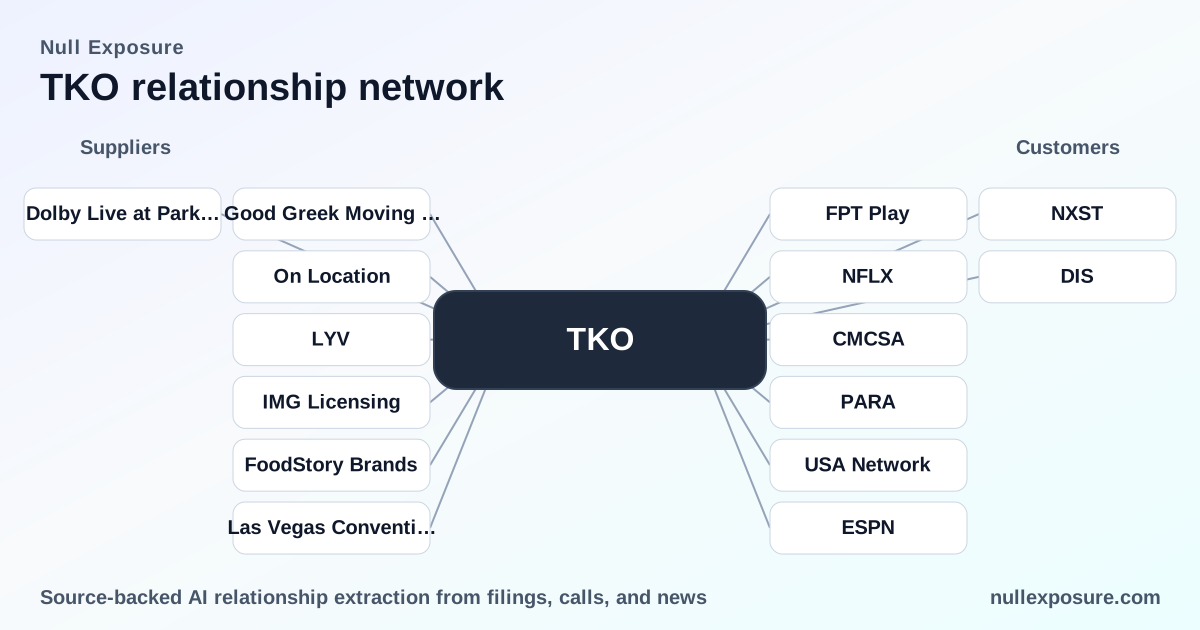
TKO Group Holdings: supplier relationships that shape event economics and risk
TKO Group Holdings monetizes a portfolio of live-entertainment intellectual property through media rights, ticketing and hospitality, sponsorships and licensing, and branded merchandise. The company leverages event-driven cash flow (UFC and WWE) and an expanding set of commercial partnerships to extend margins beyond gate receipts—ticketing and hospitality channels drive near-term revenue, while licensing and CPG partnerships broaden consumer monetization. For investors evaluating supplier exposure, the relevant signal set is a mix of venue and ticketing partners, licensing brokers, hospitality suppliers, and targeted CPG collaborators.
If you want a consolidated view of how these supplier ties translate into operating leverage and counterparty risk, explore more on the Null Exposure homepage: https://nullexposure.com/
What this supplier map tells investors about TKO's operating posture
TKO's supplier relationships in FY2026 cluster around event delivery and commercial expansion. Critical suppliers are venue and ticketing operators, hospitality partners that capture per-capita spend, and licensing/CPG partners that extend the brand into retail. Two company-level constraints are material for investor diligence: (1) a Services Agreement ties core operational functions to EGH and its subsidiaries (a related-party service provider), and (2) the company discloses annual contractual commitments above $100 million, indicating sizable fixed and committed outflows that affect free cash flow sensitivity to event cycles.
- Contracting posture: high commitment / centralized service provision, not a purely spot-market sourcing model. The EGH Services Agreement indicates entrenched supplier arrangements that affect flexibility.
- Concentration: ticketing and venue relationships create single-point dependencies during major event weeks (e.g., WrestleMania) where execution risk is concentrated.
- Criticality: suppliers that enable ticket sales, venue access, and hospitality are operationally critical for near-term revenue realization; licensing/CPG partners are commercially critical for mid‑to‑longer-term margin expansion.
- Maturity: partnerships disclosed are a mix of mature industry players (e.g., Ticketmaster/Live Nation) and newer commercial collaborations (e.g., FoodStory Brands), reflecting both stable infrastructure and growth initiatives.
For deeper supplier exposure analytics, visit the Null Exposure homepage: https://nullexposure.com/
The supplier roster (what we found, FY2026 announcements)
Good Greek Moving & Storage — official mover for UFC events
Good Greek was named the Official Mover of the UFC, handling event logistics and athlete/production relocations during major U.S. celebrations in 2026, which situates them as a tactical logistics supplier for TKO’s live-event operations. This was announced in a Sahm Capital release dated January 28, 2026.
On Location — official fan hospitality partner for WWE
On Location is confirmed as the Official Fan Hospitality Partner of WWE, distributing WWE Hall of Fame Priority Passes and managing premium fan experiences, a direct revenue channel that captures high-margin per-capita spend at major events. The partnership is described on WWE’s corporate site in a March 2, 2026 release.
Ticketmaster.com (Live Nation / LYV) — primary ticket distribution channel for WWE events
Ticketmaster.com is the ticketing platform used for WWE ticket sales, with specific onsale details cited for events in March 2026; this relationship positions Live Nation’s ticketing infrastructure as a critical distribution and customer‑data partner. The WWE corporate announcement on March 2, 2026 referenced Ticketmaster for event ticketing (Ticketmaster / LYV).
IMG Licensing — licensing broker for UFC brand extensions
IMG Licensing acted as UFC’s licensing agent in brokering a partnership tied to a UFC Performance Institute-backed protein bar, establishing IMG as the intermediary that converts brand equity into CPG licensing deals. Sahm Capital reported this role in a February 11, 2026 release.
FoodStory Brands — CPG partner developing a UFC protein bar
FoodStory Brands entered a strategic partnership with UFC to develop a nutritionist-backed protein bar, representing direct consumer-product monetization that expands TKO’s revenue mix beyond events and media. This collaboration was disclosed in a Sahm Capital announcement dated February 11, 2026.
Las Vegas Convention and Visitors Authority (LVCVA) — local destination partner for WrestleMania week
WWE partnered with the LVCVA to host the 2026 WWE Hall of Fame Ceremony during WrestleMania 42 week in Las Vegas, underscoring the importance of local DMOs and municipal partners for major event staging and co‑promotion. WWE’s corporate release on March 2, 2026 details the coordination with LVCVA.
Dolby Live at Park MGM — venue host for WWE Hall of Fame ceremony
Dolby Live at Park MGM is the chosen venue for the 2026 WWE Hall of Fame Ceremony, indicating a relationship with a premium Las Vegas performance space that influences seat inventory, hospitality packages, and production logistics. WWE’s March 2, 2026 announcement specifies Dolby Live as the site.
How these relationships influence commercial upside and risks
Collectively, these suppliers illustrate a two-track commercial model: infrastructure partners (Ticketmaster, Dolby Live, LVCVA, logistics) underpin event delivery and revenue realization; brand-extension partners (IMG Licensing, FoodStory) accelerate non-ticket revenue growth. Key investor implications:
- Revenue sensitivity to event cadence. If major events underperform or face cancellations, ticketing and hospitality revenue could compress quickly given the fixed costs embedded through venue and service contracts.
- Single-point operational dependencies. Ticketing reliance on Ticketmaster/Live Nation increases execution and fee exposure; venue concentration during marquee weeks intensifies counterparty risk.
- Material contractual commitments. A company filing summarized annual commitments showing 2025 commitments of $186,294 (figures presented in the filing in thousands), a signal of sizable committed outflows that reduce short-term flexibility.
- Related-party service provision. Disclosure that EGH and its subsidiaries (the controlling shareholder group) provide various services under a Services Agreement indicates related-party operational integration; this structure reduces bargaining flexibility but can stabilize access to certain capabilities.
What investors should watch next
- Renewal terms and fee structures with primary ticketing and hospitality partners—small changes in fee schedules compound across millions of tickets.
- Progress of CPG launches (FoodStory / UFC protein bar) and the revenue share/licensing economics secured by IMG Licensing.
- Any amendments to the EGH Services Agreement or reductions in disclosed annual commitments that would improve operating flexibility.
- Venue diversification strategy to reduce concentration risk around marquee event weeks.
For programmatic supplier scoring and an at-a-glance counterparty heat map, go to Null Exposure: https://nullexposure.com/
TKO’s supplier landscape combines operational indispensability with commercial optionality; investors should value the stability of entrenched infrastructure partners while pricing in concentrated event risk and significant contractual commitments. The next investor inflection points will come from how TKO extracts margin from hospitality and CPG while managing the fixed-cost base tied to its supply network.