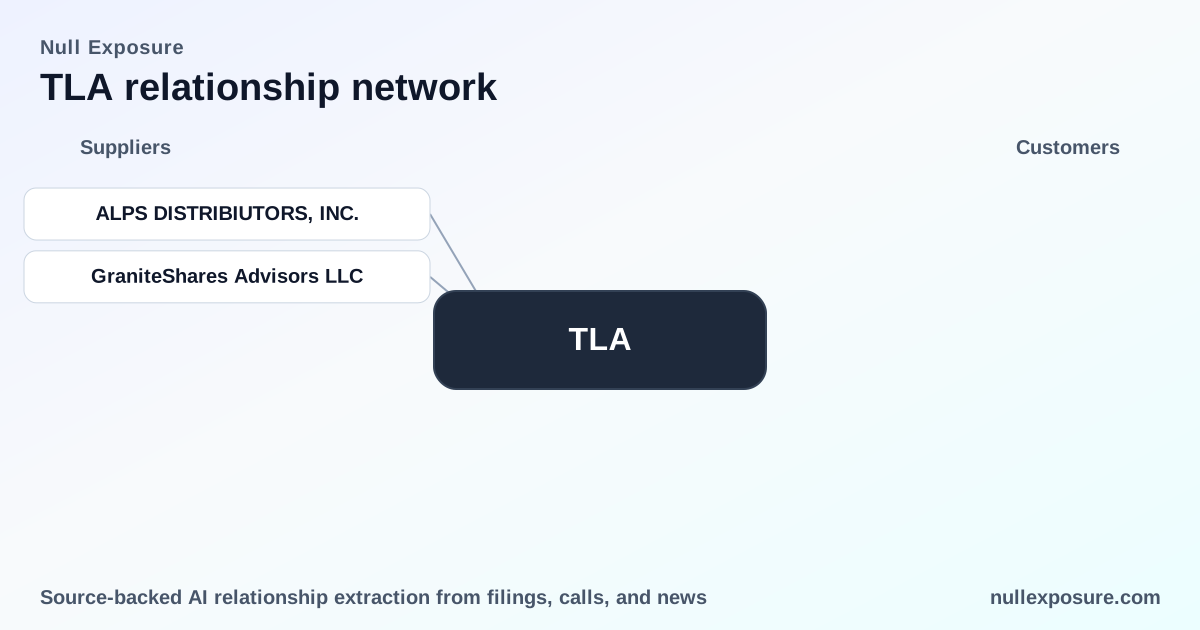
TLA supplier map: who supplies GraniteShares’ Autocallable ETF and what it means for investors
Thesis — TLA is an autocallable exchange-traded fund issued under the GraniteShares platform that monetizes through fund management and expense capture while relying on external distribution and advisory arrangements to operate. Management fees and expense structures, distribution contracts, and explicit fee-waiver commitments drive the fund’s economics and investor experience. This note summarizes the supplier relationships disclosed in public releases and extracts practical implications for portfolio managers, allocators, and operations teams. For a consolidated view of supplier relationships across funds, visit https://nullexposure.com/.
One-line summaries of the disclosed supplier relationships
According to a GraniteShares press release published via GlobeNewswire on March 3, 2026, the following supplier relationships were disclosed for the autocallable ETFs including TLA.
-
ALPS DISTRIBIUTORS, INC. handles distribution for the funds; GraniteShares clarifies that ALPS is the distributor and is not affiliated with GraniteShares, establishing a customary third-party distribution model for the ETF family (GlobeNewswire, March 3, 2026).
Source: GlobeNewswire news release (March 3, 2026). -
GraniteShares Advisors LLC has contractually agreed to waive its fees and/or pay operating expenses so that total annual fund operating expenses do not exceed 1.15%, excluding a specified set of pass-through and extraordinary costs (GlobeNewswire, March 3, 2026).
Source: GlobeNewswire news release (March 3, 2026).
Each relationship is documented in the same public release; the two entries represent the distribution and advisory/fee structure that materially determine operating costs and go-to-market for TLA.
Why these relationships matter: operational and commercial implications
GraniteShares’ use of a third‑party distributor and an explicit fee‑waiver by the adviser is a common operating pattern for newer or strategy-specific ETFs. Distribution is outsourced to ALPS DISTRIBIUTORS, INC., which positions the fund to leverage external sales channels without building a captive distribution force. The fee-waiver by GraniteShares Advisors LLC is a deliberate commercial decision to cap investor-facing expenses at 1.15%, which shapes net returns and marketability.
- Commercial driver: Fee caps and regular distributions increase retail and intermediary appetite for structured ETFs such as autocallable products. The waiver is a marketing and product-launch instrument to accelerate AUM growth.
- Operational driver: Outsourced distribution concentrates go-to-market risk with ALPS; operational continuity depends on the distributor’s platform and clearing relationships.
- Cost dynamic: The adviser’s waiver shifts the short-term economics to prioritize scale; once assets reach sustainable thresholds, fee waiver discipline, renewal terms, or cessation will determine long-term margin.
For a systematic supplier due diligence playbook and deeper relationship mapping tools, see https://nullexposure.com/ — useful for procurement, ops and investor relations teams.
Constraints and company-level signals investors should weigh
Public disclosures in the release do not list explicit contracting constraints beyond the fee-waiver language. Treat the following as company-level operational signals rather than relationship-specific legal constraints:
- Contracting posture is market-standard and distributor-centric. Outsourcing distribution to an unaffiliated distributor signals a commercial posture focused on channel reach rather than vertical integration of sales functions. This increases reliance on distributor performance metrics (placement, ticket flow) and negotiated fee schedules.
- Concentration is moderate but meaningful. With distribution centralized to a named third party, a handful of counterparties can materially affect fund flows and capacity to onboard new intermediaries quickly.
- Criticality of the adviser’s fee-waiver. The adviser’s contractual waiver to cap expenses at 1.15% is critical to investor economics and product positioning; any change in that posture would materially affect net returns and retail competitiveness.
- Maturity and flexibility. Fee waivers are typically temporary or revisable; the presence of a cap suggests an early- to mid-stage commercial lifecycle where achieving scale is prioritized over locked-in economics.
These company-level signals inform contractual risk assessments, vendor contingency planning, and scenario analysis for margin and AUM sensitivity.
Operational risks and mitigation for investors and operators
The supplier structure creates specific operational and market risks that deserve active monitoring:
- Distribution concentration risk. Concentrated reliance on a named distributor increases single‑point‑of‑failure exposure for market access and requires monitoring of distributor financial health and platform changes.
- Fee-waiver dependency risk. The adviser’s expense cap is central to product economics; track waiver renewal terms, sunset clauses, and disclosure language in successive filings to understand the timeline and triggers for any change.
- Transparency and governance. Public releases disclose relationship roles but do not detail service-level agreements, indemnities, or continuity plans—areas for active diligence by institutional investors or counterparties.
- Regulatory and accounting considerations. Autocallable structures have payout profiles and embedded derivatives; supplier changes that affect cost allocation can shift net distributions and tax character, requiring coordination between portfolio accounting and distributor reporting.
Operators should demand routine reporting from distributors on flows, spreading agreements, and operational KPIs; investors should require clear disclosures in investor materials and prospectuses.
For a tactical supplier risk checklist and next-step procurement questions, visit https://nullexposure.com/ to access practical templates and supplier maps.
Practical takeaways for allocators and fund operators
- Distributor is independent—expect external-channel dynamics. ALPS DISTRIBIUTORS, INC. is the named distributor and is unaffiliated with GraniteShares, making distribution effectiveness a third‑party metric to monitor (GlobeNewswire, March 3, 2026).
- Adviser has capped investor expenses at 1.15%. GraniteShares Advisors LLC’s contractual waiver to limit operating expenses to 1.15% directly affects net yields and product positioning; this is a cornerstone commercial commitment for TLA (GlobeNewswire, March 3, 2026).
- Action for allocators: Incorporate scenario analyses that stress-test performance if the adviser discontinues the fee-waiver or if distribution terms change. Demand transparency on waiver terms and distributor SLAs before material allocations.
- Action for operators: Establish contingency distribution options, and require quarterly reporting from the adviser on waiver costs and runway to maintain the 1.15% cap.
Closing recommendation
GraniteShares’ disclosure of an unaffiliated distributor and an adviser fee-waiver are clear, material signals about TLA’s operating model: the fund leverages third-party channels while front-loading investor economics to grow scale. Institutional diligence should focus on distributor performance metrics and the contractual mechanics and duration of the adviser’s expense waiver. For a deeper operational supplier map and tailored due-diligence templates, start at https://nullexposure.com/ and integrate supplier KPIs into your quarterly investment review process.