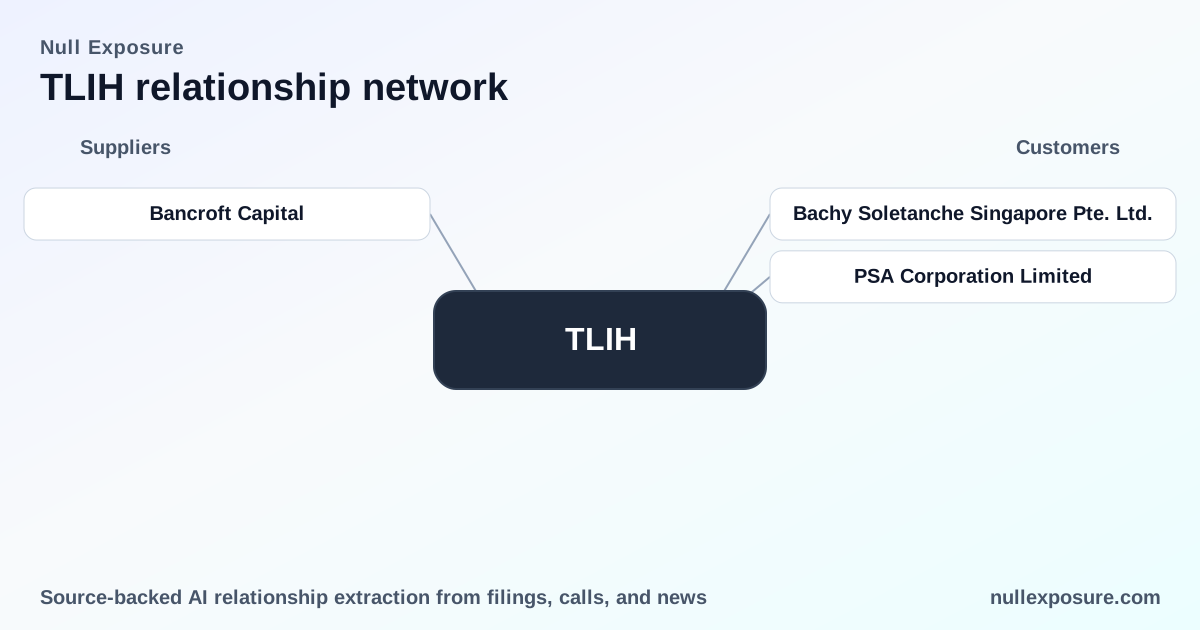
Ten‑League International (TLIH): supplier posture, capital structure and the single-bank relationship investors must know
Ten‑League International Holdings operates as a merchant of heavy equipment: it sells and rents new and used construction machinery and parts, and generates revenue from transactional sales, rental fees and aftermarket parts/service. The company is Singapore‑headquartered and listed on NASDAQ; its public financials show modest profitability on a small market capitalization, while ownership is heavily concentrated among insiders—factors that directly influence how Ten‑League contracts with suppliers and underwrites inventory risk. For a quick gateway to the full coverage and data tools, visit https://nullexposure.com/.
How Ten‑League makes money and why that matters to suppliers and operators
Ten‑League’s operating model is straightforward: inventory turnover of heavy equipment and parts combined with rental revenue produces the company’s cash flow. According to the company profile and latest quarter (period ending 2024‑12‑31), trailing twelve‑month revenue is $65.2M with gross profit of $14.25M and a net margin of about 5.55%. The market values the company at roughly $8.97M market capitalization, with an EV/EBITDA near 3.5, reflecting a low valuation multiple relative to cash flow.
These numbers drive supplier dynamics in three ways:
- Pricing leverage: thin margins compress the room for extended supplier credit or generous trade terms.
- Working capital sensitivity: inventory-heavy businesses need predictable supplier commitments to avoid liquidity stress.
- Capital access: the company’s public market presence and any capital markets activity can materially shift its supplier negotiating posture.
Visit https://nullexposure.com/ to see how this supplier profile compares across the industrial distribution universe.
Ownership, liquidity and contract posture — a company‑level view
Ten‑League’s share structure is a strategic variable for counterparties. Insiders own roughly 80.3% of shares while institutions hold about 0.5%, and the float is small relative to outstanding shares. That concentration creates tight control over corporate decisions, low public liquidity, and a governance profile where a small group sets strategic direction. For suppliers and operators, that translates to:
- Concentrated decision-making: supplier negotiations are likely handled with a concise leadership group rather than a dispersed investor base.
- Low external scrutiny: with limited institutional oversight, operational tradeoffs (e.g., prioritizing cash conservation) can persist without rapid market intervention.
- Execution risk: small float and limited analyst coverage reduce the immediate market pressure to smooth quarterly execution, raising the importance of direct supplier due diligence.
From a contracting posture standpoint, Ten‑League reads as transactional and inventory‑centric rather than long‑dated strategic contracting; rental agreements and parts sales dominate the near‑term cash conversion cycle. These are company‑level signals drawn from public financials and ownership metrics.
Known external relationship: investment bank role in the IPO
Bancroft Capital acted as sole bookrunner on Ten‑League’s U.S. IPO process. According to a Renaissance Capital report dated March 10, 2026, Bancroft Capital served as the sole bookrunner on the deal, indicating a single lead underwriter arrangement for Ten‑League’s capital markets activity. (Renaissance Capital, March 10, 2026: https://www.renaissancecapital.com/IPO-Center/News/111997/Singapore-based-equipment-provider-Ten-League-International-prices-US-IPO-a)
This relationship is material for suppliers only indirectly: a sole bookrunner structure can concentrate execution risk around a single capital markets advisor and affects the company’s access to follow‑on liquidity, which in turn influences working capital flexibility available to sustain supplier credit.
Why the Bancroft Capital connection matters for counterparties
A dedicated bookrunner on the IPO shows Ten‑League engaged with capital markets to establish a U.S. listing and raise profile. For suppliers and operators, the practical takeaways are:
- Short‑term working capital can be influenced by capital markets success; a well‑executed IPOs or placements reduces pressure on supplier payment terms.
- Reliance on a single financial partner increases execution concentration, so contingency planning is prudent if follow‑on funding or equity liquidity is essential to sustain inventory purchases.
For deeper comparisons and a consolidated supplier risk view, see https://nullexposure.com/.
Operational constraints and what they signal about supplier relationships
The constraints data available for Ten‑League in this coverage set shows no explicit supplier constraints reported. Presenting that as a company‑level signal: no flagged contractual constraints in public coverage suggests suppliers should assume normal commercial terms prevail but perform direct verification. Additional operating model characteristics:
- Concentration risk: high insider ownership and small institutional stake increase counterparty concentration risk.
- Criticality: equipment and parts suppliers are critical to revenue; disruptions to supply, logistics or warranty parts flow would have immediate revenue impact.
- Maturity: Ten‑League is established as a regional distributor with rental operations, which implies standard commercial contracting maturity rather than sophisticated, supply chain‑integrated partnerships.
These are firm‑level interpretations designed to guide contract terms, collateral sizing and credit exposure limits.
Practical checklist for suppliers and investors
Before committing material credit or inventory, evaluate:
- Payment history and receivables aging trends directly with Ten‑League.
- Collateral options for inventory financed to Ten‑League (registration, title control on high‑value units).
- Concentration exposure to a single buyer or supplier channel.
- Contingency plans for abrupt capital access changes (e.g., failed equity transactions).
Bold takeaway: providers of trade credit or consignment inventory should price for working capital risk and governance concentration.
Conclusion — what operators and investors should do next
Ten‑League’s business model—equipment sales, rentals and parts—creates clear, transaction-driven supplier relationships where working capital and ownership structure dominate risk. The banked IPO relationship with Bancroft Capital is the lone named external tie in public coverage and affects liquidity dynamics rather than day‑to‑day supply deals. For suppliers: require tighter credit controls and verify payment and title terms; for investors: monitor capital markets activity and insider actions as primary drivers of operational flexibility.
Explore the full supplier profile and comparative analytics at https://nullexposure.com/ to align counterparty limits with Ten‑League’s financial and ownership realities. For tailored due diligence support and monitoring, visit https://nullexposure.com/ to connect with our analysis tools and subscription offerings.