TriSalus Life Sciences (TLSI): supplier relationships that matter for investors
TriSalus Life Sciences operates as a developer of localized drug‑delivery platforms for oncology and monetizes through advancing clinical candidates toward regulatory approval and eventual product sales or partner licensing; the company also acquires third‑party intellectual property to accelerate its pipeline and raises capital through equity and credit facilities to fund development. Investor value for TLSI is driven by clinical progress on nelitolimod and the contractual obligations and financing arrangements that support—or constrain—that progress. For a practical supplier-risk view and ongoing coverage, see https://nullexposure.com/.
Two named counterparties that move the needle
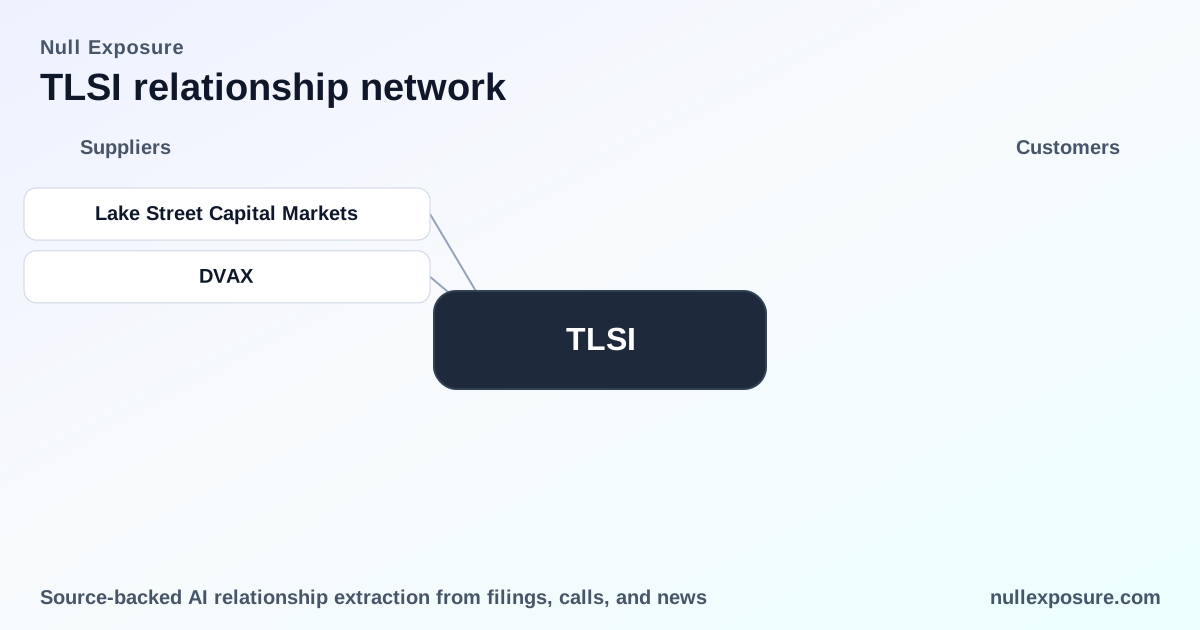
Dynavax Technologies — the IP seller behind nelitolimod
TriSalus purchased all intellectual property and the trial drug substance for nelitolimod from Dynavax in 2020; the acquisition is structured as a licensing/purchase arrangement that carries upfront, milestone, and royalty payment obligations. As detailed in TLSI’s FY2024 10‑K, TriSalus has paid $12.0 million to Dynavax to date and is contractually exposed to up to $158.0 million in development/regulatory milestones plus up to $80.0 million in commercial milestones, in addition to royalty payments. (Source: TLSI 10‑K, FY2024.)
Lake Street Capital Markets — equity placement and book‑runner role
Lake Street Capital Markets is acting as book‑runner for a planned cash raise where TriSalus will sell shares to raise approximately $40 million, positioning the firm to replenish its cash runway via a marketed stock offering. A BizWest report dated February 20, 2026, notes Lake Street will serve as book‑runner for the transaction. (Source: BizWest, Feb 20, 2026.)
What these relationships tell you about TLSI’s operating model and supplier posture
TriSalus combines product‑centric IP acquisitions with outsourced manufacturing and conventional capital markets activity. From the company disclosures and news coverage, several firm‑level signals stand out:
-
Contracting posture is licensing‑heavy and milestone‑driven. The Dynavax agreement is a front‑loaded licensing/purchase arrangement that demands upfront payments and contingent milestone and royalty payments tied to regulatory and commercial success. This creates a classic biopharma cash‑flow cadence: high early cash commitments, variable future payouts tied to binary development outcomes. (Company signal: Dynavax agreement, TLSI 10‑K FY2024.)
-
Capital structure is layered: long‑dated credit plus short‑term equity programs. TLSI has an OrbiMed credit agreement with loans maturing in 2029, while a short‑term Stock Equity Purchase Agreement (SEPA) with Yorkville allows up to $30.0 million in incremental equity during a 24‑month commitment period. These financing options indicate active liquidity management and reliance on both debt and dilutive equity to fund operations. (Company signal: loan maturity and SEPA terms cited in filings.)
-
Supply chain is outsourced and potentially concentrated. TLSI contracts third‑party manufacturers and currently relies on sole‑source suppliers for preclinical, clinical and (eventually) commercial supplies of nelitolimod. This structure creates operational dependency on external manufacturers and testing partners, elevating provider criticality even when specific vendors are not named. (Company signal: manufacturing reliance described in the 10‑K.)
-
Financial exposure is material and quantifiable. The Dynavax commitment already produced $12.0 million of cash outlay and creates the potential for hundreds of millions in additional contingent payments if development and commercial milestones are achieved—an explicit large spend band embedded in TLSI’s supplier obligations. (Company signal: milestone caps disclosed in the Dynavax agreement.)
-
Relationship maturity and activity are current. The Dynavax agreement is active as part of TLSI’s core development strategy, and recent financing activity (SEPA sales and the Lake Street‑led equity raise) confirm the company’s supplier and capital relationships are operational drivers today. (Company signal: recent borrowing and equity raises reported in filings and press.)
Relationship-by-relationship short reads (plain English)
-
Dynavax Technologies (DVAX): TriSalus purchased the nelitolimod IP and trial drug substance from Dynavax in 2020 and continues to carry milestone and royalty obligations tied to development and commercial outcomes; the 10‑K records $12.0 million paid to date and potential future payments up to the mid‑hundreds of millions. Source: TLSI FY2024 Form 10‑K.
-
Lake Street Capital Markets: Lake Street is serving as book‑runner on an equity placement intended to raise roughly $40 million, providing a near‑term liquidity event to support operations and pipeline advancement. Source: BizWest coverage, Feb 20, 2026.
Investment implications and risk checklist
-
Dilution risk is real and ongoing. TLSI uses an SEPA and is pursuing an additional $40 million equity offering—both actions increase the likelihood of dilution for existing shareholders if capital is raised via share issuance. (See SEPA and Lake Street financing references.)
-
Contingent liability concentration against Dynavax is a primary supplier risk. The Dynavax deal is both strategic (it supplies core IP for nelitolimod) and financially significant (large milestone/royalty obligations). Failure to satisfy payment terms or an inability to progress the asset creates direct financial and operational downside.
-
Operational execution depends on third‑party manufacturers. Outsourced production and reliance on sole‑source suppliers create single‑point risks for clinical continuity and commercial readiness; any disruption could delay trials or commercialization timelines and increase cost. (Company filing: manufacturing reliance.)
-
Capital runway is actively managed but sensitive to market conditions. Debt maturing in 2029 provides a medium‑term financing backstop while equity programs and a new $40M placement are used to address nearer‑term funding needs; these levers work but increase financing flexibility costs (dilution, interest). (Company signals: OrbiMed loan maturity; SEPA terms; BizWest report.)
Pragmatic next steps for investors
- Review TLSI’s FY2024 10‑K to quantify the timing and triggers for Dynavax milestone payments and to map cash‑flow timing against clinical milestones.
- Track the Lake Street placement prospectus and SEPA drawdowns for size and pricing to assess dilution and runway extension.
- Monitor supplier continuity disclosures around manufacturing vendors; any mention of changes to sole‑source providers is an immediate red flag.
For ongoing supplier‑centric intelligence and to compare TLSI’s counterparty exposures against peer biotechs, visit https://nullexposure.com/ for analyst‑grade reports and supplier mapping.
Bottom line
TriSalus’s path to value is a binary combination of clinical success with nelitolimod and disciplined capital execution. The Dynavax agreement is the strategic backbone of the program but also a material contingent cost; the Lake Street equity placement is the near‑term financing lever to keep catalysts in play. Investors should focus on milestone timetables, manufacturer stability, and the pricing/size of equity raises as the key determinants of upside versus dilution risk. For tailored supplier‑risk briefings on TLSI and direct comparison to peers, see https://nullexposure.com/.