Tompkins Financial (TMP): how wholesale lenders shape funding, margin and risk
Tompkins Financial Corporation is a community-based regional bank that earns its returns through net interest margin on loans and securities plus fee income from trust, wealth and insurance services; its operating model depends on predictable deposit flows and ready access to wholesale funding to manage liquidity and growth. For investors and operators, the critical question is not whether Tompkins can make a loan but whether it can refinance short-term repo and overnight lines and access durable advances when growth or market stress requires it. Learn more about supplier relationships and counterparty concentration at https://nullexposure.com/.
Why wholesale counterparties matter to TMP investors
Tompkins runs a classic regional-bank balance sheet: loans and investments funded by customer deposits supplemented by short-term repurchase agreements, Federal funds and wholesale advances. That posture produces three linked characteristics investors must price into TMP:
- Contracting posture — mixed tenor. The bank uses both short-term repurchase agreements (typically 30–90 days) and longer-dated advances with the Federal Home Loan Bank, so funding roll and tenor risk coexist on the balance sheet.
- Concentration and criticality. Company disclosures identify the Federal Home Loan Bank of New York (FHLBNY) as the most important liquidity counterparty; loss of access would materially constrain financial flexibility.
- Operational maturity and role. These are active, service-provider relationships: FHLBNY and the Federal Reserve function as liquidity providers and backstops rather than commercial vendors.
These are company-level operating signals drawn from investor communications and filings; they imply a funding model that is resilient under normal cycles but exposed to roll, collateral and counterparty concentration in stress.
Supplier map: the two counterparties you must watch
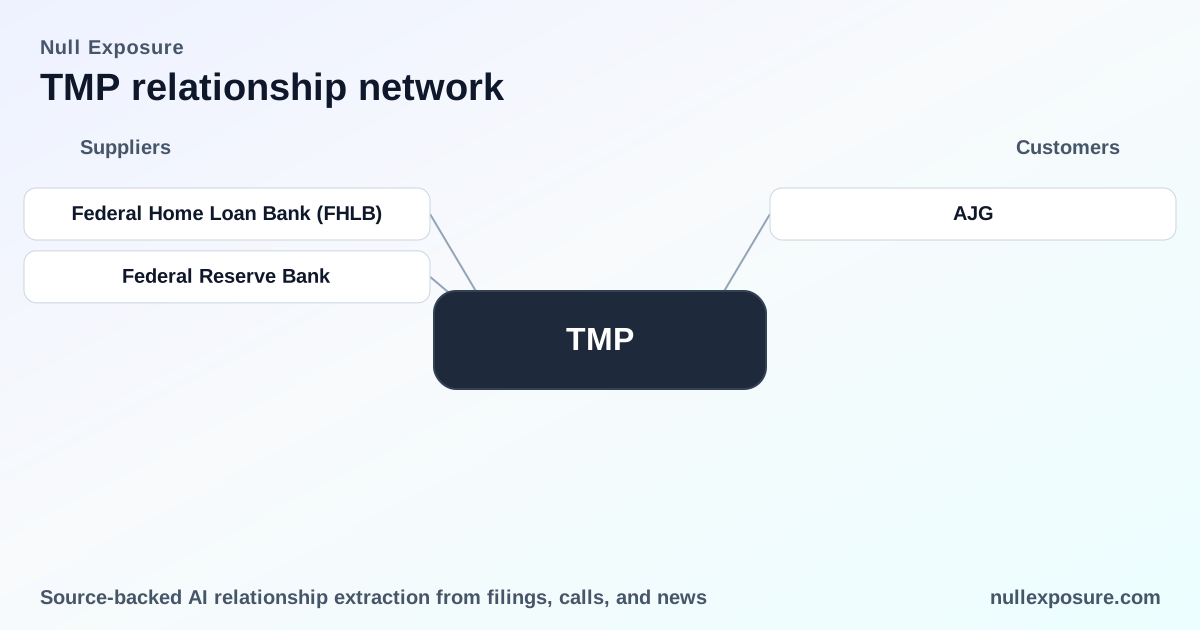
Federal Home Loan Bank (FHLB / FHLBNY)
Tompkins identifies the Federal Home Loan Bank of New York as its primary source of overnight funds and a provider of both short-term and long-term advances; the bank also uses FHLB advances to supplement deposits and to secure liquidity for growth. A CityBiz release summarizing TMP’s financial results references access to FHLB advances as a core element of liquidity management (company results, FY2026), and a second investor release covering FY2025 repeats the same point. According to corporate disclosures, inability to maintain FHLB access could materially constrain Tompkins’ financial flexibility. (Sources: CityBiz FY2026 and CityBiz FY2025 coverage; Greater Rochester Chamber FY2025 release.)
Federal Reserve Bank
Tompkins reports ready access to Federal Reserve facilities such as Discount Window advances, alongside Federal funds and repurchase agreements, positioning the Fed as a structural backstop for short-term liquidity. Public investor releases for FY2025 and FY2026 cite Discount Window access in the same paragraph that describes the company’s wholesale funding mix, underscoring the Fed’s role as a contingency lender-of-last-resort in TMP’s liquidity toolkit. (Sources: CityBiz FY2026 and Greater Rochester Chamber FY2025 coverage.)
Relationship snapshots (each relationship in the results)
- Federal Home Loan Bank (FHLB / FHLBNY): Tompkins uses the FHLBNY as its primary overnight funding source and also maintains longer-term advances and repurchase agreements with the bank; company statements flag the FHLB relationship as the most important counterparty for liquidity. (Source: CityBiz coverage of company financial results and Greater Rochester Chamber release, FY2025–FY2026.)
- Federal Reserve Bank: Tompkins lists Discount Window advances and Federal funds access among its wholesale funding options, using the Federal Reserve as an available backstop for short-term needs alongside brokered deposits and repos. (Source: CityBiz and Greater Rochester Chamber investor releases covering FY2025–FY2026.)
What the constraints tell investors about Tompkins’ operating model
The documented constraints reveal a coherent funding and counterparty profile:
- Short-term contract posture is dominant but not exclusive. Evidence cites repurchase agreements that typically mature within 30–90 days and the use of FHLBNY for overnight liquidity, signalling frequent refinancing activity that elevates roll risk under market stress.
- Long-term access exists alongside short-term reliance. The company also discloses longer-dated FHLB advances and repurchase agreements, which reduce but do not eliminate concentration and tenor risk.
- Government counterparties are central. FHLBNY is explicitly named as the most important counterparty, which is a double-edged operational characteristic: government-sponsored lenders provide stability in normal and stressed markets but also concentrate counterparty exposure.
- Geographic and collateral considerations are conventional for a regional bank. Membership in the FHLB system allows the company to pledge mortgage-related collateral to secure borrowings, anchoring liquidity to mortgage-asset availability.
- Relationship maturity and role are active and service-oriented. Disclosures present these counterparty ties as ongoing, operational relationships rather than occasional or one-off arrangements.
These constraints are company-level signals except where the excerpt explicitly names FHLBNY, in which case they function as relationship-level evidence.
If you want a deeper counterparty stress map or covenants summary for TMP’s funding lines, our platform has consolidated filings and coverage to speed diligence — visit https://nullexposure.com/ to start.
Investment implications: monitoring, risk and mitigants
For investors and strategic operators, these supplier relationships translate into actionable monitoring priorities:
- Primary risk — counterparty concentration and roll risk. Heavy reliance on FHLBNY and short-term repo facilities creates exposure to periods when collateral values or market liquidity deteriorate. Stress scenarios should model repo roll failure and constrained advance availability.
- Secondary risk — collateral and regulatory constraints. The ability to pledge unencumbered mortgage-related assets determines borrowing capacity with FHLB; balance-sheet composition therefore influences liquidity capacity as much as nominal lines.
- Mitigants in place. Tompkins’ operating metrics — strong profitability (ROE ~19.5%), solid book value and diversified fee businesses — reduce the probability that funding stress instantaneously translates into solvency risk. Institutional ownership and a conservative management posture historically support market reputation and funding access.
- Operational checklist for diligence. Investors should review (1) the composition and tenor of repo and brokered deposits, (2) the size and terms of FHLB long-term advances, (3) collateral availability and encumbrance, and (4) the bank’s contingency funding plan, including Discount Window governance.
Conclusion — what to watch next
Tompkins runs a pragmatic funding model that mixes short-term rollable instruments with long-term FHLB advances, anchored by government-backed counterparties. That model supports growth and margin stability in normal markets but concentrates liquidity risk in periods of market stress — a trade-off every regional-bank investor must price.
For a vendor-agnostic view of TMP’s counterparty exposure and to access the filings cited here, visit https://nullexposure.com/. If you need a tailored briefing on wholesale funding lines or a stress-test template for TMP, our research team can prepare a focused note — start at https://nullexposure.com/.