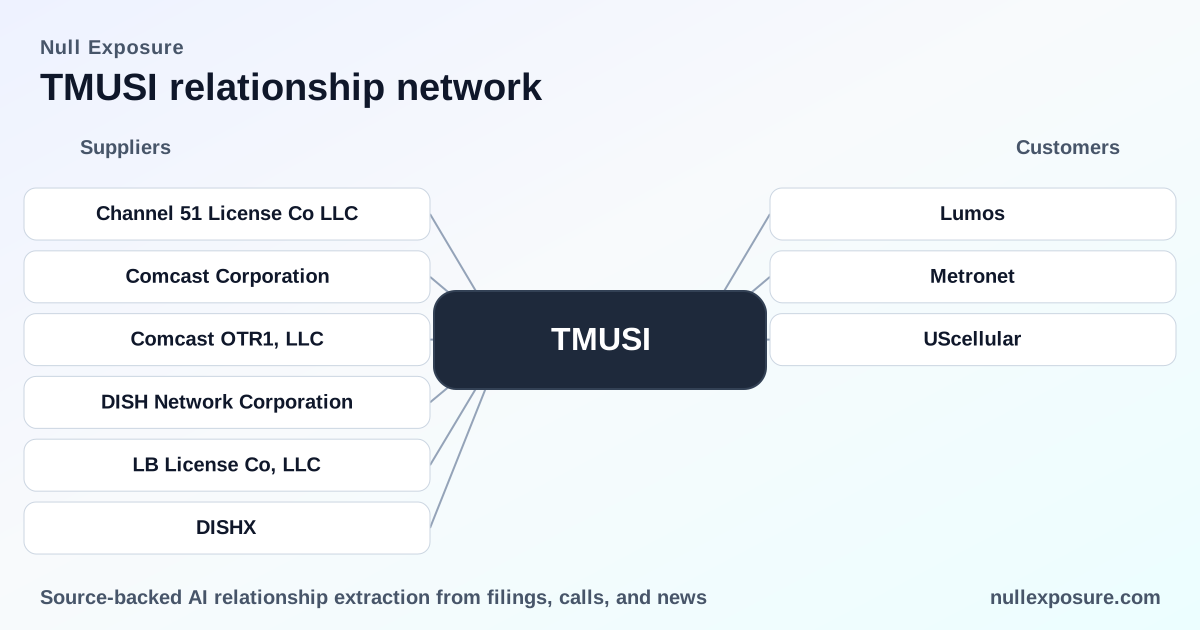
TMUSI Supplier Map: T‑Mobile’s Spectrum Deals and What They Mean for Credit and Operations
T‑Mobile monetizes primarily through wireless service subscriptions (postpaid and prepaid) and device sales while funding network expansion and strategic initiatives through long‑term capital markets instruments such as the 5.500% Senior Notes due June 2070 (TMUSI). Supplier relationships disclosed in the FY2025 10‑K are dominated by spectrum license transactions and device supply arrangements — both of which are material to network capacity, competitive positioning, and the company’s long‑dated credit profile. For a quick dive into additional supplier intelligence, visit https://nullexposure.com/.
Spectrum aggregation is a strategic lever — and a long‑dated commitment
T‑Mobile continues to grow its low‑band spectrum footprint through purchases from legacy spectrum holders and cable companies. These transactions are explicitly structured as license purchase agreements and are consequential because spectrum licenses are long‑term regulatory assets that underpin network coverage and ARPU upside. The FY2025 10‑K documents multiple counterparties and related transactions that reshape T‑Mobile’s asset base.
Channel 51 License Co LLC
T‑Mobile entered a license purchase agreement on August 8, 2022 to acquire 600 MHz spectrum from Channel 51 License Co LLC, making this entity a direct seller of low‑band spectrum to T‑Mobile. According to T‑Mobile’s FY2025 Form 10‑K, the Channel 51 sale is part of a set of 600 MHz deals the company executed to expand its low‑frequency holdings (FY2025 10‑K).
LB License Co, LLC
LB License Co, LLC joined Channel 51 as a co‑seller in the August 8, 2022 license purchase agreements through which T‑Mobile acquired 600 MHz licenses, further consolidating the company’s low‑band spectrum position. The transaction is disclosed in the FY2025 Form 10‑K and is presented as part of the same sellers group (FY2025 10‑K).
Comcast Corporation
On September 12, 2023, T‑Mobile executed a license purchase agreement with Comcast Corporation to acquire 600 MHz spectrum in a deal that contemplates cash consideration between $1.2 billion and $3.3 billion, subject to FCC approval — a sizeable strategic investment in low‑band capacity. The FY2025 10‑K explicitly describes the Comcast License Purchase Agreement and the conditional pricing structure (FY2025 10‑K).
Comcast OTR1, LLC
Comcast OTR1, LLC is listed as Comcast’s affiliate party in the September 12, 2023 license purchase agreement, and the FY2025 filing treats the two Comcast entities as joint sellers in the transaction whereby T‑Mobile acquires 600 MHz spectrum from Comcast (FY2025 10‑K).
DISH transactions: a two‑part relationship with cash and accounting impacts
DISH figures both as a counterparty in an earlier spectrum sale and as a source of later accounting gains tied to fee arrangements.
DISH Network Corporation (license sale)
T‑Mobile and DISH entered into a License Purchase Agreement dated July 1, 2020 under which DISH agreed to purchase certain 800 MHz spectrum licenses from T‑Mobile; the transaction represents a carve‑out of specific spectrum bands and is disclosed in the FY2025 10‑K. This 2020 agreement is a documented sale of legacy spectrum that altered the companies’ holdings (FY2025 10‑K).
DISH (extension fee gain recognized)
During the year ended December 31, 2024, T‑Mobile recognized a gain associated with a $100 million extension fee previously paid by DISH tied to the DISH License Purchase Agreement, reflecting a subsequent economic adjustment and accounting recognition disclosed in the FY2025 10‑K. The entry shows that the contractual relationship included contingent or time‑based fees that affected reported results (FY2025 10‑K).
How these relationships translate into operating constraints and risk signals
The FY2025 disclosures and the company’s constraint analysis reveal several company‑level operating characteristics that investors should fold into credit and counterparty assessments:
- Long‑term contracting posture: Spectrum licenses are issued for fixed multi‑year terms (commonly up to 15 years with routine renewals), which makes these supplier arrangements long‑dated and effectively durable capital commitments rather than short‑term procurement. This raises both asset permanence and regulatory dependency on the FCC framework (company‑level signal drawn from FY2025 disclosures).
- Licensee role and regulatory dependency: T‑Mobile acts as a licensee in recent 600 MHz purchases; success depends on FCC approvals and regulatory clearances, creating transactional conditionality on government action rather than pure commercial negotiation.
- Hardware exposure through manufacturers: The company sells customer devices sourced from third‑party manufacturers; this creates supply chain reliance in the hardware segment that translates to working capital and inventory risk, even if the dominant risk for long‑dated creditors is network and spectrum capital allocation.
- Maturity and criticality: Spectrum licenses are critical, non‑fungible assets for network coverage and service quality; their long maturity and strategic value make these supplier relationships highly consequential for long‑term cash flow stability.
What this means for TMUSI holders and counterparties
- Credit impact: Large, multi‑billion spectrum purchases (for example, the Comcast deal with a price band stated in the 10‑K) are financed out of corporate cash and long‑term liabilities; underwriters and bondholders should track incremental leverage and the allocation of proceeds against network CAPEX versus operating cash flow. Spectrum purchases are capital‑intensive and increase asset backing but also concentrate regulatory risk.
- Counterparty concentration and operational risk: Multiple sellers are legacy spectrum holders and cable affiliates rather than diversified vendors, so while supplier count is small, the criticality of each relationship is high because each transaction changes spectrum economics materially.
- Earnings sensitivity: Non‑operational items such as the $100 million extension fee tied to DISH illustrate that supplier agreements can have one‑time or timing effects on reported gains and thus on covenant metrics or coverage ratios.
For more detailed supplier intelligence and to compare TMUSI counterparties across filings, visit https://nullexposure.com/.
Final takeaways and investor action steps
- Spectrum acquisitions disclosed in the FY2025 10‑K are long‑term strategic purchases that materially affect network capacity and credit profiles.
- T‑Mobile operates both as a buyer and seller of spectrum—transactions with legacy holders (Channel 51, LB License Co) and with large cable players (Comcast and affiliate Comcast OTR1) change the scale and composition of low‑band holdings.
- Related accounting outcomes, such as the $100 million extension fee tied to DISH, demonstrate that supplier agreements produce both economic and reported earnings effects.
If you evaluate credit and supplier risk in telecom credits, these relationships warrant tracking through regulatory approvals, cash flow impact, and any contingent payments in counterparties’ agreements. For ongoing monitoring and deeper supplier maps, explore our work at https://nullexposure.com/.