TNL Mediagene (TNMG): supplier relationships that are already monetizing a media‑commerce pivot
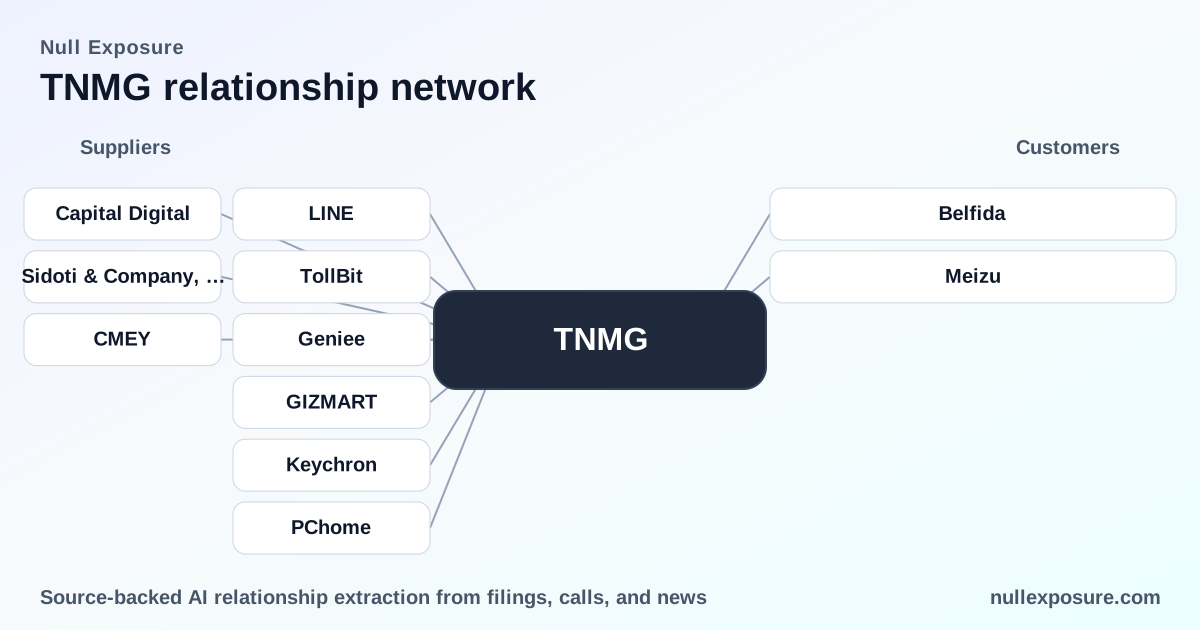
TNL Mediagene operates as a digital media and technology group that monetizes audiences through advertising, AI content licensing, and media‑commerce partnerships rather than through traditional product sales. The company bundles editorial brands, adtech (SaaS and audience products), and direct commerce projects to extract fees, revenue shares and licensing income from third‑party platforms and partners — turning content and audience attention into multiple revenue streams. For investors evaluating supplier exposure and counterparty risk, the partner map below clarifies where revenue is concentrated and which relationships are operationally critical. Explore a full supplier intelligence view at https://nullexposure.com/.
How TNMG actually makes money: media, adtech and commerce — in plain English
TNL has converted editorial reach into commercial products across three vectors: (1) AI-driven advertising and audience products sold or integrated into partner ad networks; (2) content licensing and AI licensing where its editorial assets are monetized on third‑party marketplaces; and (3) media‑commerce projects that launch co‑branded products on crowdfunding and e‑commerce platforms with a percentage of GMV captured by TNL. This multi‑pronged model creates recurring ad and SaaS‑like income as well as high‑velocity one‑off commerce cash flows that can materially lift revenue in short windows.
Bold takeaways: TNMG is already collecting revenue from AI licensing and commerce; its model is revenue‑share heavy and partner dependent, but scalable if brand and adtech integrations expand.
If you want a structured supplier risk report for portfolio allocation, start here: https://nullexposure.com/.
Supplier and partner map — short, actionable summaries
-
LINE — TNL has integrated the iGood Price‑Drop Radar into LINE in Taiwan to surface product tracking inside the messaging experience, reducing user friction and embedding commerce signals in conversations, which supports engagement and monetization. — PR Newswire (first reported Mar 10, 2026).
-
TollBit — TNL reports it has begun generating revenue through TollBit's AI licensing marketplace, integrating 15 media brands to monetize AI‑driven traffic and validating AI content licensing as a commercial channel. — Company press releases and investor updates (Dec 2025–Mar 2026).
-
Geniee — TNL has a strategic partnership to expand access to the Cr.ED advertising creative SaaS, combining TNL's media reach with a data‑powered creative platform to improve interactive ad production for marketers. — PR Newswire shareholder presentation (Mar 2026).
-
GIZMART — GIZMART is the media‑commerce platform used to launch product projects such as the Nape Pro; TNL leverages the platform as a sales and crowdfunding channel to convert content audiences into buyers. — PR Newswire launch announcement (Mar 10, 2026).
-
Keychron — A co‑development and co‑branded commerce partner; the Keychron Nape Pro trackball launched on crowdfunding and e‑commerce channels, achieved rapid GMV milestones (¥100M in 12 hours, >¥200M shortly after), and demonstrates the revenue‑share mechanics of TNL's commerce strategy. — PR Newswire and Sahm Capital reports (Dec 2025–Mar 2026).
-
PChome — TNL announced a strategic partnership with PChome, one of Asia’s large e‑commerce marketplaces, providing a distribution and fulfillment channel to scale product projects and reach broader retail audiences. — PR Newswire shareholder letter (Mar 2026).
-
Capital Digital (PICTOLINE) — TNL executed a licensing agreement with Capital Digital in Mexico to extend content licensing internationally and leverage local media brands, signaling cross‑border licensing ambitions outside Asia. — PR Newswire shareholder letter (Mar 2026).
-
Sidoti & Company, LLC — Independent research coverage from Sidoti highlights improved financial flexibility and operational focus at TNL, providing a sell‑side perspective that can influence liquidity and investor sentiment. — SahmCapital summary of Sidoti coverage (Dec 2025).
-
CMoney — TNL formed a strategic partnership to integrate CMoney’s retail data into TNL’s Ad2iction ad network and Ad2 AI Audience solution, deepening audience signals in Taiwan and strengthening programmatic and targeted advertising capabilities. — PR Newswire and Finviz reporting (Dec 11, 2025; reported Mar 2026).
Each of the above relationships is documented in public press releases and investment‑community summaries; these partners collectively represent advertising distribution, commerce monetization, AI licensing marketplaces, and regional e‑commerce reach, which together drive the company's current monetization mix.
What the partner mix tells investors about operating posture and constraints
There are no explicit vendor constraint excerpts included in the material, so the following are company‑level operating signals inferred from the relationship set and financial snapshots:
-
Contracting posture is commercial and revenue‑share oriented. TNL sells audience access, takes percentage of GMV on product launches, and licenses content to marketplaces; contracts are structured around performance and distribution economics rather than fixed‑fee, long‑term licenses.
-
Concentration is moderate and geographically diversified. Partnerships span Taiwan (LINE, CMoney, PChome), Japan (Keychron/GIZMART activity), and Latin America (Capital Digital), reducing single‑market concentration risk but keeping execution complexity high.
-
Criticality: several partners are operationally pivotal. Adtech and licensing partners that control distribution and data (TollBit, CMoney, ad partner networks) are critical to sustaining the ad‑revenue and AI‑licensing lines; commerce partners provide episodic but material GMV spikes.
-
Maturity: early monetization with proof points. Financials show Revenue TTM
$49.7M with negative EBITDA (‑$48M) and a market cap around $95.8M, indicating early stage commercial traction with ongoing profitability pressure; partnership wins have driven near‑term revenue but scaling will determine margins.
Use this supplier intelligence to stress test assumptions in your financial model or vendor risk scorecard. For a tailored supplier exposure analysis, see https://nullexposure.com/.
Investment implications — upside and risk, framed for allocations
Upside drivers:
- Rapidly monetizing commerce projects (Keychron/GIZMART) can produce outsized quarter‑to‑quarter revenue and prove the unit economics of media‑commerce.
- AI licensing and adtech partnerships (TollBit, Geniee, CMoney) convert audience assets into recurring, scalable revenue if adoption and pricing hold.
Primary risks:
- Partner concentration around distribution and data means a few counterparty disputes or integration issues could materially disrupt revenue.
- Profitability and liquidity pressure remain evident from negative EBITDA and relatively small market capitalization; operational execution must improve to sustain growth investments.
Bottom line and next steps
TNL Mediagene has transitioned into a partner‑centric media and commerce operator that extracts revenue through licensing, adtech integrations, and GMV shares from co‑branded commerce projects. The relationship network validates the strategy with real revenue streams — but investor returns will depend on the company’s ability to convert episodic commerce wins into predictable, margin‑accretive recurring revenue.
For a deeper supplier risk and commercial due‑diligence package tailored to your exposure, begin here: https://nullexposure.com/.
Explore the partner filings and press releases cited above to validate model assumptions and contract terms before adjusting position size.