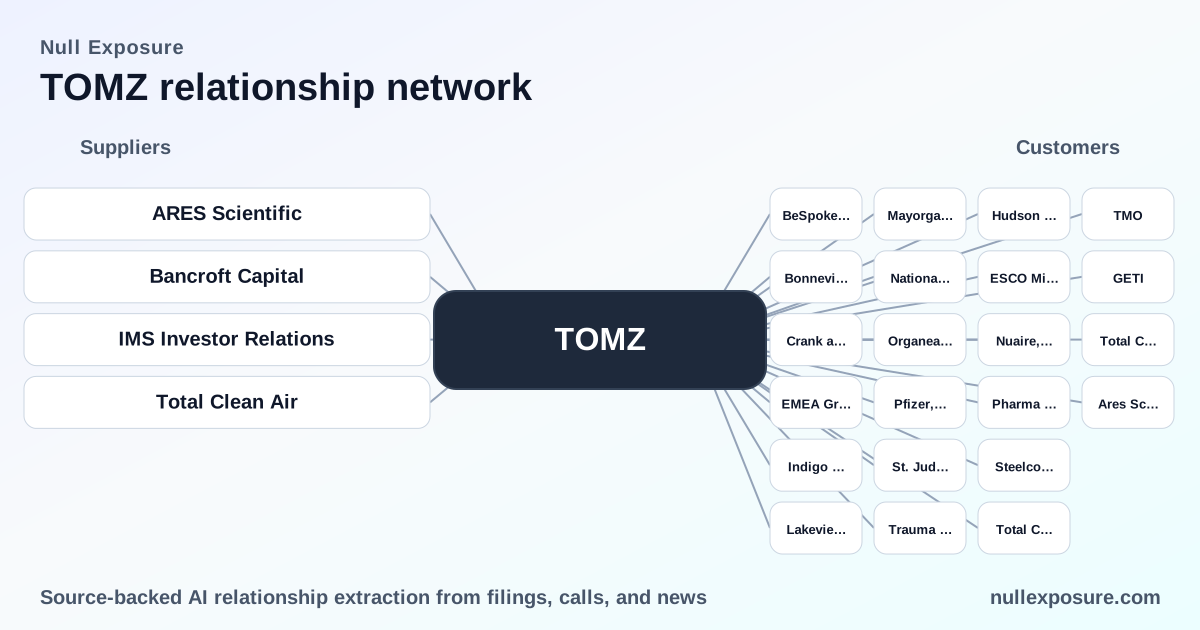
TOMI Environmental Solutions (TOMZ) — Supplier Relationships and Operational Risks Investors Should Price In
TOMI Environmental Solutions sells SteraMist iHP decontamination equipment, BIT™ consumables and related services through a mix of direct sales and channel partners; the company monetizes hardware sales, recurring consumable sales, and service/maintenance contracts, while using third‑party manufacturers and distributors to scale internationally. Investors should evaluate supplier concentration, warranty and manufacturing arrangements, and the role of capital markets advisors in supporting near‑term liquidity. For a deeper look at supplier and partner signals, visit https://nullexposure.com/.
How TOMI’s supplier footprint drives revenue and risk
TOMI outsources manufacturing of its core hardware and solution blending, relying on ISO9001‑registered manufacturers in multiple U.S. states and Australia to produce SteraMist equipment and BIT solution. Outsourced manufacturing reduces fixed capital but increases supplier concentration risk because a small number of vendors account for the bulk of cost of sales and payables. The company offsets some operational risk through distribution agreements in Europe and strategic placement advisors to support capital raises. These structural choices directly affect gross margin volatility and the company’s ability to deliver equipment on schedule.
The supplier and partner roster — what investors need to know
-
ARES Scientific
TOMI schedules strategic distributor meetings with ARES Scientific to expand adoption of its ionized Hydrogen Peroxide (iHP) technology, signaling an active channel strategy to reach laboratory and life‑science customers. According to a GlobeNewswire press release dated November 10, 2025, TOMI’s team planned engagement with ARES Scientific at the AALAS national meeting. -
Bancroft Capital
TOMI engaged Bancroft Capital in a strategic advisory and placement role connected to a $50 million universal shelf registration and an equity line of credit filing, using the firm to support near‑term financing and securities placement. This arrangement is disclosed in a GlobeNewswire filing on November 17, 2025. -
IMS Investor Relations
IMS Investor Relations (John Nesbett / Rosalyn Christian) is TOMI’s named investor relations contact and represented the company at investor conferences and earnings calls, centralizing external communications and investor engagement. TOMI listed IMS contact details in multiple press releases, including its December 4, 2025 Sidoti Year‑End Investor Conference announcement. -
Total Clean Air
TOMI appointed Total Clean Air as its preferred European partner for SteraMist iHP decontamination technology, establishing a dedicated distribution channel for Europe and enhancing go‑to‑market coverage on that continent. This appointment is documented in a GlobeNewswire release dated November 10, 2025.
Company‑level constraints and what they imply for operations
The public disclosures provide explicit signals about TOMI’s supplier posture:
-
Geographic manufacturing footprint (NA & APAC): The company reports manufacturing facilities in Pennsylvania, Delaware, New Jersey, North Carolina, California, and Australia; this is a company‑level signal indicating diversified manufacturing across North America and APAC, which reduces single‑country operational risk but does not eliminate concentration at the vendor level.
-
Manufacturer role and contracting posture: TOMI outsources manufacturing and blending, and its manufacturers assume warranty against product defects from date of sale, which TOMI then extends to customers. This contracting posture shifts warranty liability onto manufacturers contractually, improving TOMI’s balance‑sheet risk profile for warranty claims but creating dependency on manufacturer compliance and claims management.
-
Materiality and concentration: As of December 31, 2024, one vendor represented approximately 60% of accounts payable, and two vendors together accounted for 67% of cost of sales against total cost of sales of $4,181,764 for the year. These numbers are company‑level signals that confirm high supplier concentration and meaningful single‑vendor exposure.
-
Spend band and supplier maturity: Cost of sales and vendor concentration place key suppliers in the $1–$10 million spend band annually. The cited manufacturers are ISO9001‑registered, a maturity indicator that supports production consistency but does not eliminate operational disruption risk.
Collectively, those constraints point to a supplier model with outsourced production, concentrated spend, and contractually shifted warranty exposure — a configuration that delivers asset‑light scaling but concentrates counterpart risk.
What this means for margin, continuity and procurement strategy
-
Margin sensitivity: With two vendors accounting for roughly two‑thirds of cost of sales, gross margin is highly sensitive to supplier price changes, capacity constraints, or FX pass‑throughs. Investors should model scenarios where supplier pricing increases or volumes slip.
-
Continuity risk: ISO9001 certification reduces quality risk, but the concentration in a small vendor set elevates single‑point failure potential. Procurement for operators should plan dual sourcing and contractual continuity clauses where feasible.
-
Warranty and legal exposure: Because manufacturers assume initial warranty responsibility, TOMI reduces on‑balance warranty reserves; however, investors must monitor contract enforcement, supplier solvency, and the company’s ability to collect under those manufacturer warranties.
For operational teams and procurement, the immediate priorities are to lock in capacity, secure alternative suppliers for critical components, and negotiate price protection. For investors, the clear monitoring points are vendor receivable/payable concentration trends and any changes in manufacturing locations or contractual terms.
If you want a consolidated supplier risk briefing and benchmarking against peers, start with an overview at https://nullexposure.com/.
Tactical takeaways for investors and operators
- High supplier concentration is the primary single risk: One vendor at ~60% of payables and two vendors contributing 67% of cost of sales means revenue delivery and margins are materially exposed to vendor performance.
- Contracting reduces direct warranty liability but creates counterparty reliance: Manufacturer‑assumed warranties lower TOMI’s direct reserve requirements but raise dependency on supplier compliance and solvency.
- Geographic spread is beneficial but not decisive: Manufacturing in NA and Australia diversifies geography, but concentration at vendor level preserves operational fragility.
For executives assessing vendor relationships, restructure negotiations should prioritize capacity guarantees, price collars, and clear warranty enforcement clauses. For investors, tracking quarterly disclosure on accounts payable composition and any changes to named manufacturers will be critical.
Visit https://nullexposure.com/ to access consolidated supplier profiles and scenario models tailored to TOMI’s concentration signals.
Conclusion — actionable next steps
TOMI’s supplier configuration supports rapid scale via outsourcing and channel partnerships but introduces material concentration and continuity risk that investors must price into valuation and scenario analyses. The combination of ISO9001 manufacturing, a European distribution partner, and capital markets advisory engagement shapes a capital‑efficient, channel‑driven model with concentrated vendor dependency. Recommended next steps: (1) monitor vendor concentration metrics in quarterly filings, (2) validate contractual warranty enforceability with named manufacturers, and (3) evaluate the company’s contingency sourcing plans.
For a deeper supplier risk assessment and peer benchmarking, visit https://nullexposure.com/ and request an investor‑grade briefing.