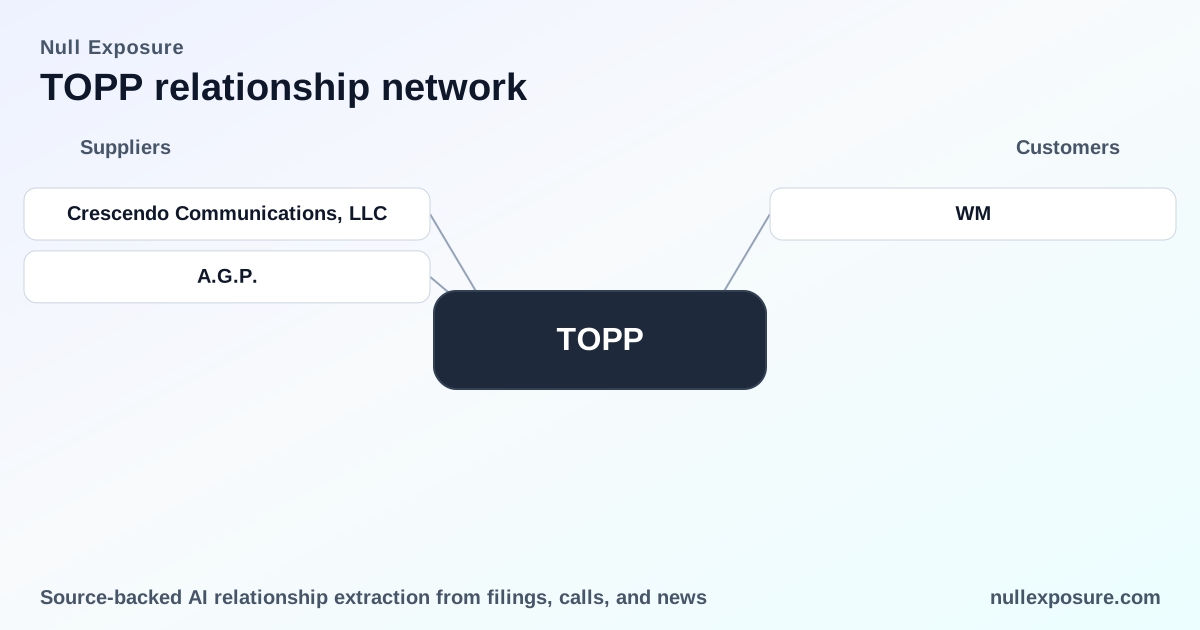
Toppoint Holdings (TOPP): Supplier relationships that drive the trucking business
Toppoint Holdings operates as a trucking and freight services company that monetizes transportation capacity through a leased owner‑operator model and related equipment procurement. The company directs and supervises owner‑operator trucks as leased vehicles, collects freight revenue, and outsources key services—investors should treat supplier links and related‑party vendors as direct operational levers that shape margins, cash flow timing, and capital intensity. For a centralized view of supplier counterparty exposure and how it affects valuation, visit https://nullexposure.com/.
Where supplier relationships matter most for investors
Toppoint’s operating model is built around three practical realities that make supplier relationships high‑impact: (1) trucks are the core production asset and are controlled through leased owner‑operators; (2) payments to drivers and dispatch vendors are short and recurring, driving working capital dynamics; and (3) the company relies on related‑party vendors for both services and capital equipment purchases at materially non‑trivial dollar levels. These are company‑level signals drawn from the firm’s disclosures for the year ended December 31, 2024.
- The owner‑operator leasing structure gives the company operational control without full asset ownership, which compresses capital requirements but increases reliance on contract terms and vendor performance.
- Short payment terms to owner‑operators (7 days after delivery documentation) tighten cash‑flow timing and elevate the importance of predictable receivables and supplier financing.
- Related‑party spend in the mid‑six to seven figures (dispatch services and chassis purchases) creates concentration and reputational risk that investors must price into liquidity and governance assessments.
If you want a deeper counterparty map to inform supplier risk premiums, start with the company overview at https://nullexposure.com/.
Documented relationships in the public record
Crescendo Communications, LLC — GlobeNewswire press release (FY2025)
Crescendo is listed as the investor relations contact for Toppoint in a corporate press release announcing strategic activity; the firm functions as the company’s public communications/IR adviser. According to a GlobeNewswire press release dated May 27, 2025, investor relations inquiries were routed through Crescendo Communications, LLC, including contact details for TOPP investor relations.
A.G.P. — Renaissance Capital IPO coverage (FY2025)
A.G.P. acted as the sole bookrunner on Toppoint’s recent offering, establishing a direct underwriter relationship that framed the public float and initial pricing. Renaissance Capital reported that A.G.P. served as sole bookrunner when Toppoint priced its IPO at $4 per share during FY2025.
Crescendo Communications, LLC — Yahoo Finance syndication (FY2025)
The Crescendo IR relationship is corroborated in broader press syndication; a Yahoo Finance article reproducing the company release also shows Crescendo as the designated investor relations contact for TOPP. The Yahoo Finance story restated the same IR contact details originally published in the company’s FY2025 press materials.
What the constraints and disclosures reveal about operating posture
Toppoint’s public filings and press materials embed several company‑level constraints that define supplier risk and contracting posture:
- Service provider contracting posture: The company explicitly reports that trucks are owned by independent owner‑operators but are under Toppoint’s exclusive direction as leased vehicles, and the company pays owner‑operators within 7 days after submission of required delivery documents. This creates a vendor relationship characterized by operational direction with rapid settlement, tightening short‑term liquidity dependencies.
- Spend scale and concentration: Filings show rent expense in the $100k range for the year ended December 31, 2024, and related‑party payments of $628,200 for dispatch services plus $1,174,855 in truck chassis purchases during the same period. These figures place several supplier relationships in the mid‑six to low‑seven figure band—enough to be material to a company with roughly $16.1 million in trailing revenue.
- Related‑party dependence and governance signal: The presence of significant payments to related parties—one identified as a family member of the CEO—constitutes a governance hotspot that affects counterparty risk, procurement terms, and potential conflicts over pricing and quality.
- Maturity and capital intensity: The chassis purchases signal periodic capital procurement for fleet capability rather than simple operating purchases, indicating supplier relationships that are strategic and intermittent rather than purely transactional.
Together these signals point to an operationally critical supplier set that is concentrated, partially related‑party, and capable of moving cash flow and service reliability materially.
Operational and investment implications
For investors and operators evaluating TOPP supplier exposure, three practical implications follow:
- Working capital sensitivity: The 7‑day payout cadence to owner‑operators creates a persistent working capital requirement; any slowdown in receivables collection or credit squeeze will compress margin and could force short‑term financing.
- Concentration and counterparty risk: Related‑party dispatch services and chassis purchases at sizable dollar levels concentrate procurement risk and raise governance questions. A disruption with a related vendor would have outsized operational impact given the company’s fleet control model.
- Underwriting and public market transition: The role of A.G.P. as sole bookrunner defines the initial investor base and liquidity profile; early underwriter relationships matter for aftermarket behavior and access to future capital.
Key takeaway: investors should price a premium for counterparty and governance risk while recognizing that the leased owner‑operator model reduces fixed capital but shifts risk to supplier performance and short payment cycles.
If you want a structured counterparty risk report and supplier scoring for TOPP, see the research hub at https://nullexposure.com/ — it lays out vendor concentration, related‑party flags, and cash‑flow sensitivity in a single place.
Bottom line: what to watch next
Toppoint’s supplier footprint is concentrated, operationally critical, and intertwined with related‑party vendors—this is an essential input for valuation and credit assessment given the company’s modest revenue base and negative operating margins. Monitor three items closely: (1) receivables and days‑sales‑outstanding that affect the 7‑day payout cycle; (2) any changes in related‑party agreements or procurement sourcing that could reduce concentration; and (3) the secondary market performance and liquidity established after the A.G.P.‑led offering.
For investors constructing a thesis on TOPP, supplier exposure and governance are central risk levers—start your diligence at https://nullexposure.com/ for a concise supplier risk scorecard and follow‑up materials.