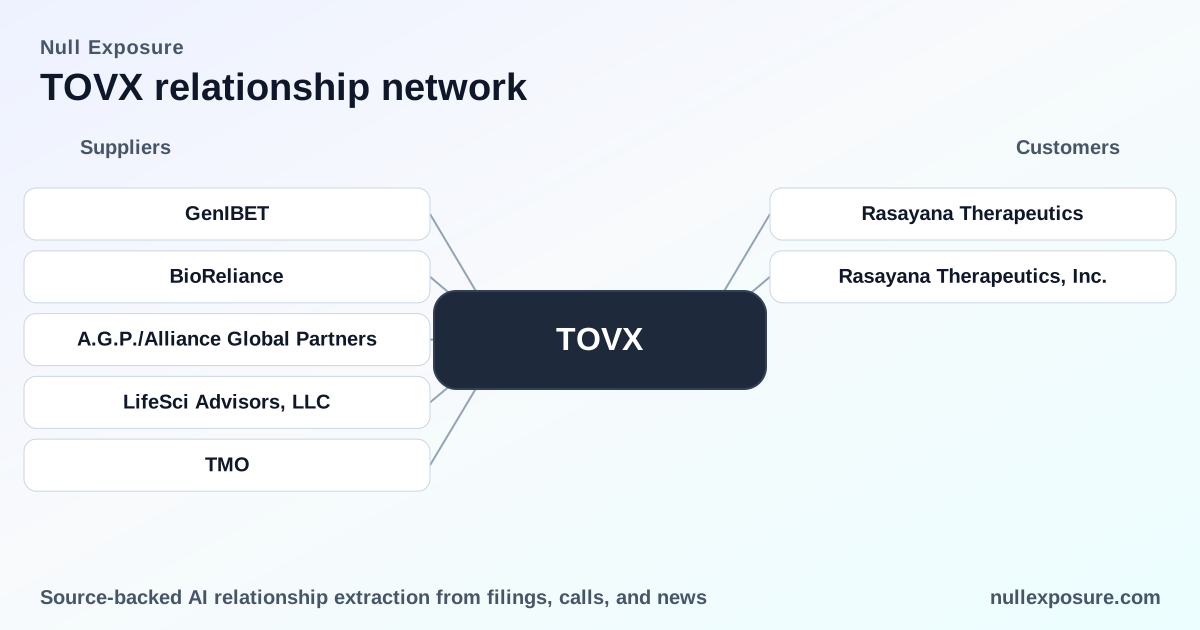
Theriva Biologics (TOVX) supplier map — what investors need to know
Theriva Biologics is a clinical-stage biotech that develops oncolytic virus therapies and relies on third-party manufacturing and advisory relationships to advance molecules toward commercial readiness. The company monetizes primarily through R&D progress that enables licensing, partnering, and capital markets financings; near-term cash flow depends on capital transactions and investor outreach rather than product revenue. For investors evaluating counterparty exposure, the relevant signal is that Theriva contracts out critical manufacturing and investor-relations functions, creating concentrated operational and financing dependencies that directly affect timeline and valuation risk.
Explore deeper supplier intelligence at https://nullexposure.com/.
Why supplier relationships matter more than the headline market cap
Theriva’s enterprise value is driven by clinical progress and capital access, not product sales: no revenue reported in TTM metrics and a market capitalization near $6.4 million (latest data). That profile makes supplier and advisor relationships operationally and financially material — disruptions to CDMOs or key service providers can delay trials, increase burn, and force dilutive financings. The company’s 10‑K explicitly lists several CDMOs and external service providers as part of its development and manufacturing strategy, signalling a deliberate outsourcing model rather than vertical integration.
Key commercial characteristics:
- Contracting posture: Reliance on third-party CDMOs and CROs for API and drug product manufacturing and clinical services. Theriva does not own commercial-scale production capacity.
- Concentration and criticality: Manufacturing partners supply APIs and clinical batches; failures would have a material adverse effect on development timelines and costs.
- Maturity: Relationships are operational and active across clinical stages, not merely exploratory.
- Spend profile: External spend clusters in the mid-six-figure to low-seven-figure bands for audit, lease and CRO accruals — meaning service providers represent meaningful recurring cash commitments.
If you evaluate counterparties for portfolio or operational exposure, this outsourcing posture elevates supplier risk relative to capital market and trial execution risk. For a concise supplier dossier, visit https://nullexposure.com/.
Confirmed suppliers and advisors — what the filings and press releases show
Below are every relationship identified in Theriva’s public materials and press mentions, with a one- to two-sentence plain-English summary and the source cited in-line.
Thermo Fisher (TMO)
Theriva contracts with Thermo Fisher as one of its named CDMOs for synthesizing oncolytic viruses and developing manufacturing processes used in clinical supplies. According to Theriva’s FY2024 Form 10‑K, Thermo Fisher is listed among CDMO collaborators for virus production.
BioReliance
BioReliance is listed alongside other contract manufacturers that provide biologics synthesis and testing services for Theriva’s oncolytic virus platform. The company named BioReliance in its FY2024 Form 10‑K as a partner in production processes for clinical material.
GenIBET
GenIBET is cited in Theriva’s regulatory filing as a CDMO collaborator helping to synthesize and scale the company’s oncolytic viruses for clinical use. Theriva’s FY2024 Form 10‑K includes GenIBET in the list of contract and development manufacturing organizations.
A.G.P. / Alliance Global Partners
A.G.P. served as exclusive financial advisor on a warrant inducement transaction that raised gross proceeds for Theriva, reflecting the firm’s role in structuring capital-market financings. This involvement was disclosed in a GlobeNewswire press release describing the October 2025 financing and reiterated by a Yahoo Finance summary of the same transaction.
LifeSci Advisors, LLC
LifeSci Advisors is Theriva’s investor relations firm and is repeatedly listed as a contact for investor communications and company announcements in October 2025 filings and press statements. GlobeNewswire releases and subsequent market coverage list Kevin Gardner at LifeSci Advisors as the investor-relations contact, and a stock-focused announcement in early 2026 reiterated that relationship.
What the company-level constraints tell investors
The constraints extracted from public filings present a consistent, company-level picture: supplier relationships are material, operationally active, and primarily manufacturing- and service-oriented. Those excerpts convey the following signals:
- Materiality: Theriva’s filings state that supplier failures could have a material adverse effect on operations and financial results, underscoring counterparty risk as a valuation driver. This is a company-level assertion about the impact of supply interruptions.
- Roles: The company distinguishes between manufacturers (CDMOs for API and drug product) and service providers (CROs, consultants, auditors), both of which are integral to trial execution and reporting.
- Stage: Relationships are described as active—the company relies on contracted clinical supplies and has accrued CRO expenses—indicating these are not preliminary engagements but operational commitments.
- Spend profile: Public accounting and disclosure items show audit fees, lease costs, and CRO accruals in the $100k–$10m bands, signaling meaningful and recurring external spend.
Those company-level constraints signal that counterparty performance, contractual terms, and continuity of supply are strategic risk factors for TOVX investors.
Practical investment implications and a short risk checklist
- Timeline risk is supplier risk. Any manufacturing or CRO failure will likely translate into trial delays and extra cash burn. That is a direct valuation lever for a pre‑revenue biotech.
- Financing dependence is visible. The use of warrant inducement financings and an external financial advisor indicates reliance on capital markets; advisor relationships therefore connect operational needs to financing execution.
- Concentration risk exists but is monitorable. The 10‑K names a small set of CDMOs (Thermo Fisher, BioReliance, GenIBET), so counterparty concentration is measurable and can be mitigated via multi-source procurement or contractual protections.
- Service maturity is mid-stage. Active accruals for CRO services and defined audit and lease expenses indicate ongoing operational maturity rather than early-stage informality.
Investors should prioritize contract terms (supply continuity, indemnities, lead times) and track press releases for advisor-led financings that affect dilution and runway. For a supplier risk scorecard and ongoing monitoring, check https://nullexposure.com/.
Bottom line: supplier relationships are strategic value drivers
Theriva’s path to commercial value flows through external manufacturers and capital markets intermediaries. CDMOs and investor-relations/financial-advisory firms are not peripheral — they are critical enablers whose performance and contractual terms shape development timelines and funding needs. For investors, the actionable work is not discovering these names but interrogating contracts, production timelines, and financing cadence that bind them to Theriva’s clinical program.
For a structured supplier-risk briefing or to subscribe to continuous supplier monitoring for TOVX and peer names, visit https://nullexposure.com/.