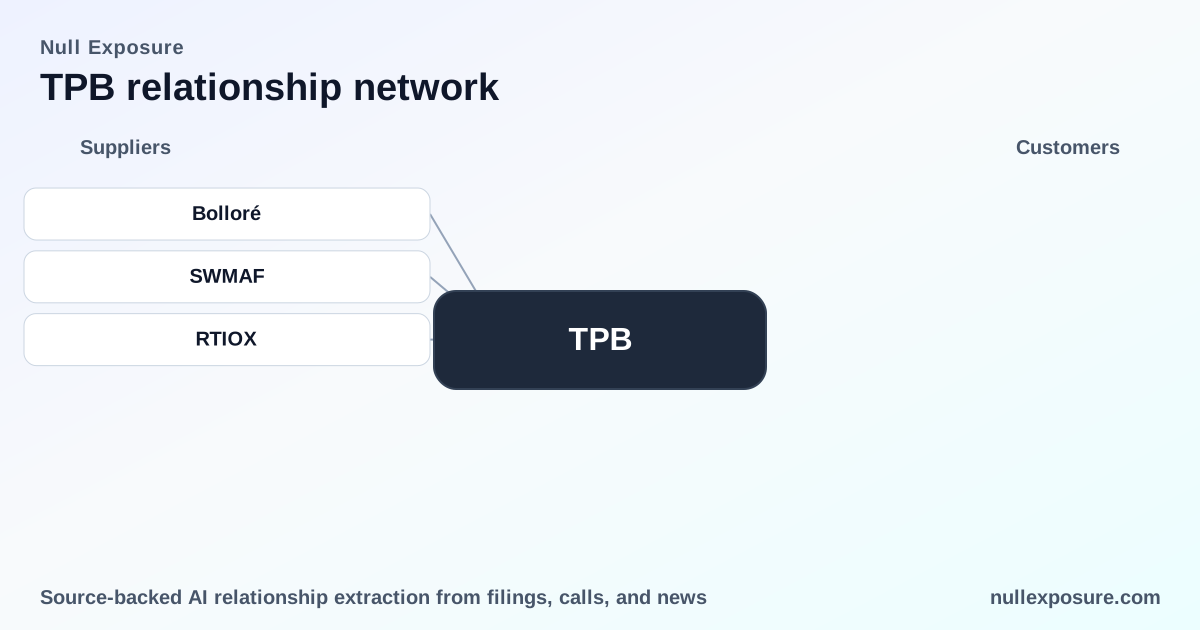
Turning Point Brands (TPB) — supplier relationships that drive product availability and margin
Turning Point Brands monetizes through manufacturing, licensing and distribution of tobacco and smoking-accessory products, relying on a small set of contractual supplier relationships for both finished goods and branded inputs. TPB sells finished products and retains margin through exclusive access and distribution arrangements (e.g., Zig‑Zag cigarette papers) while outsourcing roughly 70% of production to third‑party manufacturers. These supplier arrangements create stable product supply and brand exclusivity, but concentrate counterparty risk and expose TPB to regional sourcing constraints. Learn more about supplier risk and relationship monitoring at https://nullexposure.com/.
The three supplier relationships that matter now
Swedish Match (SWMAF)
Swedish Match produces all of TPB’s loose‑leaf chewing tobacco sold in the U.S., making it a single-source producer for a core product line. According to TPB’s FY2024 Form 10‑K, Swedish Match was identified as one of TPB’s two most important suppliers in 2024. (TPB FY2024 10‑K)
RTI (RTIOX)
RTI provides TPB with exclusive access to the Zig‑Zag cigarette paper brand and related accessories in the U.S. and Canada, a distribution and brand arrangement that underpins sales and shelf presence for Zig‑Zag products. TPB’s FY2024 10‑K lists RTI as one of its two most important suppliers in 2024, citing exclusive access to Zig‑Zag products. (TPB FY2024 10‑K)
Bolloré
Bolloré originally held Distribution and License Agreements for Zig‑Zag, but in November 2020 Bolloré sold U.S. and Canadian trademark rights for Zig‑Zag to RTI and assigned the underlying Distribution and License Agreements to RTI. This assignment explains the current contractual route for Zig‑Zag exclusivity. TPB documents this assignment in its FY2024 10‑K. (TPB FY2024 10‑K)
How these relationships shape TPB’s operating and risk profile
TPB’s supplier posture is contractually concentrated and operationally critical. The company discloses that approximately 70% of production (by net sales) is outsourced to suppliers, which signals a deliberate strategy to keep manufacturing off‑balance‑sheet while preserving brand and distribution control. That outsourcing level produces predictable cost structure benefits but concentrates operational risk: a disruption at a primary supplier would directly affect product availability and revenue.
Two geographic signals are important for investors evaluating geopolitics and supply‑chain volatility:
- TPB sources a substantial portion of a joint‑venture’s products from China for the Creative Distribution Solutions JV, creating APAC supply‑chain exposure and import risk.
- Under the Distribution Agreements, TPB is required to buy cigarette papers, tubes and injector machines from a supplier in France, establishing a European sourcing constraint that limits immediate supplier substitution.
Both excerpts are listed as company‑level signals in TPB’s risk disclosures and should be treated as structural constraints on procurement flexibility rather than temporary sourcing choices.
TPB also emphasizes a reliance on third‑party professional service providers: external consultants for ITGCs, internal audit, risk management and compliance, and an independent registered public accounting firm for audited financial statements and internal control assessments. This indicates mature governance and third‑party oversight but also ongoing vendor management needs.
Contracting posture, concentration, criticality and maturity — what investors should monitor
- Contracting posture: TPB uses long‑term Distribution and License Agreements to secure exclusive brand access and dedicated supply lines (e.g., Zig‑Zag). These contracts support brand premium and predictable margins but create renewal and counterparty concentration risk.
- Concentration: With two suppliers identified as “most important” in FY2024 (Swedish Match and RTI) and roughly 70% of production outsourced, TPB’s supplier base is concentrated, increasing single‑vendor leverage over production and pricing.
- Criticality: Suppliers provide exclusive or single‑source inputs (Zig‑Zag papers; U.S. loose‑leaf tobacco production), so supplier outages are directly revenue‑affecting rather than merely costly.
- Maturity and controls: The use of specialized consultants and an external auditor indicates TPB has invested in control frameworks and vendor oversight, reducing but not eliminating third‑party operational and compliance risk.
Visit https://nullexposure.com/ for supplier concentration dashboards and contract‑risk scoring to help prioritize engagement and oversight.
Practical investor takeaways and monitoring checklist
- Watch contract expirations and assignment clauses for Zig‑Zag and other branded arrangements—assignment history (Bolloré → RTI) shows these contracts can change legal counterparty while preserving commercial exclusivity. (TPB FY2024 10‑K)
- Track single‑source exposure to Swedish Match for loose‑leaf chewing tobacco; any production disruption or pricing renegotiation there would have immediate P&L implications. (TPB FY2024 10‑K)
- Monitor regional supply risks: APAC sourcing from China via the JV and the requirement to source papers/tubes from a French supplier create geopolitical and trade‑policy sensitivity that should be stress‑tested in scenario analyses.
- Validate governance and remediation plans tied to third‑party consultants and auditors: mature controls exist, but oversight of outsourced production and third‑party service providers is critical to operational resilience.
Final assessment
TPB’s commercial model leverages exclusive brand access and a high degree of outsourced manufacturing to preserve capital efficiency and margin. The trade‑off for investors is clear: predictable shelf presence and brand economics versus elevated counterparty and regional supply concentration risk. Swedish Match and RTI are operationally critical, while the Bolloré assignment history demonstrates how brand rights and distribution counterparty can change without altering market access.
For a focused view on contractual concentration and supplier risk exposure, consult the Nillexposure supplier monitoring tools and scenario analyses at https://nullexposure.com/.