Tempest Therapeutics (TPST): Supplier map, strategic dependencies and what investors should price in
Tempest Therapeutics is a clinical-stage oncology company that develops targeted small molecules and immune-mediated therapies and now expands into CAR‑T through strategic deals; the firm monetizes through clinical asset development, collaborator-supplied drugs for pivotal trials, milestone-linked partnerships, and equity-financed acquisitions that extend runway and create near-term value catalysts. Investors should evaluate Tempest as a project-stage operator whose value hinges on partner-supplied clinical materials, adviser-led transactions, and successful integration of acquired cell‑therapy assets. For an operationally focused supplier-risk assessment, see more at https://nullexposure.com/.
How Tempest runs the business: contracting posture and commercial reality
Tempest does not operate a vertically integrated manufacturing chain. Instead the company runs a lean, partnership-first model: strategic supply agreements, outsourced CRO/CMO manufacturing and distribution, and occasional M&A to acquire clinical programs. That operating posture concentrates operational risk but preserves capital.
Key operating signals and implications:
- Framework clinical supply with Roche: Tempest has a master clinical supply agreement that allows Roche to provide atezolizumab for planned studies via study-specific supplements, establishing a structured long-term supply channel with reduced procurement cost and execution risk for the sponsored trial. (Roche supply agreement language disclosed October 2024.)
- Long-term real estate commitment: The company has a multi‑year office lease (8 years), showing fixed operating overhead and a longer-term physical footprint. (Lease disclosed January 2022.)
- Outsourcing and single‑source risk: Tempest relies on third‑party CROs, CMOs and service providers for discovery, testing, manufacturing, packaging and distribution — this is a critical dependency that can delay trials or increase costs if a supplier fails or is single-sourced.
- Contract mix: Contracts include framework and term-supplement structures plus cancelable short-term arrangements; this gives program flexibility but also creates step-change risk around renewal and scale-up events.
- Financial posture: Spend signals and reported obligations put near-term cash needs in the low‑millions band; Tempest uses capital markets transactions and placement agents to raise financing.
The mix above implies a high operational leverage to successful partner execution and a funding profile that will require continued access to capital or non‑dilutive collaboration milestones. Learn more about supplier and counterparty signals at https://nullexposure.com/.
Line‑by‑line: every supplier, advisor and counterparty in the record
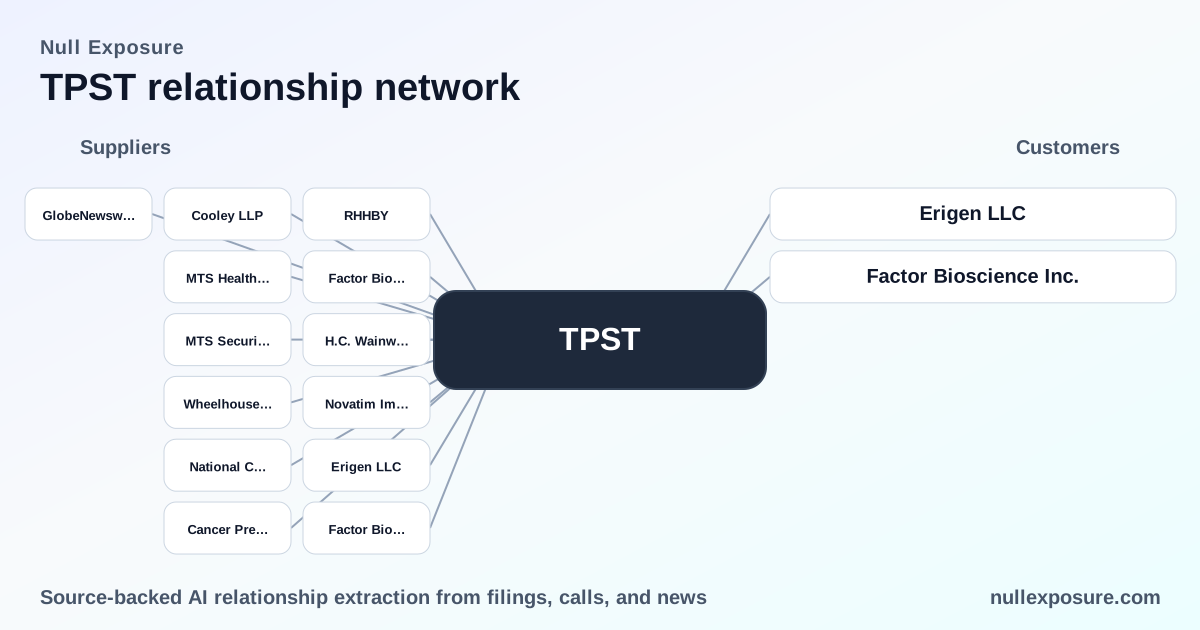
Below I cover every named relationship captured in the available public notices and filings, with a concise investor-facing takeaway and source.
-
Roche — Tempest entered a master clinical supply arrangement under which Roche will supply atezolizumab (TECENTRIQ) globally while Tempest sponsors and leads the pivotal first-line hepatocellular carcinoma study, with study‑specific supplements determining quantities and delivery timelines. Source: Tempest press release via GlobeNewswire describing the Roche Supply Agreement (Oct 2024).
-
Factor Bioscience Inc. — Tempest announced definitive agreements to acquire certain dual‑targeting CAR‑T programs from Factor in an all‑stock transaction, a strategic M&A move that materially alters Tempest’s therapeutic mix and runway profile. Source: GlobeNewswire press release announcing the proposed acquisition (Nov 19, 2025) and subsequent closing note (Feb 4, 2026).
-
H.C. Wainwright & Co. — Served as the exclusive placement agent for Tempest’s registered direct offering and concurrent private placement of warrants, facilitating immediate capital raises to support operations and portfolio growth. Source: GlobeNewswire press releases (Nov 25–26, 2025) and related QuiverQuant coverage.
-
Novatim Immune Therapeutics — Novatim is Tempest’s in‑market development partner in China for TPST‑2003, meaning the company delegates regional development execution and regulatory interactions for that program. Source: SEC filing (Exhibit disclosure referencing Novatim) and follow‑up GlobeNewswire items (FY2026).
-
Erigen LLC — Named as a counterparty in Tempest’s asset purchase agreement and warrant distribution mechanics tied to the Factor/Erigen assets, indicating an affiliate-level transaction structure that impacted equity allocation and shareholder dilution considerations. Source: GlobeNewswire and Markets FinancialContent reporting on the Asset Purchase Agreement and warrant distribution (Jan–Nov 2025/2026).
-
Cooley LLP — Acted as legal advisor to Tempest on the CAR‑T acquisition and related transactions, providing deal and securities counsel for the all‑stock purchase and closing actions. Source: QuiverQuant coverage and GlobeNewswire deal announcements (Nov 2025; Feb 2026).
-
MTS Health Partners, L.P. — Served as financial advisor to Tempest in connection with the acquisition of CAR‑T programs from Factor, and its affiliate provided a fairness opinion to the Tempest board. This highlights the use of boutique healthcare M&A advisory to validate valuation and structure. Source: QuiverQuant and GlobeNewswire disclosures (Nov 2025; Feb 2026).
-
MTS Securities, LLC — Affiliate of MTS Health Partners that provided the board fairness opinion regarding the purchase price for the Factor transaction, an important governance signal around transaction rigor. Source: GlobeNewswire filings and QuiverQuant (FY2025–FY2026).
-
National Cancer Institute — The NCI agreed to fund and support a Phase 2 study of TPST‑1495 in familial adenomatous polyposis (FAP), offering non‑dilutive funding and clinical validation channels for that program. Source: Tempest press release summarizing the trial sponsorship and funding by the NCI (Feb 2026).
-
Cancer Prevention Clinical Trials Network — Identified as the operational partner to run the NCI‑funded Phase 2 TPST‑1495 study, providing trial infrastructure and patient‑recruitment capabilities for the registrational pathway. Source: GlobeNewswire press release detailing study operationalization (Feb 2026).
-
Wheelhouse Life Science Advisors — Listed repeatedly as Tempest’s investor and media contacts across press announcements, indicating Wheelhouse handles external communications and investor relations outreach for the company. Source: Yahoo Finance and GlobeNewswire press releases that include Wheelhouse contact information (FY2024–FY2026).
-
GlobeNewswire — Used as the distribution channel for Tempest’s public disclosures and press releases on financing, M&A, and trial updates; multiple company announcements were released via GlobeNewswire. Source: Multiple GlobeNewswire press releases cited across FY2024–FY2026.
What these relationships mean for the investment case
- Roche supply and NCI funding are strategic de‑riskers: the Roche framework removes drug procurement friction for a pivotal trial and NCI funding allocates non‑dilutive resources to a second program, improving execution odds for near‑term milestones.
- Acquisition transforms the company into a hybrid developer (small molecules + cell therapy): Factor’s CAR‑T programs and the integration process change clinical, manufacturing and capital needs — investors must price in higher near‑term dilution risk but also new upside from cell‑therapy milestones.
- Operational fragility is concentrated: reliance on third‑party CMOs/CROs, cancelable short‑term contracts and single‑source manufacturing options creates critical supplier exposure that can affect timelines and costs.
- Advisors and placement agents are active: use of MTS and H.C. Wainwright shows Tempest is actively managing financing and transaction execution; consider governance and fairness opinion disclosures when assessing deal economics.
If you want a structured supplier-risk scorecard or a counterparty concentration table for TPST, run a targeted review at https://nullexposure.com/.
Investment implications and next steps
Tempest is transitioning from a small‑molecule pure‑play into a partner-driven, multi‑modality developer that relies on supply frameworks, public capital markets and adviser‑led transactions. Key investor triggers are Roche-supplied pivotal trial enrollment, clinical readouts on acquired CAR‑T programs, NCI‑funded trial milestones, and any further capital raises or equity allocations tied to the Factor transaction.
To track these operational dependencies and counterparty events in real time, visit https://nullexposure.com/ and review the TPST supplier and partner monitor.
Bottom line: Tempest’s partner list provides both execution leverage and concentrated supplier risk — price the company as a trial-stage operator where partner performance and financing cadence will dominate short‑term valuation movements.