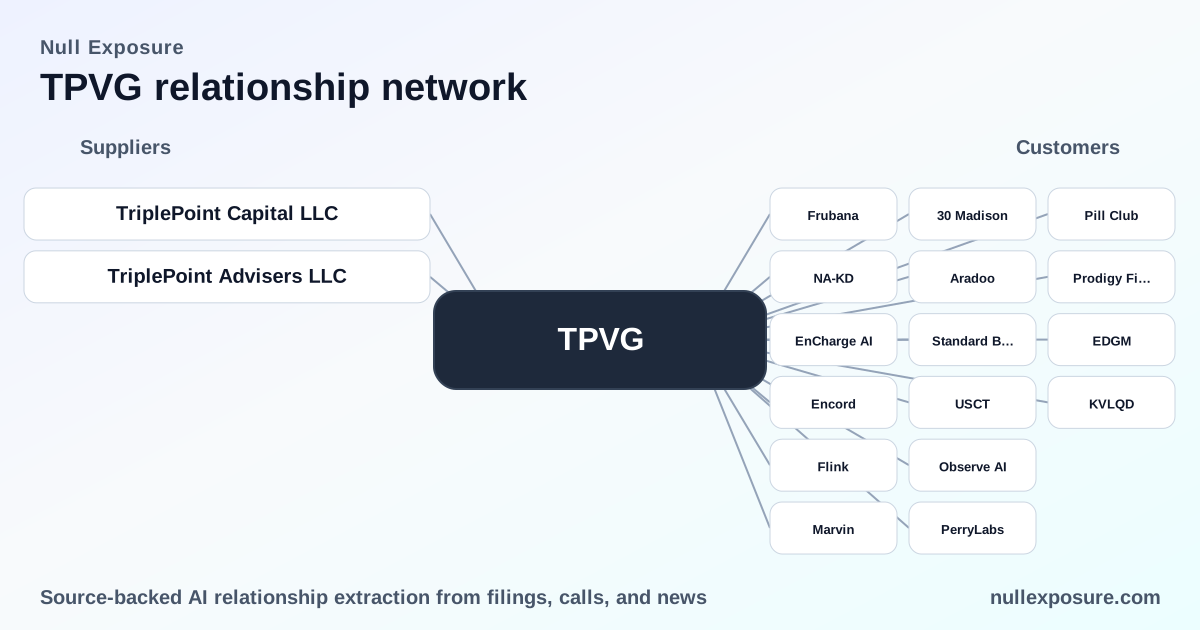
TriplePoint Venture Growth BDC (TPVG): what suppliers and advisers reveal about operational leverage
TriplePoint Venture Growth BDC (TPVG) underwrites venture-backed growth companies with structured debt and generates returns through interest income, contractual fees and externally managed advisory arrangements that create recurring management and incentive fees. The firm’s economics depend on long-running relationships with brand licensors, its investment adviser and third‑party service providers; those relationships shape counterparty concentration, operational risk and the company’s ability to sustain distributions. For diligence and supplier-risk scoring, focus on the adviser and licensing arrangements first.
For more detailed coverage and tracking of supplier relationships, visit the Null Exposure homepage: https://nullexposure.com/
How TPVG actually makes money and where suppliers fit in
TPVG is a closed‑end BDC that lends to high‑growth, venture‑backed companies and realizes returns primarily through interest spread on debt instruments and fee income driven by structured finance features. The BDC is externally managed, which means a material portion of operational execution — sourcing, underwriting, portfolio monitoring, compliance and cybersecurity — flows through its adviser and other third‑party providers rather than being done in‑house. That operating model concentrates risk in a small set of counterparty arrangements and converts supplier performance directly into investor outcomes: underwriting quality and servicing efficiency translate into portfolio credit performance and distributable earnings.
Key commercial drivers:
- Interest and fee income from venture debt plus management and incentive fees paid to advisers.
- Externalized operations via an adviser and sales agents, which reduces fixed overhead but increases supplier concentration risk.
- Brand and licensing arrangements that allow the BDC to carry the TriplePoint name under contract rather than direct ownership.
Contract structure and operational constraints investors should log
Company filings and news extracts surface three company-level constraints that are material to counterparty risk and operational resilience:
- Licensing arrangement: TPVG has entered a license agreement that grants the company a non‑exclusive, royalty‑free license to use the “TriplePoint” name and logo. This is a brand‑use arrangement rather than an equity or operational tie, and it signals brand dependency without equity control (evidence confidence 0.80).
- External service provider posture: The BDC’s day‑to‑day operations, cybersecurity program and many administrative functions are delegated to the adviser and other third‑party service providers, creating operational concentration and elevated criticality of those vendors (evidence confidence 0.80).
- Standard advisory/sales agent contract dynamics: The relationship includes a base management fee and incentive fee structure for the adviser and a sales agreement that places ordinary commercial‑effort obligations on sales agents rather than guaranteed placement volumes — a standard BDC contracting posture that shifts commercial risk to the company while limiting supplier obligations (evidence confidence 0.80).
These constraints imply a mature externalization model: TPVG uses third parties for core functions, accepts brand licensing rather than vertical ownership, and uses market‑standard agent engagement terms. For investors this produces operational leverage (lower fixed cost) but greater counterparty and governance risk.
https://nullexposure.com/ — track evolving supplier exposures and filings.
Supplier and adviser relationships to review (explicit results)
Below are every relationship referenced in the provided results with a concise, plain‑English take and the source noted.
-
TriplePoint Capital LLC — According to a MarketBeat instant alert on 2026‑02‑19, TriplePoint Capital LLC is identified as the external manager of TriplePoint Venture Growth BDC, confirming that the fund is externally managed rather than internally run, which concentrates operational control in a named manager (source: MarketBeat instant alert, FY2026 — https://www.marketbeat.com/instant-alerts/triplepoint-venture-growth-bdc-corp-nysetpvg-given-average-rating-of-reduce-by-brokerages-2026-02-19/).
-
TriplePoint Advisers LLC — MarketScreener reported in FY2025 filings that TriplePoint Advisers LLC serves as TPVG’s investment adviser; the same coverage also notes insider share purchases disclosed in SEC filings tied to adviser activity, which highlights ongoing governance and insider engagement around adviser‑managed entities (sources: MarketScreener news items reporting FY2025 SEC filings — https://www.marketscreener.com/news/triplepoint-venture-growth-bdc-insider-bought-shares-worth-325-002-according-to-a-recent-sec-filin-ce7d51d3da89f42c and https://www.marketscreener.com/news/triplepoint-venture-growth-bdc-insider-bought-shares-worth-414-210-according-to-a-recent-sec-filin-ce7d50dcd188ff23).
Each of these relationships points to the same operational reality: TPVG’s core functions are delegated to named TriplePoint entities that execute investment advice, operations and market placement activities.
What this means for risk, concentration and governance
- Operational concentration is elevated. External management concentrates decision‑making and operational execution in adviser entities; if adviser performance or systems fail, TPVG’s operations are directly affected. The company’s own disclosures reference a cybersecurity program implemented by the Adviser, which makes supplier cyber posture a first‑order diligence item.
- Brand licensing reduces direct control. The non‑exclusive, royalty‑free license to use the TriplePoint name and logo creates brand exposure without equity alignment; reputational incidents at other TriplePoint entities could affect the BDC without recourse.
- Contracting posture is market standard but asymmetric. Sales agent and advisory agreements use commercially reasonable efforts language and fee structures that preserve revenue upside for the adviser while leaving placement and commercial execution risk with TPVG. That saves fixed cost but increases commercial execution risk during market stress.
- Capital and distribution sensitivity. With a Market Capitalization near $213 million and a material dividend yield, investor returns depend on disciplined underwriting and adviser incentives — any deterioration in adviser incentives or alignment warrants re‑stress testing dividend coverage.
Diligence checklist — what to verify next
- Confirm the full text of the License Agreement and whether the license is revocable, term‑limited or subject to cross‑defaults.
- Review the Investment Advisory Agreement for termination rights, fee cliffs and incentive fee calculation methodology.
- Audit the Adviser's cybersecurity program and incident history, since the Adviser runs day‑to‑day systems.
- Validate sales agent engagement terms and historical placement performance in market stress periods.
- Monitor insider activity tied to adviser personnel and governance arrangements noted in FY2025 filings.
Final read and call to action
TPVG is a classic externally managed BDC with concentrated supplier risk: the adviser and branded licensing arrangements determine operational resilience and, ultimately, distributable cash flow. Investors and operators evaluating TPVG should prioritize adviser contracts, cybersecurity posture and licensing terms in their scorecards.
For a consolidated view of TPVG’s supplier relationships and to receive alerts on new filings or changes, visit Null Exposure: https://nullexposure.com/ — subscribe on the homepage to monitor adviser and licensing developments. If you want targeted supplier intelligence and continuous tracking of adviser contracts, start your review at https://nullexposure.com/ and build a supplier risk watchlist.