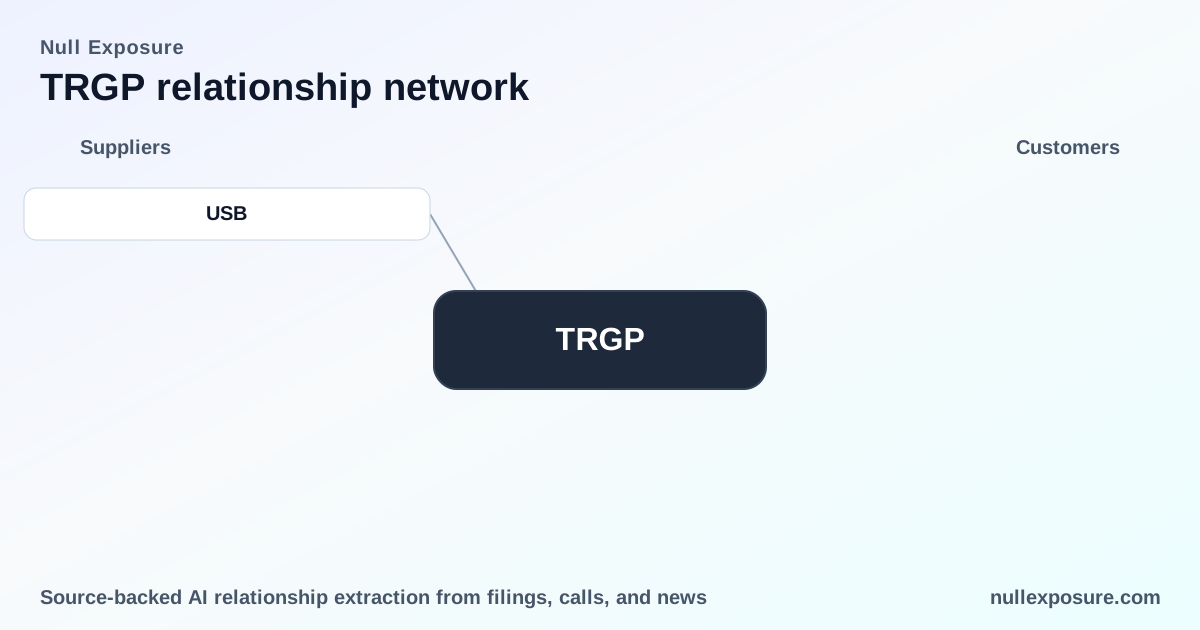
Targa Resources (TRGP) — What investors should know about supplier relationships and operational constraints
Targa Resources monetizes midstream infrastructure by gathering, processing, fractionating and transporting natural gas and NGLs and by selling commodity and midstream services to producers and refiners. The company earns stable fee-based and commodity-exposed cash flows from integrated infrastructure assets while managing price volatility through hedges and long-term commercial arrangements. For investors and operators assessing counterparty exposure, the core questions are contracting tenor, counterparty caliber, infrastructure criticality, and geographic concentration. For a concise supplier-risk dashboard, visit https://nullexposure.com/.
How Targa’s operating model drives supplier relationships
Targa is an infrastructure-first midstream operator: it builds and operates pipelines, processing plants, fractionators and storages and monetizes through throughput and commodity-margin capture. The business combines fee-for-service revenue (gives predictability) with commodity-linked economics (creates price sensitivity) — a duality that forces deliberate supplier selection and long-term contracting to stabilize cash flows.
Balance-sheet and scale context matters when judging suppliers. Targa’s market capitalization is roughly $51.4 billion with trailing revenue near $17.0 billion and adjusted EBITDA around $4.85 billion, which supports large-scale capital programs and attracts major financial institutions as counterparties. Profitability metrics (operating margin ~22.6%, profit margin ~11.3%) underline substantial cash generation to service contracts and debt obligations.
The documented supplier/contract relationships uncovered
Below is every supplier or contractual relationship surfaced in public reporting for the supplier scope.
- U.S. Bank Trust Company — Targa used U.S. Bank Trust Company as trustee under the company’s existing indenture for a senior notes offering completed in March 2026. According to a TradingView news item reporting on March 10, 2026, Targa completed a $1.5 billion senior notes offering (2031 at 4.35% and 2056 at 6.05%) issued under that indenture with U.S. Bank Trust Company serving as trustee (https://www.tradingview.com/news/tradingview:8479a473ca0c0:0-targa-resources-completes-1-5-billion-senior-notes-offering-2031-at-4-35-2056-at-6-05/).
Constraints and what they signal about Targa’s supplier posture
Company disclosures and excerpts provide clear operating signals that frame Targa’s supplier relationships:
- Long-term contracting orientation. Targa hedges commodity exposure across multiple years (hedges referenced through 2028), indicating a preference for multi-year financial protections that reduce cash-flow volatility and increase the value of stable service providers.
- Counterparty caliber is high. The company states that commodity derivatives are with major financial institutions or major energy companies, which implies counterparty concentration toward large-enterprise counterparties rather than boutique or non-investment-grade counterparties.
- North America-focused operations. Regulatory excerpts call out Texas, Louisiana, Oklahoma, New Mexico and North Dakota as operational states, signaling geographic concentration and regulatory exposure in U.S. producing basins.
- Dependency on third-party infrastructure as service providers. Targa explicitly depends on third-party pipelines, storage and other facilities to provide delivery and takeaway options, highlighting operational criticality of external pipeline and storage operators.
- Infrastructure segment characteristics. The business relies on integrated physical assets (gathering, processing, fractionation, storage), which drives capital intensity and prioritizes stable counterparties and long-standing service contracts.
These constraints are company-level signals and not assigned to a single relationship unless the company explicitly names that party.
What these signals mean for counterparty risk and procurement
Put together, the disclosures and the recorded trustee role for Targa’s notes create a coherent picture:
- Contracting posture is conservative and long-dated. Hedging through 2028 and structural debt issuance under formal indentures mean counterparties will be institutional (banks, trustees, large energy firms) and contracts will be documented and enforceable.
- Concentration skews toward large enterprises. This reduces the probability of counterparty default but increases systemic linkage to global financial markets and bank funding conditions.
- Operational criticality of external pipelines/storage elevates execution risk. Even with strong financial counterparties, reliance on third-party takeaway and storage operators introduces throughput constraints, regulatory dependency and potential bottlenecks in high-demand periods.
- Maturity profile is infrastructure-like. Capex, maintenance, and long maintenance cycles imply predictable counterparty engagements (contractors, large EPCs, service providers) rather than spot or transactional suppliers.
Monitoring checklist for investors and operators
Use this checklist to monitor supplier-related risk at Targa:
- Track the tenor and counterparties of commodity hedges and any amendments extending protection beyond 2028.
- Watch debt issuance and indenture/trustee appointments (trustees like U.S. Bank Trust Company signal institutional debt visibility).
- Monitor regulatory developments in Texas, Louisiana, Oklahoma, New Mexico and North Dakota for pipeline and storage rules that could affect third-party delivery options.
- Assess third-party pipeline and storage counterparty credit and operational reliability given Targa’s dependence on external takeaway capacity.
For a practical supplier-risk dashboard and ongoing monitoring, visit https://nullexposure.com/.
Bottom line: pragmatic exposure with institutional counterparties
Targa’s supplier ecosystem is anchored by long-term commercial hedging, institutional counterparties, and heavy reliance on pipeline and storage infrastructure — a profile that supports stable cash flows but creates concentrated exposure to infrastructure outages and regional regulatory shifts. The trustee relationship with U.S. Bank Trust Company is consistent with the company’s practice of working through established financial institutions for capital markets transactions, reinforcing an investment-grade operational posture on the financing side.
For deeper supplier mapping and alerts tailored to TRGP and other midstream names, explore the tools and reports at https://nullexposure.com/.