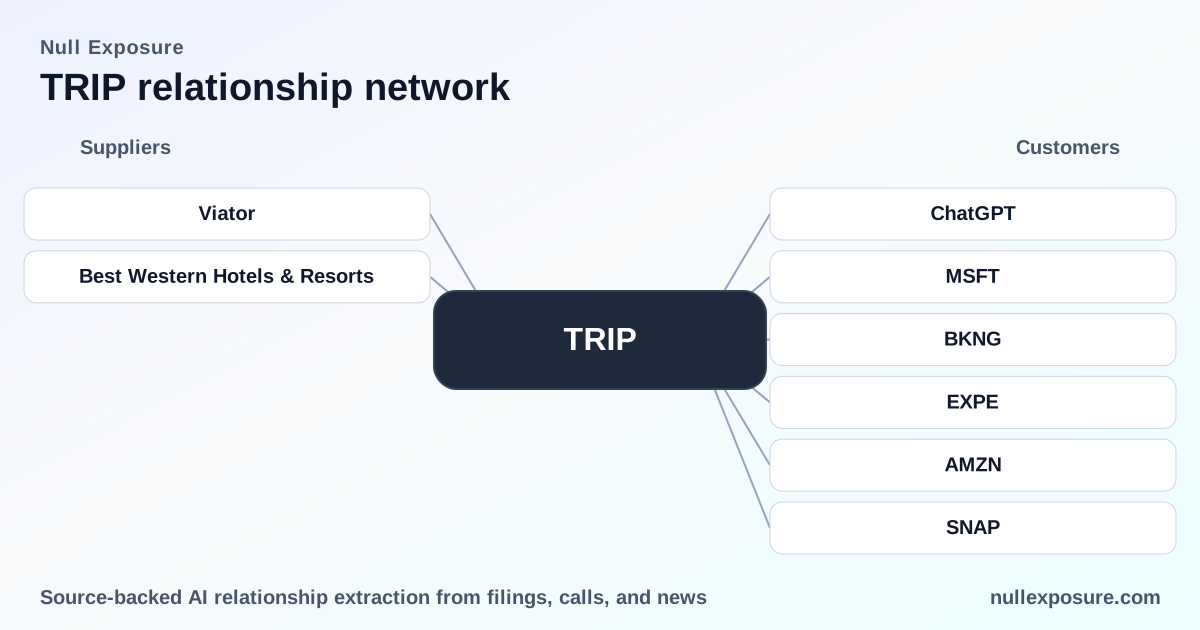
TripAdvisor (TRIP): Supplier Relationships, Constraints, and Investment Implications
TripAdvisor operates a global travel marketplace that connects travelers to hotels, tours, activities and experiences and monetizes primarily through advertising and commissions on bookable experiences. The core operating model is a high-volume agent marketplace: TripAdvisor lists inventory sourced from a large and diversified base of hoteliers and experience operators, routes bookings through its Viator marketplace for tours and activities, and captures revenue through fees and advertising placements rather than direct inventory ownership. For investors and operators, that combination implies revenue leverage to platform scale and concentrated operational risk in platform execution and long-term commercial contracts.
Explore a structured view of TripAdvisor supplier dynamics and contractual constraints at Null Exposure: https://nullexposure.com/
What the business model actually buys you as an investor
TripAdvisor’s commercial engine collects demand signals and converts them into monetizable actions—advertising clicks, hotel bookings and bookable experiences—while acting largely as an agent for operators. The company’s gross profit margin and return metrics reflect this intermediary role: high gross profit on network effects, but modest operating margin due to fixed costs and long-term commitments. Key financial context: FY TTM revenue of about $1.891 billion, EBITDA near $147 million, and a forward P/E that compresses future earnings expectations into current valuation.
How TripAdvisor structures supplier relationships in practice
TripAdvisor’s supplier posture is characterized by scale, diversity, and contractual depth. Several company-level signals drive that characterization:
- Contracting posture: TripAdvisor maintains a mix of licensing agreements and multi-year non-cancellable commitments—telecommunications, licensing, office leases and vendor contracts—with some obligations extending through 2029. These commitments create fixed-cost leverage even as travel demand fluctuates.
- Concentration and criticality: Supplier concentration is low; no single operator contributed more than 10% of consolidated revenue in presented periods, and the Viator channel aggregates tens of thousands of operators, spanning large enterprises and small businesses. That structure reduces single-vendor dependency but increases operational complexity and reputational exposure.
- Relationship role and economics: TripAdvisor functions predominantly as an agent for bookable experiences; it records amounts due to operators as deferred merchant payables until experience completion, minimizing inventory risk but creating cash flow timing and settlement dependencies.
- Geographic reach and maturity: Supplier coverage is global—North America, EMEA, APAC and over 200 countries for bookable experiences—backed by long-term office leases and international operations footprint that demand ongoing fixed commitments.
These company-level constraints point to a platform that is mature in commercial relationships but retains fixed contractual overheads that pressure margins when travel volume normalizes.
Read deeper operator-level intelligence and supplier analytics at Null Exposure: https://nullexposure.com/
Supplier relationships in the record — concise investor summaries
This section covers every supplier-related relationship surfaced in public reporting and media. Each entry includes a one- to two-sentence plain-English summary and the reporting source.
Viator
TripAdvisor routes tours and activities through its Viator marketplace, which aggregates nearly 400,000 experiences and tens of thousands of operators, and the company actively promotes these bookable products across its platform to drive commission and fee revenue. According to an industry news overview, TripAdvisor “pushes its tours and activities hard through its Viator connection” (Ad-hoc News, March 10, 2026).
Best Western Hotels & Resorts
TripAdvisor partnered with Best Western on an AI-powered, tournament-focused trip-planning platform called “Go for the Goal,” integrating TripAdvisor data and AI to help fans coordinate multi-city travel, routes, hotels and local experiences for the 2026 international soccer tournament; more than 200 Best Western properties near host stadiums are already integrated into the experience (Sahm Capital, Feb 1, 2026; SimplyWall St, March 2026). This is a time-bound, co-branded activation that positions TripAdvisor as the underlying planner for event-driven lodging and activities revenue.
What these relationships imply for operational risk and upside
Both relationships illustrate two consistent strategic themes: platform distribution power and partnership-led demand capture.
- Viator demonstrates TripAdvisor’s role as the primary distribution channel for third-party experience operators, which scales revenue per visit without inventory ownership but increases reputational exposure if operators deliver poor experiences.
- The Best Western partnership shows TripAdvisor’s ability to monetize major events through targeted, AI-driven trip planning and hotel integration, unlocking incremental bookings and upsell opportunities during concentrated demand periods.
Together, these dynamics produce high revenue operating leverage but also earnings cyclicality tied to travel seasonality and event schedules.
Constraints that shape supplier negotiation and financial durability
Company-level constraints evident in reporting are instructive for counterparties and investors:
- Long-term contractual commitments: The company discloses multi-year purchase obligations and non-cancellable leases and vendor contracts, creating fixed-cost baseload even as revenue fluctuates.
- Licensing exposure: TripAdvisor lists licensing commitments among its fixed and determinable purchase obligations, implying recurring fees for software, content and telecom services that affect gross-to-operating margin conversion.
- Diverse counterparty base: The supplier mix explicitly includes both large enterprises and small businesses, which reduces single-counterparty concentration but elevates operational onboarding and support costs.
- Immaterial single-operator revenue: The company states no single operator accounted for more than 10% of revenue, signaling low concentration risk from any one supplier but also a necessity for high-volume scale to sustain margin.
These constraints indicate a contracting posture that favors durable platform relationships supported by long-term vendor deals and licensing, while keeping supplier concentration low—an appealing structure for transaction counterparties but one that requires disciplined cost management.
Investment risks, upside drivers, and what to watch next
Key investment considerations for asset managers and operators:
- Risks: Fixed contractual obligations through 2029 and 2026 debt maturities create refinancing and margin pressure if travel demand weakens; reputational risk is concentrated in third-party operator quality since TripAdvisor acts as an agent; event-driven activations (e.g., 2026 tournament) are time-bound and must translate to recurring engagement for lasting benefit.
- Upside drivers: AI-enabled trip planning partnerships (Best Western) and continued Viator expansion can accelerate bookings per user and advertising monetization; global reach across NA/EMEA/APAC provides scale for cross-selling.
- Signals to monitor: operator fill rates and deferred merchant payables timing, renewal terms on licensing and telecom contracts, performance metrics from event-focused platforms, and notes on concentration in quarterly filings.
Next steps for investors and operators
- For investors: review upcoming quarterly disclosures for updates on deferred merchant payables and contractual maturity schedules; evaluate sensitivity of EBITDA to shifts in bookings volume given non-cancelable vendor obligations.
- For operators and partners: validate integration mechanics with Viator and event-focused platforms to understand settlement timing and promotional economics.
Get regular, structured supplier intelligence and scenario analysis for TripAdvisor at Null Exposure: https://nullexposure.com/
Final takeaway: TripAdvisor is a mature, asset-light platform that monetizes scale through Viator and strategic hotel partnerships, supported by long-term vendor and licensing commitments that both stabilize operations and create fixed-cost exposure. Investors should balance the company’s distribution power and event-driven monetization against contractual rigidity and operational execution risk.