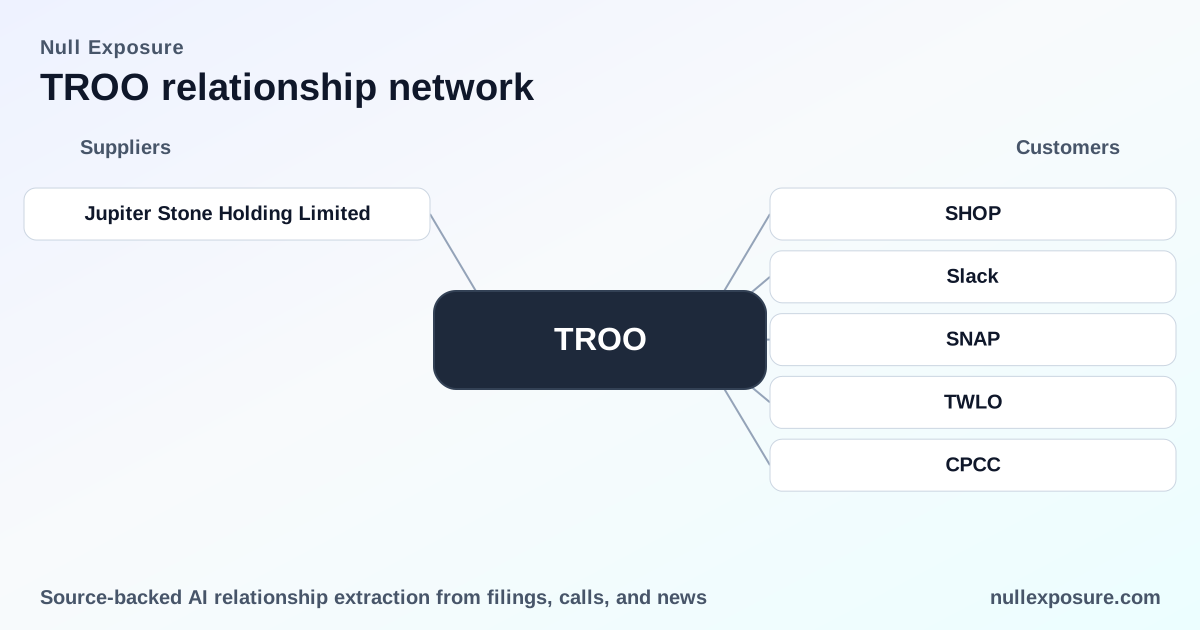
TROOPS Inc (TROO): Supplier relationships and what they mean for investors
TROOPS Inc operates a niche enterprise software and workforce-management business focused on data-driven decision tools for defense and public-safety customers, monetizing through a mix of services and transactional engagements run out of its Hong Kong/China base. Revenue is limited at scale (Revenue TTM $15.08M) while valuation multiples remain elevated (Price/Sales ~24.9x), so supplier posture and deal structure materially affect near-term cash flow and execution risk. For investors evaluating counterparty exposure and operational resilience, the company’s announced supplier and M&A engagements provide a direct lens into how TROOPS is allocating capital and structuring growth initiatives. Explore the supplier map and disclosure roll-up at https://nullexposure.com/ for a consolidated view of counterparties and related filings.
Quick profile that matters to relationship analysis
TROOPS trades on NASDAQ with a market capitalization around $375.9M and a high beta (2.99) that reflects sensitivity to sentiment and execution news. Profitability metrics are negative (Profit Margin -86.3%, Operating Margin -16.2%), insiders control a majority of shares (~50.3%), and institutional ownership is negligible (~0.11%). These facts frame supplier risk: the company is capital-constrained, valuation-driven, and highly sensitive to single-deal outcomes.
The specific supplier / counterparty disclosed: what happened and why it matters
TROOPS’ wholly owned subsidiary, Giant Connection Limited, executed a Letter of Intent to acquire 49% of Y Concept Holding Limited — the Hong Kong parent of The Cara Hotel, a co-living and co-working asset in Malaysia — from Jupiter Stone Holding Limited. This transaction is structured as an equity purchase via LOI, signaling TROOPS’ willingness to deploy balance-sheet resources into adjacent real-estate–operated ventures that support its workforce-management positioning. According to the company announcement reported on Yahoo Finance on March 10, 2026, the LOI frames the purchase as a strategic stake rather than a controlling acquisition. (Source: Yahoo Finance, March 10, 2026.)
Relationship snapshot for Jupiter Stone Holding Limited
Jupiter Stone is the vendor in an LOI where TROOPS’ subsidiary intends to buy a 49% equity stake in Y Concept, the listed parent of The Cara Hotel co-living/co-working business in Malaysia. The structure is an LOI—not yet a definitive purchase agreement—which positions this contact as strategic minority ownership of an APAC real-estate operating business (Source: Yahoo Finance, March 10, 2026).
What the disclosed relationship says about TROOPS’ operating model
- Strategic diversification through minority stakes. The Jupiter Stone LOI implies TROOPS will use equity stakes to expand operational footprint in the APAC region rather than rely purely on software licensing or services revenue.
- Capital allocation via subsidiaries. The use of Giant Connection Limited as the purchaser shows a corporate routing that isolates operational assets and concentrates execution risk in subsidiary structures.
- Geographic emphasis on APAC. The target asset (Malaysia) and corporate address points (Hong Kong/China) align with a regional focus that shapes supplier selection and regulatory exposure.
For a curated supplier map and related filings that clarify counterparty exposure, visit https://nullexposure.com/.
Company-level supplier constraints and the implications for procurement posture
TROOPS’ disclosure excerpts and related constraint signals indicate several consistent characteristics across supplier relations (presented as company-level signals unless a disclosure specifically names a counterparty):
- Contracting posture: variable and short-term. Evidence points to usage-based payment terms and short-duration fee arrangements. This buys flexibility and lowers fixed-cost leverage, but it also creates revenue and margin variability when usage dips.
- Service-provider orientation. The firm’s contracts frequently position counterparties as service providers (administration, office services, underwriting fees). That structure reduces capital intensity per supplier relationship but elevates the importance of continuity and invoice discipline.
- Low per-vendor spend on many categories. Excerpts referencing modest monthly fees (~$7,500) support a signal of sub-$100k annualized spend for certain suppliers, suggesting broadly distributed small-ticket vendor exposure rather than a few large procurement commitments.
- APAC concentration. Geographical signals emphasize operations and counterparties located in Asia-Pacific, which concentrates regulatory, FX, and execution risk regionally.
Taken together, these constraints describe a company that buys flexibility through short-term, usage-priced service contracts and small-ticket vendor commitments while selectively pursuing strategic equity investments.
Financial and operational consequences for investors
- Cash-flow sensitivity. Usage-based and short-term contracts limit fixed cost but increase earnings volatility. Given negative margins and limited EBITDA, cash management and timing of one-off investments (like the Jupiter Stone LOI) are central to whether TROOPS can sustain growth spending without dilution.
- Governance and concentration risk. With insiders holding roughly half the stock and institutions virtually absent, supplier relationships can be influenced by strategic choices of controlling shareholders, increasing the importance of counterparty diligence and transaction economics for outside investors.
- Execution complexity from APAC operations. Local operating partnerships (e.g., co-living assets in Malaysia) introduce property and regulatory risk that are different from pure software vendor relationships.
Risk checklist — what to watch next
- Progress from LOI to definitive agreement and the economic terms of the Y Concept transaction (price, governance rights, earn-outs). Source disclosure so far is limited to the LOI notice (Yahoo Finance, March 10, 2026).
- Any shift from usage-based, short-term vendor arrangements toward multi-year fixed contracts, which would change cash-flow profiles and supplier criticality. Constraint excerpts indicate the company currently prefers short-duration arrangements.
- Capital commitments and funding sources for acquisitions: whether TROOPS uses cash, debt, or equity—this drives dilution and leverage outcomes.
For a gateway to structured supplier exposure and to monitor counterparties as transactions progress, go to https://nullexposure.com/.
Investor takeaways and recommended next steps
- TROOPS is executing opportunistic APAC investments while running a lean, variable-cost supplier model. That combination offers upside in successful integrations but raises short-term cash and execution risk given negative operating margins and elevated valuation multiples.
- The Jupiter Stone LOI is strategically interesting but operationally non-controlling. Investors should require clarity on agreed economics before re-rating risk. (Source: Yahoo Finance, March 10, 2026.)
- Monitor disclosures and subsidiary-level filings. Because TROOPS routes deals through subsidiaries, detailed counterparty diligence requires tracking subsidiary announcements and local filings.
If your mandate requires consolidated supplier intelligence or live monitoring of counterparties, begin your due diligence at https://nullexposure.com/ for organized disclosure and relationship mapping.