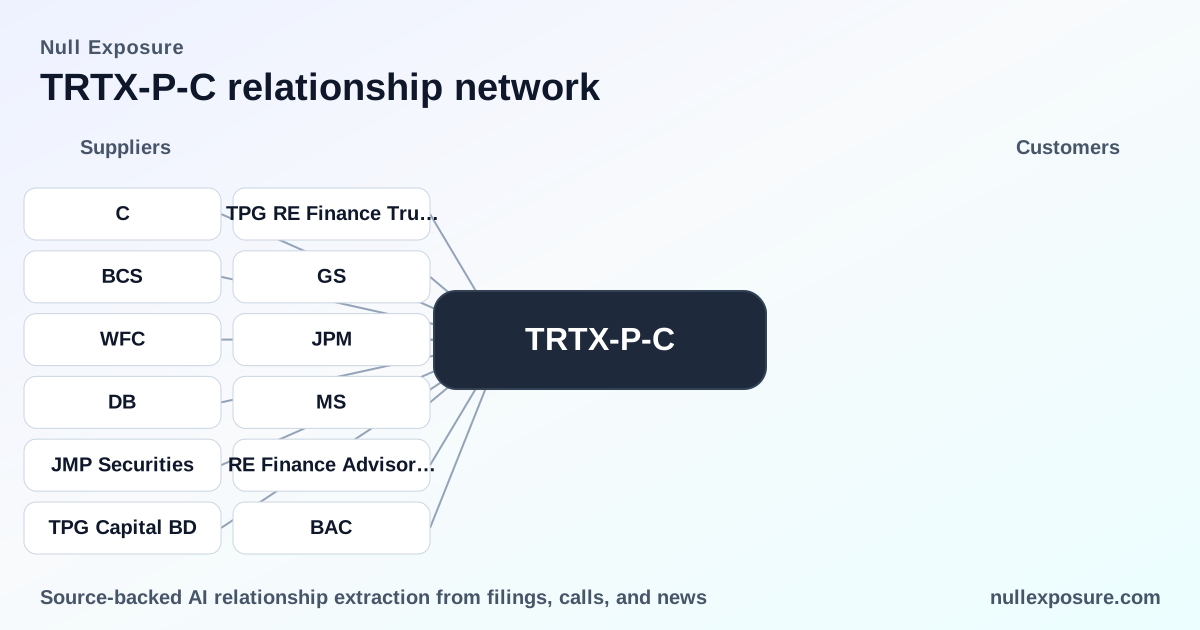
TRTX-P-C: Counterparty Map and What It Means for Investors
TPG RE Finance Trust (preferred shares traded as TRTX-P-C) operates as an externally-managed commercial real estate finance vehicle that originates and holds mortgage loans and debt investments on urban, institution-quality properties across the United States. The firm monetizes through yield on originated credit and an externally managed capital structure that leverages TPG’s real estate platform for sourcing and underwriting; for preferred shareholders, returns are a function of portfolio cash flow and the company’s dividend policy. Understanding the manager and capital markets counterparties is essential for evaluating operational continuity, funding access, and reputational risk. For a structured repository of supplier and counterparty intelligence, visit https://nullexposure.com/.
The manager-first operating model: TPG controls the playbook
TRTX-P-C is externally managed, which creates a concentrated counterparty dependency around TPG’s real estate platform. According to a company press release, the company is externally managed by TPG RE Finance Trust Management, L.P., part of TPG Real Estate, which provides leadership and operational control for underwriting and portfolio management (Yahoo Finance, Mar 2026: https://finance.yahoo.com/news/tpg-finance-trust-inc-announces-201000182.html). MarketScreener also notes the same external management linkage (MarketScreener, Jan 2026: https://www.marketscreener.com/news/tpg-re-finance-trust-keeps-quarterly-dividend-at-0-24-per-share-payable-jan-23-to-holders-of-reco-ce7d50d8da81f120). Key takeaway: governance and underwriting discipline are routed through TPG — investors are effectively underwriting TPG’s execution capability as much as the underlying loans.
If you want ongoing supplier intelligence on counterparties and external managers, explore https://nullexposure.com/ for structured profiles.
What the management and advisory links imply for contracting posture and maturity
- The external-management model implies a service-contract posture rather than an internal operating posture — fees, decision rights, and termination provisions in the management agreement will drive economics and control.
- This structure produces concentration risk: continuity of origination, servicing, and strategic direction is tied to TPG and its affiliates.
- The presence of established global banks as IPO underwriters signals capital markets maturity and distribution capability, which supports liquidity and access to public equity and debt taps.
Capital markets relationships: an institutional underwriting syndicate
TRTX-P-C’s entry into public markets was supported by a full-service underwriting syndicate made up of major global and U.S. banks. Market commentary on the IPO confirms that BofA Merrill Lynch, Citigroup, Goldman Sachs, Wells Fargo Securities, Deutsche Bank Securities, J.P. Morgan, Morgan Stanley and Barclays acted as underwriters, with TPG Capital BD and JMP Securities serving as co-managers (MarketBeat instant alert, Jan 29, 2026: https://www.marketbeat.com/instant-alerts/tpg-re-finance-trust-nysetrtx-downgraded-by-zacks-research-to-strong-sell-2026-01-29/). Key takeaway: the breadth of the syndicate provides distribution depth and institutional sell-side coverage that supports secondary liquidity for preferred holders.
Counterparty roster — every disclosed relationship and what it means
- TPG RE Finance Trust Management, L.P. — The firm is the external manager and primary operator responsible for sourcing and managing the loan portfolio; governance, underwriting standards and day-to-day execution flow through this entity (press release, Yahoo Finance, Mar 2026: https://finance.yahoo.com/news/tpg-finance-trust-inc-announces-201000182.html).
- RE Finance Advisors, LLC — Identified as an affiliate providing senior leadership and access to TPG’s global real estate financing expertise; this relationship reinforces that management services are delivered inside TPG’s platform (MarketBeat instant alert, Jan 29, 2026: https://www.marketbeat.com/instant-alerts/tpg-re-finance-trust-nysetrtx-downgraded-by-zacks-research-to-strong-sell-2026-01-29/).
- Goldman Sachs (GS) — Part of the IPO underwriting syndicate, providing distribution and capital markets advisory services for the company’s public listing (MarketBeat, Jan 29, 2026: https://www.marketbeat.com/instant-alerts/tpg-re-finance-trust-nysetrtx-downgraded-by-zacks-research-to-strong-sell-2026-01-29/).
- J. P. Morgan (JPM) — Participated as an underwriter on the IPO syndicate, supporting bookrunning and market access functions (MarketBeat, Jan 29, 2026: https://www.marketbeat.com/instant-alerts/tpg-re-finance-trust-nysetrtx-downgraded-by-zacks-research-to-strong-sell-2026-01-29/).
- Morgan Stanley (MS) — Served on the underwriting syndicate, providing institutional placement and secondary market support (MarketBeat, Jan 29, 2026: https://www.marketbeat.com/instant-alerts/tpg-re-finance-trust-nysetrtx-downgraded-by-zacks-research-to-strong-sell-2026-01-29/).
- BofA Merrill Lynch (BAC) — One of the lead underwriters for the IPO, contributing distribution and investment banking services (MarketBeat, Jan 29, 2026: https://www.marketbeat.com/instant-alerts/tpg-re-finance-trust-nysetrtx-downgraded-by-zacks-research-to-strong-sell-2026-01-29/).
- Citigroup (C) — Participated in the underwriting syndicate, supporting syndication and investor placement capabilities (MarketBeat, Jan 29, 2026: https://www.marketbeat.com/instant-alerts/tpg-re-finance-trust-nysetrtx-downgraded-by-zacks-research-to-strong-sell-2026-01-29/).
- Barclays (BCS) — Served on the IPO syndicate and provides international distribution reach (MarketBeat, Jan 29, 2026: https://www.marketbeat.com/instant-alerts/tpg-re-finance-trust-nysetrtx-downgraded-by-zacks-research-to-strong-sell-2026-01-29/).
- Wells Fargo Securities (WFC) — Member of the underwriting group, delivering U.S. institutional sales coverage (MarketBeat, Jan 29, 2026: https://www.marketbeat.com/instant-alerts/tpg-re-finance-trust-nysetrtx-downgraded-by-zacks-research-to-strong-sell-2026-01-29/).
- Deutsche Bank Securities (DB) — Participated as an underwriter, enhancing execution capacity across debt and equity channels (MarketBeat, Jan 29, 2026: https://www.marketbeat.com/instant-alerts/tpg-re-finance-trust-nysetrtx-downgraded-by-zacks-research-to-strong-sell-2026-01-29/).
- JMP Securities — Listed as a co-manager on the transaction, supporting targeted investor outreach (MarketBeat, Jan 29, 2026: https://www.marketbeat.com/instant-alerts/tpg-re-finance-trust-nysetrtx-downgraded-by-zacks-research-to-strong-sell-2026-01-29/).
- TPG Capital BD — A TPG affiliate acting as a co-manager, aligning sponsor distribution with the underwriting effort (MarketBeat, Jan 29, 2026: https://www.marketbeat.com/instant-alerts/tpg-re-finance-trust-nysetrtx-downgraded-by-zacks-research-to-strong-sell-2026-01-29/).
What counterparty structure means for investors and operators
- Concentration and control: The external-management relationship concentrates operational control in TPG’s hands; this improves underwriting consistency if TPG executes, but creates single-source dependence for origination and policy execution.
- Funding and liquidity channels: A broad syndicate of global banks provides distribution depth for equity and potential access to committed capital or capital markets solutions; this reduces reliance on a single bank but does not eliminate market-wide funding risk.
- Operational criticality: Management and advisory relationships are critical — any disruption at TPG or its affiliates would have immediate effects on portfolio decision-making and investor communications.
- Maturity signal: The presence of tier-1 underwriters during the IPO is a signal of institutional market acceptance and distribution capability that supports secondary liquidity for preferred holders.
For deeper counterparty intelligence and supplier risk scoring, check the platform at https://nullexposure.com/.
Investment implications and practical next steps
Preferred shareholders should weigh portfolio cash-flow resilience, the governance terms of the external management agreement, and the health of capital markets access provided by the underwriting syndicate. Operational diligence should focus on the management agreement terms (fees, termination, indemnities) and evidence of TPG’s ongoing origination pipeline. From an operator perspective, ensure contractual contingency plans exist for management transitions and that bank relationships are actively cultivated to preserve funding optionality.
Final takeaway: TRTX-P-C’s value proposition is tightly coupled to TPG’s execution and to the liquidity support of an institutional underwriting syndicate; both are strengths when performing and potential single points of failure if the sponsor’s strategy or market access deteriorates.
For ongoing updates on TRTX-P-C counterparties and supplier-side risk, visit https://nullexposure.com/.