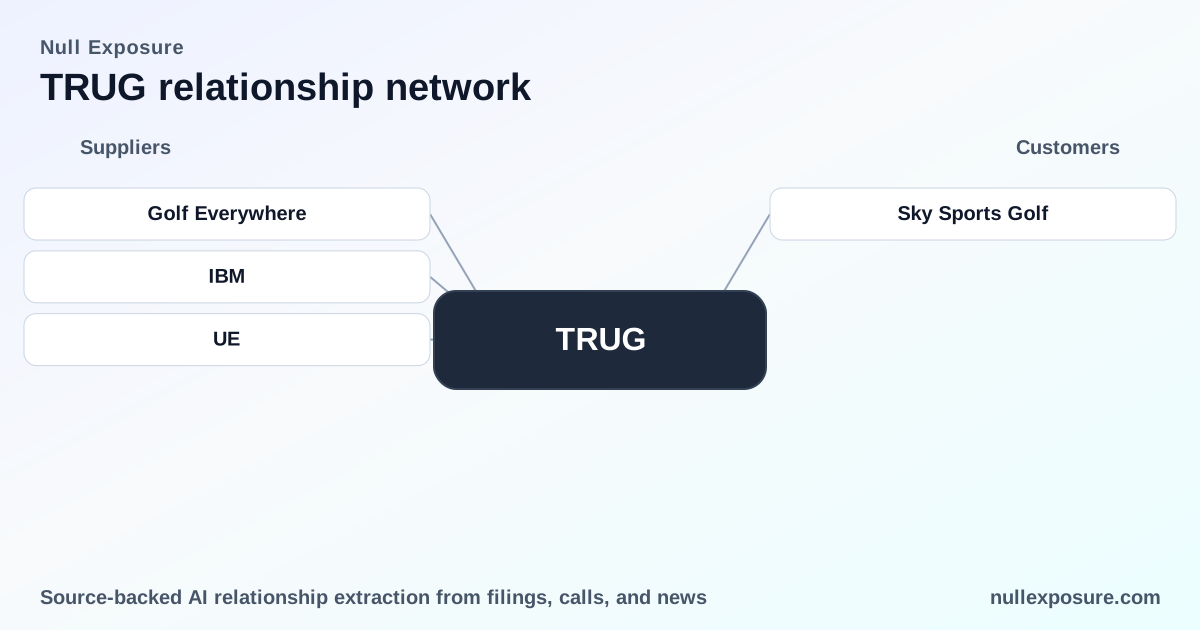
TruGolf (TRUG) — Supplier relationships that shape the revenue engine
TruGolf sells indoor golf simulators and related software and franchises under the TruGolf Nevada/TruGolf Links brands. The company monetizes through hardware sales, recurring software and royalty arrangements tied to unit and subscription usage, and franchise/real-estate-driven placement of simulator experience locations; large facility supply contracts and software partnerships are the two levers that can convert product sales into durable, higher-margin recurring streams. For investors, the supplier picture is dual-purpose: it shows how TruGolf secures the physical systems required to scale and also how it uses exclusive placements and third-party AI partnerships to lift software economics. Learn more and monitor supplier signals at https://nullexposure.com/.
How the supplier footprint forces a business-model tradeoff
TruGolf operates a hybrid hardware-software model that exposes it to both manufacturing concentration and software upside.
- Contracting posture: Company disclosures show TruGolf uses short-term royalty agreements — often one-year terms with automatic renewals — and usage‑based royalty economics where TruGolf pays or receives royalties tied to units or subscriptions. That structure produces revenue volatility but also aligns incentives with partners that drive unit sales or subscriptions (company disclosures for 2023–2024).
- Concentration vs. diversification: While the company has developed multiple third‑party manufacturers for component parts, five manufacturers accounted for roughly 52% of purchases in 2023 and six accounted for ~50% in 2024, signaling meaningful supplier concentration that compresses negotiating leverage (company disclosures for the years ended Dec. 31, 2023–2024).
- Critical single-source suppliers: TruGolf explicitly names specialized turf and screen suppliers — Controlled Products (turf) and Allied (screens) — and states it relies on a single vendor for each, which is a critical single‑point-of-failure for installation schedules and margin stability.
- Maturity and sourcing: The company has established multiple manufacturing partners for raw materials like frames, projectors, sensors and PCs, which indicates product‑level manufacturing maturity but not elimination of supply risk given the purchase concentration described above.
These structural characteristics explain why TruGolf pursues exclusive supply deals for marquee venues (to secure predictable unit demand) while simultaneously pursuing software and analytics partnerships to raise lifetime value per installation.
Named relationships investors should track
Golf Everywhere — the Flower Mound, TX facility exclusive
TruGolf is the exclusive supplier of simulator hardware and the TruGolf Range technology package for Golf Everywhere’s large indoor facility in Flower Mound, Texas, slated to open in 2025. This deal positions TruGolf as the systems integrator for what the company describes as one of the largest indoor golf venues in the U.S., providing both revenue and a showcase location for its software ecosystem (QuiverQuant news item, March 2026; Sahm Capital report, Nov. 5, 2025).
IBM — AI partnership to lift software differentiation
TruGolf has incorporated IBM’s watsonx.ai into its software stack to deliver AI-driven analytics and in-play commentary, which management highlights as a key differentiator for its software ecosystem and future subscription offerings. The IBM collaboration signals TruGolf’s move to monetize software analytics and voice/insight features that can boost recurring revenue per install (GlobeNewswire release reporting TruGolf Q3 2025 results, Nov. 17, 2025).
Urban Edge Properties — franchise site leasing for flagship locations
Urban Edge Properties has executed leases tied to TruGolf Links franchising for 6,045 SF flagship locations at The Plaza, reflecting the company’s strategy of partnering with landlords to place branded, retail-style simulator venues. Press releases covering separate franchise-development deals (one reported in FY2024 and another in FY2025) show repeated collaboration with Urban Edge to roll out physical locations that generate hardware sales, recurring software subscriptions, and local franchise revenue (PR Newswire releases, FY2024 and FY2025).
What each relationship implies for revenue, risk and runway
These relationships together illustrate TruGolf’s go-to-market rhythm: large, exclusive venue deals (Golf Everywhere) create spikes in hardware sales and marketing visibility; landlord/franchise deals (Urban Edge) supply steady retail distribution points; and platform partnerships (IBM) aim to convert one-time system installs into recurring software revenue.
- Upside: Exclusive facility contracts and AI partnerships can materially increase lifetime value per install and help transition the company toward subscription economics. The IBM collaboration is strategically important because AI features are scalable across installed bases.
- Downside: The company’s supply-side concentration and critical single-source turf/screen vendors (Controlled Products and Allied) create execution risk — delays or price shocks in those inputs would directly impede installations and revenue realization.
- Revenue context: TruGolf reported roughly $20.5M TTM revenue with a negative operating margin and diluted EPS deeply negative, which underscores that the supplier and channel execution issues above are material to near-term profitability (company financials, latest quarter Sep. 30, 2025).
Explore the supplier risk dashboard and monitor new contract disclosures at https://nullexposure.com/.
Practical checklist for investors and operator due diligence
- Confirm exclusivity scope and duration on marquee deals like Golf Everywhere; exclusivity gives marketing leverage, but short-term royalty frameworks can still limit revenue visibility.
- Validate contingency plans for turf and screen supply (Controlled Products, Allied) and assess inventory or multi-sourcing options to reduce single-vendor disruption risk.
- Quantify the IBM watsonx.ai rollout timeline and the monetization strategy: how many installs will be upgraded, what subscription ARPU is implied, and how royalties flow between partners.
- Track franchise rollouts with landlords such as Urban Edge for cadence of store openings and expected hardware/software recognition timing.
Bottom line and next steps
TruGolf’s supplier relationships are simultaneously an enabler and a constraint: exclusive supplier roles and an IBM partnership create a clear path to higher-margin recurring revenue, while single-source components and concentrated manufacturing purchasing present tangible execution risk. The company’s short-term, usage-based contracting and reliance on a few manufacturers mean investors should watch installation cadence, supplier continuity plans, and the rate at which software upgrades convert installations into subscriptions.
For ongoing tracking of TRUG supplier dynamics and to see new relationship disclosures as they arrive, visit https://nullexposure.com/. If you want a deeper supplier-risk briefing tailored to your portfolio, start at https://nullexposure.com/ and request the TRUG supplier pack.