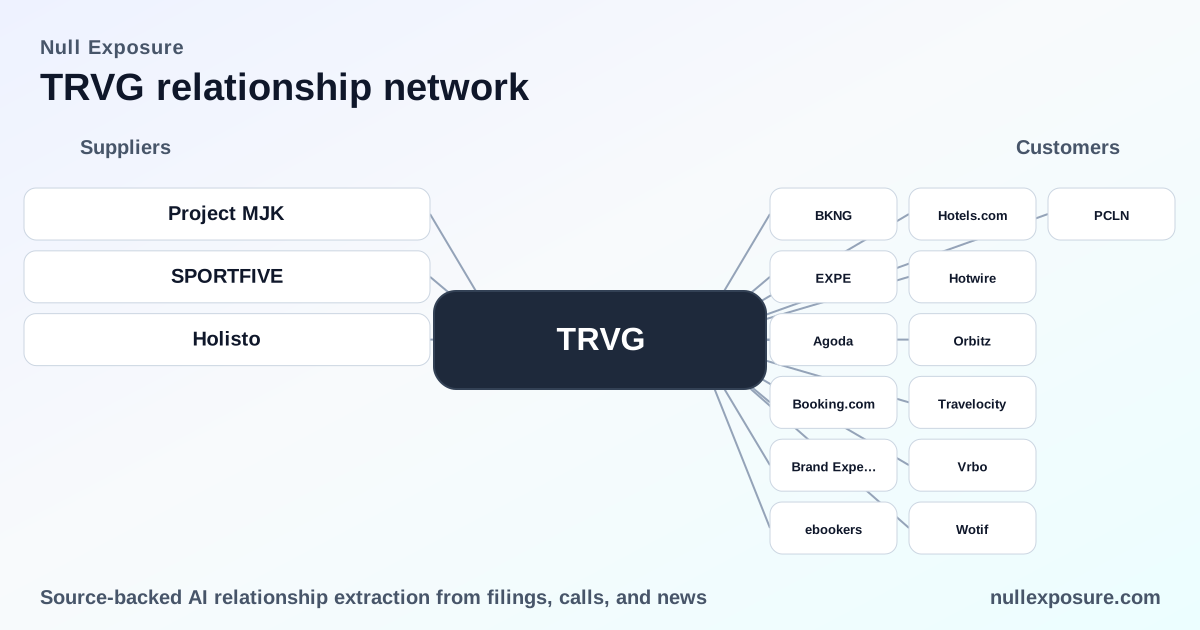
Trivago (TRVG) — supplier relationships that shape distribution and brand reach
Trivago operates an online hotel search and metasearch platform that monetizes by directing traffic to hotel and OTA partners through paid listings and advertising, earning referral fees and cost-per-click revenue from accommodation providers and travel platforms. For investors and operators, the company’s supplier relationships fall into two categories: brand and marketing partners that extend consumer reach, and technology/content acquisitions that broaden distribution or product capability—both of which influence traffic economics and long-term revenue per visit. Learn more about how we track supplier connections at https://nullexposure.com/.
How TRVG’s operating model depends on suppliers and partners
Trivago’s core product is a comparison layer between travel demand and accommodation supply. That structure produces specific supplier dynamics:
- Contracting posture: Trivago generally contracts with a wide set of hotel channels and advertising agencies rather than owning inventory, so supplier agreements are commercial and performance-driven rather than capital-intensive.
- Concentration and criticality: The platform benefits from scale and a broad partner base; no single supplier is recorded as dominantly critical in the reviewed relationships, which supports resilience in traffic sourcing and ad inventory.
- Maturity of relationships: The visible relationships mix established agencies and a recent acquisition, indicating a blend of mature marketing partnerships and active consolidation in product capability. These characteristics collectively imply a focus on marketing effectiveness and traffic acquisition efficiency rather than supplier-supplied inventory control. For service providers and analysts who want the raw relationship mapping, visit https://nullexposure.com/ for the full view.
Supplier relationships that matter right now
This section reviews every supplier relationship identified in our sources and summarizes the strategic relevance for TRVG.
Project MJK — a branded campaign vehicle organized around Jürgen Klopp. trivago engaged Project MJK in a creative/brand ambassador collaboration for a high-profile advertising push featuring Jürgen Klopp, reflecting an emphasis on brand uplift and global consumer awareness. According to a GlobeNewswire press release (Oct 23, 2024), SPORTFIVE orchestrated the engagement in collaboration with Project MJK as part of an AI-powered marketing campaign.
SPORTFIVE — sports marketing agency executing the campaign. SPORTFIVE acted as the sports-marketing agency executing the campaign that brought Jürgen Klopp into trivago’s global marketing program, signaling a deliberate move to leverage sports sponsorship expertise for scale and audience targeting. This relationship is described in the same GlobeNewswire release (Oct 23, 2024) that announced the campaign partnership.
Holisto — an acquisition to expand product capability. trivago completed the acquisition of the remaining equity in Holisto at the end of July 2025, bringing the company fully into trivago’s organizational and product fold and indicating strategic consolidation aimed at strengthening search, personalization, or ad-tech capabilities. The acquisition was disclosed on the Q2 2025 earnings call and summarized in an InsiderMonkey transcript covering that call (Q2 2025).
What these relationships reveal for investors and operators
The mix of relationships reflects a deliberate two-pronged strategy: drive short-term traffic and brand salience through high-visibility marketing partnerships, while accrete capability and potential margin leverage through targeted acquisitions.
- Brand partnerships with SPORTFIVE and Project MJK are marketing-cost focused and outcome-driven, which increases near-term spend volatility but can meaningfully raise user acquisition and conversion if campaigns scale successfully.
- The Holisto acquisition is a classic tuck-in move: it is capability-augmenting, and if integrated effectively it can improve margins or product stickiness by enhancing search or ad targeting.
Operationally, this means management is balancing brand investment cycles with inorganic growth to protect or improve revenue per visit. Given trivago’s TTM revenue (~$549m) and low single-digit profit margins, marketing efficiency and integration success are decisive variables for earnings leverage.
For a deeper mapping between supplier commitments and commercial impact, visit https://nullexposure.com/ to see the underlying relationship signals in context.
Supplier risk and constraints — what the data showed
The review of available supplier relationship data returned no explicit supplier-specific constraints. In plain terms: there were no flagged contractual limits, concentration warnings, or supplier maturity red flags in the reviewed sources. That absence is itself an informative company-level signal — it suggests that public disclosures and press releases emphasize strategic partnerships and acquisitions rather than defensive supplier dependencies.
Operational implications of that absence:
- Investors should treat supplier risk as managed but not absent; lack of public constraints does not remove execution risk tied to campaign ROI or integration of acquisitions.
- The near-term risk profile is concentrated in marketing spend efficiency and integration execution rather than in single-supplier dependency.
Key takeaways for investors
- Marketing-first plus targeted M&A: trivago is investing in brand reach through SPORTFIVE/Project MJK while acquiring capability via Holisto—this combination supports traffic growth but raises execution stakes.
- Revenue sensitivity to traffic economics: because monetization depends on referral and advertising economics, campaign ROI and integration benefits from Holisto will directly influence revenue per user and margins.
- No public supplier constraints flagged: the dataset reviewed did not record supplier-level constraints, which emphasizes strategic choices rather than supplier-enforced limits.
If you track supplier exposure or need bespoke supplier risk scoring for TRVG, our cataloged relationship evidence and analyst notes are available at https://nullexposure.com/.
Final thought: for a company whose revenue is a function of traffic quality and partner economics, the effectiveness of marketing partnerships and the speed and quality of integrating acquired capabilities will drive the next phase of margin recovery and revenue growth. Explore detailed supplier mappings and signals at https://nullexposure.com/ to inform investment or operational decisions.