Trevi Therapeutics (TRVI) — supplier posture, concentration risks, and what investors should price in
Trevi Therapeutics is a clinical-stage biopharma that derives its value from the development and eventual commercialization of Haduvio, an extended‑release nalbuphine formulation. The company currently has no product revenue and monetizes via future product sales or licensing transactions; near-term value drivers are clinical progress, regulatory milestones, and the company’s ability to secure reliable supply and manufacturing for Haduvio. For a focused supplier-risk briefing and portfolio-level benchmarking, visit https://nullexposure.com/.
How Trevi runs its external relationships and why that matters to investors
Trevi operates as a highly outsourced development organization: it is a licensee of third‑party intellectual property, it contracts out R&D and manufacturing to CROs/CMOs, and it relies on a single supplier for its active pharmaceutical ingredient (API). Those characteristics create a supplier profile that is simultaneously lean (low fixed overhead) and highly concentrated (single‑point failures can derail programs).
- Contracting posture: Trevi holds an exclusive, sublicensable license for nalbuphine technology originally from Penwest Pharmaceuticals (now part of Endo). That licensing posture makes Trevi dependent on licensed IP and any contractual limits embedded in those agreements, while positioning the company to commercialize Haduvio if regulatory approval is achieved. This is a company-level signal drawn from Trevi’s corporate disclosures in FY2026.
- Concentration and criticality: The company discloses reliance on a single supplier for nalbuphine hydrochloride drug substance; any significant delay, cost increase, or shortage could materially delay clinical supplies and commercialization timelines. This is a high‑criticality exposure in the manufacturing bucket and is active today.
- Outsourcing and maturity: Trevi outsources clinical operations and manufacturing to CROs and CMOs and engages external service providers for specialized work (including cybersecurity oversight). These are established, active relationships consistent with a clinical‑stage outsourcing model rather than in‑house manufacturing maturity.
- Relationship roles and segments: Trevi functions as a licensee and contract counterparty to manufacturers and service providers; the primary supplier segment of concern is manufacturing (API and clinical supply).
These signals come from Trevi’s public disclosures for FY2026 and are central to assessing operational risk for investors evaluating supplier counterparty exposure.
What the public relationship evidence shows
Below I cover the recorded supplier/partner relationships in the public results set and what each means for operational capability and investor risk.
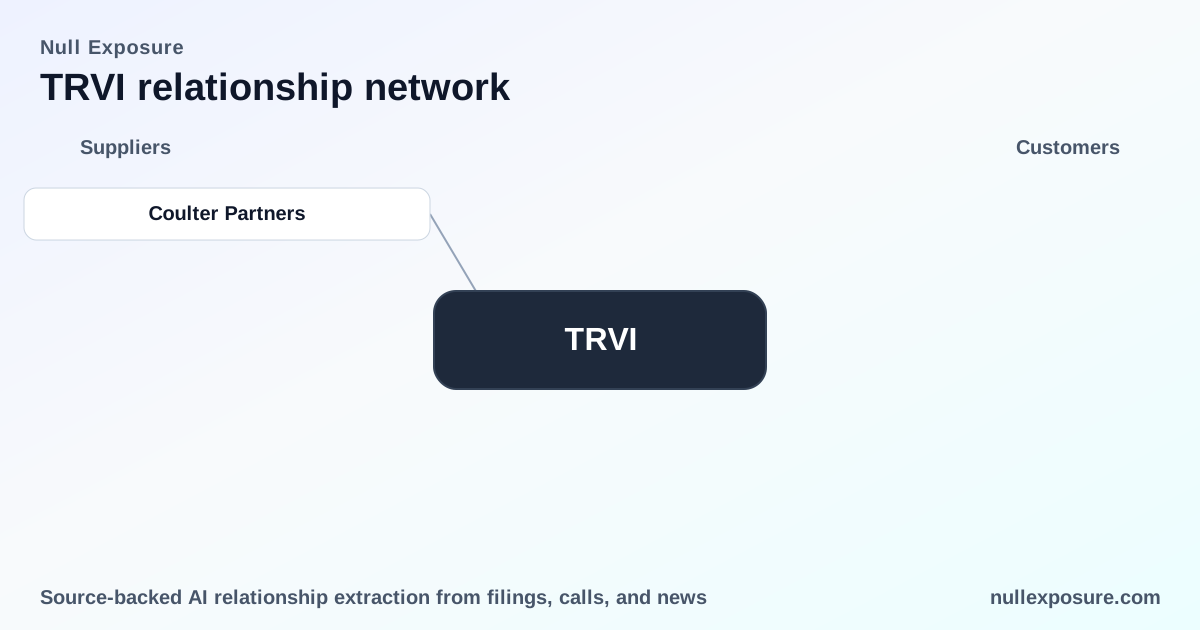
Coulter Partners — retained for executive search, placed the CFO
Coulter Partners executed a retained search for Trevi and placed David Hastings as Chief Financial Officer, demonstrating that Trevi relies on external executive search firms to staff critical leadership roles. According to a HuntsCanlon press release dated March 10, 2026, Coulter Partners successfully led that search and announced the appointment. This is a strategic HR/service provider relationship rather than a manufacturing or IP counterparty (HuntsCanlon, March 10, 2026).
Manufacturing and IP links investors must watch
Trevi’s public filings contain explicit contractual and supplier disclosures that shape the supplier risk profile investors should price.
- Licensing history with Penwest/Endo: In May 2011 Trevi entered an exclusive, worldwide, sublicensable license with Penwest Pharmaceuticals — a company that later merged into Endo Pharmaceuticals — covering nalbuphine hydrochloride patent rights and know‑how used in Haduvio. That arrangement establishes Trevi as a licensee of third‑party IP and frames freedom‑to‑operate and royalty or covenant obligations documented in its corporate filings (company disclosures, FY2026).
- Single‑supplier API exposure: Trevi discloses reliance on a single supplier for the nalbuphine hydrochloride drug substance, which the company identifies as a potential source of material delay and cost risk to manufacture and clinical supply of Haduvio. This is a critical concentration risk for a clinical‑stage product that must scale for commercialization (company disclosures, FY2026).
- Outsourced development and manufacturing: The company contracts CROs and CMOs for clinical trial execution and the manufacture, packaging, and distribution of clinical supplies, reflecting a standard clinical‑stage operating model that is material to the business and operational timelines (company disclosures, FY2026).
- Service providers beyond manufacturing: Trevi engages consultants and cybersecurity firms to support governance and technical controls, indicating an appetite for specialist third‑party services across operations (company disclosures, FY2026).
Investment implications — how suppliers translate into valuation risk
Trevi’s supplier posture drives four investable conclusions:
- Operational leverage is high but brittle. Outsourcing lowers fixed costs but creates single points of failure (API supplier, CMOs). Investors should price a premium for operational risk until supplier diversification or long‑term manufacturing contracts are visible.
- Regulatory success alone is insufficient. Even with favorable clinical data, the company must demonstrate scalable and secure supply chains to monetize Haduvio; manufacturing readiness and IP freedom are gating items.
- Counterparty due diligence matters. Financial health and capacity of the single API supplier and principal CMOs are as material as clinical readouts. Contract terms (supply lead times, price escalation clauses, exclusivity) will drive cash‑flow timing and margin dynamics post‑approval.
- Leadership hires reflect execution focus. The engagement of Coulter Partners to place a CFO signals management’s emphasis on financial and capital markets readiness, which matters for funding manufacturing scale‑up and potential commercialization efforts (HuntsCanlon, March 10, 2026).
For investors who need structured supplier risk analytics tied to capital planning, visit https://nullexposure.com/ for bespoke briefings and risk scoring.
What to monitor next and actionable signals
Investors should track three categories of disclosure and milestones:
- Supply diversification actions: evidence of multiple API sources, development of dual sourcing, or long‑term supply contracts.
- CMO scale‑up commitments: agreements that include capacity commitments and quality audit outcomes.
- Licensing and contractual amendments: any changes to rights, royalties, or sublicensing that affect commercialization economics.
If Trevi documents supplier diversification or binding long‑term manufacturing contracts, that will materially de‑risk the current single‑supplier concentration and should compress supply‑related risk premia.
Bottom line and recommended next steps
Trevi is a classical clinical‑stage biopharma: value is driven by trial and regulatory success, but operational execution hinges on a concentrated supplier footprint and third‑party manufacturing. The company’s use of external executive search support underscores ongoing capacity building at the leadership level, while public disclosures flag single‑supplier and outsourcing exposures that are material to timelines and costs.
For a concise supplier risk scorecard and scenario analysis tailored to TRVI, consult our platform at https://nullexposure.com/. If you need an investor‑grade report that translates supplier contracts into cash‑flow and timeline scenarios, reach out through https://nullexposure.com/ and we will prepare a focused briefing.