TimesSquare Quality Mid Cap Growth ETF (TSCM): supplier relationships and what they signal for investors
The TimesSquare Quality Mid Cap Growth ETF (Nasdaq: TSCM) operates as an actively managed U.S. mid‑cap growth ETF: revenue is generated through management and distribution arrangements common to ETFs, with fees collected from investors and shared among the asset manager, distributor, and any service providers. TSCM’s economics depend on a small, conventional set of external partners—an asset manager that sources portfolio strategy and investment decisions, and a distributor that handles fund distribution and compliance-facing services. For investors evaluating supplier risk and commercial leverage, the partnership map is compact and functionally critical. Learn more about supplier exposure at https://nullexposure.com/.
A concise investor thesis: what matters here
TSCM is a newly launched actively managed ETF whose investment performance and commercial traction will be driven by three things: the credibility and track record of the portfolio managers, the effectiveness of distribution channels, and the fund’s ability to attract assets under management. Supplier relationships are not peripheral—they are core to go‑to‑market, regulatory distribution, and investor servicing. Early-stage funds that centralize operational roles with a handful of providers present straightforward but concentrated counterparty exposure.
- The launch partner and distributor determine market access and operational compliance.
- The named portfolio managers supply the investment thesis and are the product’s principal intangible asset.
- Concentration of partners reduces operational complexity but increases single‑point dependency.
If you want a quick supplier risk checklist for this fund, visit https://nullexposure.com/ for an investor-grade supplier map.
What the public record shows about partners and roles
The public launch notice for TSCM lists three external entities playing distinct roles in the fund’s life cycle. Below are plain‑English summaries of each relationship with the primary public source for verification.
-
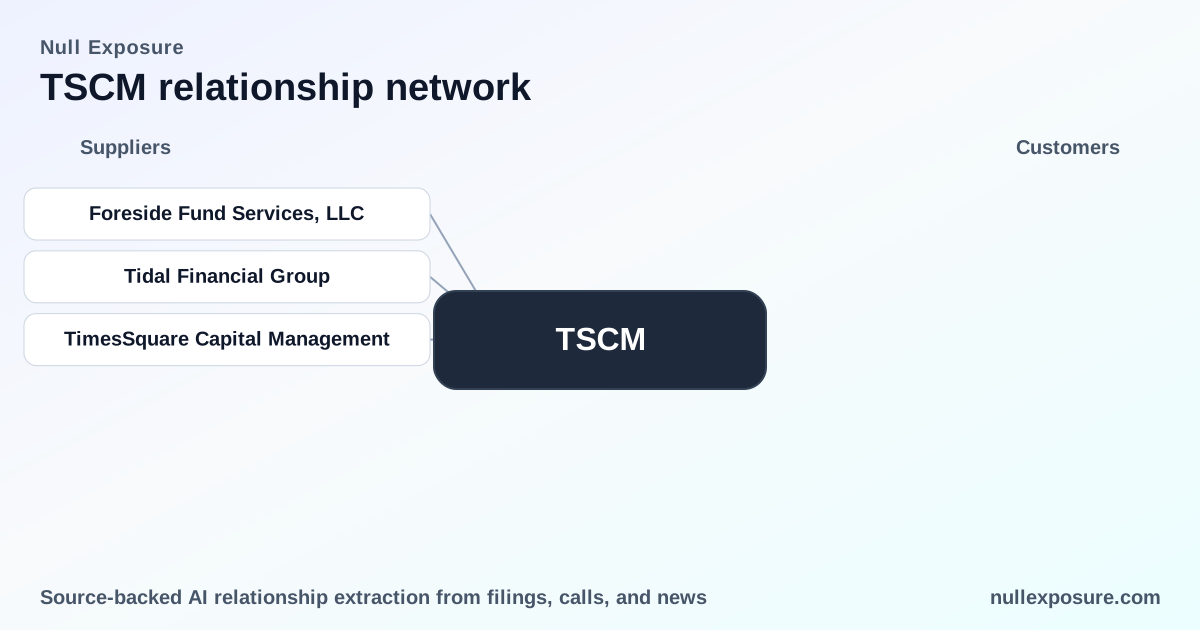
Foreside Fund Services, LLC — Foreside is identified as the distributor for the TimesSquare Quality Mid Cap Growth ETF, meaning it handles distribution, regulatory filings, and certain compliance and investor communications functions for the fund. This distribution role is essential to market access and SEC‑facing obligations. A GlobeNewswire press release announcing the ETF (Dec 30, 2025) states that the fund is “distributed by Foreside Fund Services, LLC.”
-
Tidal Financial Group — Tidal Financial Group is the sponsor and the launching entity that announced the debut of the TimesSquare Quality Mid Cap Growth ETF, effectively bringing the product to market and coordinating launch logistics and commercial positioning. The same GlobeNewswire release (Dec 30, 2025) notes that Tidal Financial Group and TimesSquare Capital Management announced the ETF’s debut.
-
TimesSquare Capital Management — TimesSquare acts as the investment manager, with three named portfolio managers (Sonu Chawla, Edward Salib, and Joshua Bischoff) responsible for implementing the mid‑cap growth strategy and daily portfolio decisions. The GlobeNewswire announcement (Dec 30, 2025) lists the managers and highlights their tenure in mid‑ and small‑cap growth strategies.
How these relationships map to commercial and operational risk
These three supplier relationships create a conventional but concentrated operating model structure:
- Distribution and compliance are consolidated through a single distributor; that reduces complexity but creates a central counterparty whose performance and compliance posture are mission‑critical.
- Sponsorship and go‑to‑market are driven by the sponsor (the launching firm), which defines product economics and marketing reach.
- Investment delivery depends on a small manager team whose track records and continuity directly influence investor inflows and retention.
This configuration benefits speed to market and clarity of accountability. It also concentrates counterparty and execution risk—a limited number of suppliers means fewer coordination frictions but higher single‑point exposure if any one partner underperforms or exits.
Operational constraints and business model characteristics investors should note
Treat the following as company‑level signals about how TSCM operates:
- Contracting posture: The fund adopts a standard outsourced ETF model where core functions—investment management and distribution—are contracted externally rather than vertically integrated, which is typical for new ETFs and reduces fixed cost at launch while creating multi‑party contractual dependencies.
- Concentration: Supplier concentration is high; the fund’s launch disclosure shows only a handful of named partners, increasing exposure to each counterparty’s business continuity and reputational performance.
- Criticality: Each supplier role is critical—distribution, sponsor coordination, and portfolio management cannot be replicated quickly without operational disruption, making relationship continuity essential for AUM growth and regulatory maintenance.
- Maturity: The product launched in late 2025 and is nascent; commercial scale and operational maturity remain to be proven as asset inflows and process refinements evolve.
Investment implications and risk checklist
For investors and operators evaluating a supplier relationship with TSCM, focus on three pragmatic areas:
- Manager continuity and succession: The fund’s value proposition rests on named managers; assess employment arrangements and succession planning.
- Distributor capacity and compliance history: Distribution drives access and regulatory filings—review Foreside’s track record on fund launches and any regulatory notices.
- Sponsor economics and alignment: The sponsor determines fee structure and marketing support; confirm how economics are shared and how incentives align with long‑term AUM growth.
For an investor-grade supplier diligence template and deeper counterparty mapping, explore resources at https://nullexposure.com/.
Final assessment and next steps for investors
TSCM presents a classic early‑stage ETF supplier profile: compact partner set, clear role delineation, and concentrated counterparty risk. That structure supports rapid commercialization but requires active monitoring of manager retention, distributor conduct, and sponsor commitment to scale the product.
If you are performing operational due diligence or building an exposure model around new ETF launches, start with the named partners and track three indicators over the next 12 months: asset inflows, manager continuity, and any distribution or compliance notices. For a structured supplier evaluation and monitoring toolkit tailored to asset managers and investors, visit https://nullexposure.com/ and request the TSCM supplier brief.