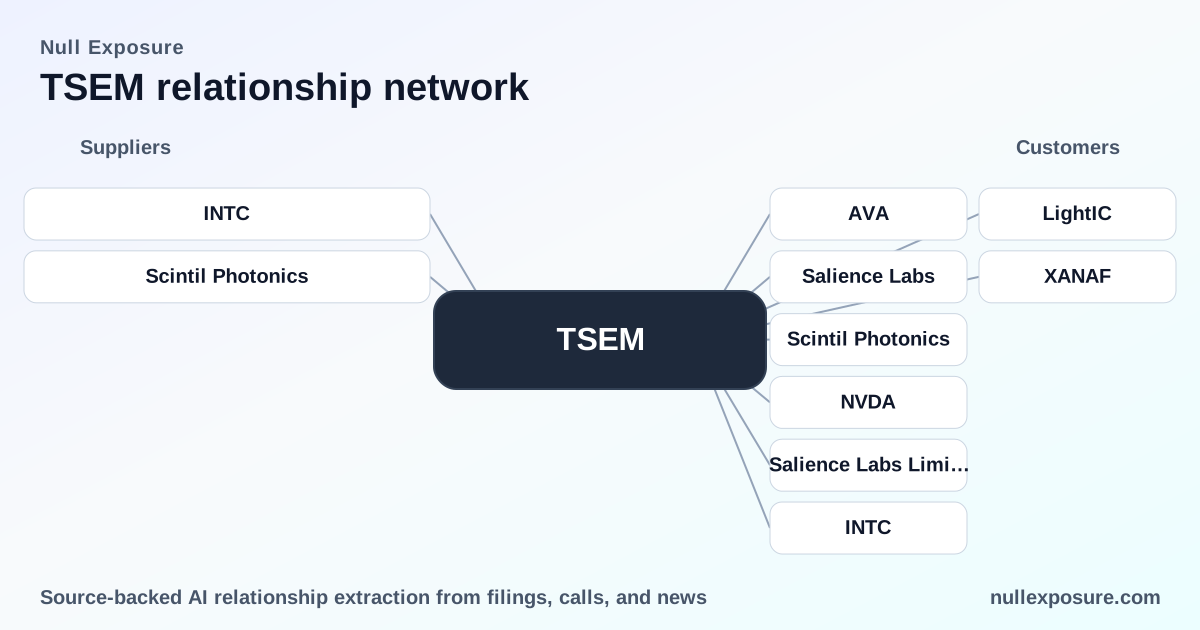
Tower Semiconductor (TSEM): Supplier relationships that shape capacity and silicon‑photonics strategy
Tower Semiconductor operates as an independent specialty foundry that monetizes by selling wafer fabrication capacity, differentiated process technologies (notably silicon photonics and mixed‑signal analog processes), and co‑development partnerships to fabless customers and system OEMs. Revenue derives from wafer bookings, technology licensing and strategic capacity corridors with larger fabs, while margin leverage depends on mix (300mm vs 200mm, SiPho vs commodity analog) and utilization. For a concise supplier‑relationship intelligence dashboard and ongoing tracking of partner moves, visit the NullExposure homepage: https://nullexposure.com/.
Why supplier relationships matter for Tower’s economics
Tower is a capacity‑centric foundry: its operating leverage scales with wafer starts, process mix, and long‑duration customer programs. The company’s opportunities and risks flow from three structural features:
- Contracting posture: Tower sells capacity through customer wafer orders and strategic capacity arrangements rather than ownership of all manufacturing lines; partnerships and third‑party capacity corridors are integral to meeting 300mm scale requirements.
- Concentration: A handful of large customers and hosted capacity relationships can move utilization materially, so single partner decisions have outsized profit impact.
- Criticality and maturity: Tower’s investment in silicon photonics positions it as a critical supplier to AI infrastructure OEMs, while its fab footprint is mature and in the process of migrating to 300mm to achieve cost parity.
No supplier‑constraint items were recorded in the provider feed as company‑level signals at the time of writing; that absence itself signals a gap in captured contractual disclosures that investors should monitor through earnings and regulatory filings.
Operational signals investors should watch now
- 300mm wafer conversion progress and utilization rates.
- Mix shift toward high‑value SiPho and DWDM laser source production.
- Renewal or termination of hosted capacity corridors with large fabs.
- Backlog length and multi‑year wafer agreements.
- Capex cadence to support 300mm expansion versus maintenance of legacy lines.
For tactical monitoring and alerts on these signals, see our intelligence product at https://nullexposure.com/.
Relationship map — the specific supplier ties reported recently
Intel: a hosted‑capacity relationship under stress
In September 2023 Intel signed a contract to manufacture 300mm wafers for Tower’s customers at Intel’s New Mexico facility, but early‑2026 reporting indicates Intel intends to withdraw from that 2023 agreement; see the company press release coverage and related reporting in Feb–Mar 2026 (GlobeNewswire, Feb 11, 2026; Calcalist, Mar 2026). Financial‑market reporting also describes Tower’s strategic shift of silicon‑photonics production onto a 300mm platform by leveraging a capacity corridor at Intel’s New Mexico site, highlighting both the importance and fragility of that hosted capacity arrangement (Markets/FinancialContent, Feb 2026).
Source citations: GlobeNewswire press release (Tower Semiconductor, Feb 11, 2026) and Calcalist reporting (Mar 2026); Markets/FinancialContent coverage (Feb 2026).
Scintil Photonics: product development partnership for SiPho lasers
Tower announced a commercial collaboration with Scintil Photonics to launch heterogeneously integrated DWDM laser sources using Scintil’s SHIP™ technology on Tower’s silicon‑photonics platform—an example of Tower monetizing its process platform through co‑development and productized photonics IP (Quiver Quant, early 2026).
Source citation: Quiver Quant news item on the Tower–Scintil partnership (2026).
What these relationships tell investors about Tower’s operating posture
- Tower relies on hosted capacity and partnerships to scale 300mm production—this reduces capital burden but increases dependency on partner contract stability.
- Productized photonics IP and joint launches (e.g., with Scintil) demonstrate a clear move up‑value from pure wafer manufacturing toward platform monetization and differentiated revenue streams.
- Partner volatility is a tactical risk: the reported Intel withdrawal is a high‑impact event because it affects the company’s ability to deliver 300mm SiPho volumes under existing plans.
- Maturity and repositioning: Tower’s public metrics (FY‑TTM revenue, margins, and institutional ownership) confirm a revenue‑generating foundry with healthy profitability but valuation that prices growth expectations—investors must weigh execution of 300mm scale and photonics adoption against premium multiples.
Key financial context: Tower’s market capitalization and profitability figures reflect a company priced for growth (MarketCap ≈ $15.6B; trailing P/E ~71.4; FY‑TTM revenue ≈ $1.57B; operating margin ~16%), underscoring that partner outcomes materially affect valuation.
Risk / opportunity synthesis for operators and investors
- Risk: Loss or instability of a hosted‑capacity partner like Intel compresses near‑term volume and can force spot‑capacity purchases at higher cost, pressuring margins and backlog delivery.
- Opportunity: Successful commercialization of SiPho devices and DWDM lasers through partners like Scintil accelerates Tower’s shift from commodity wafer pricing to higher‑margin platform solutions.
- Operational implication for customers: OEMs sourcing SiPho must assess Tower’s hosted capacity continuity and contingency arrangements; operators should negotiate explicit capacity commitments and escalation rights.
How to act — practical next steps
- For investors: monitor 10‑Q/10‑K disclosures and earnings calls for explicit updates on the Intel arrangement and 300mm utilization; update cash‑flow scenarios to reflect potential shortfalls in hosted capacity.
- For operators and supply‑chain managers: secure multi‑point capacity options and request contractual language that mitigates single‑partner concentration risk.
- To keep track of partner moves and supplier intelligence, visit NullExposure for dedicated coverage and alerts: https://nullexposure.com/.
Tower’s combination of specialty process IP and reliance on hosted 300mm corridors makes supplier relationships a primary determinant of near‑term performance and long‑term strategic positioning; investors and operators must treat partner announcements as core operating signals rather than peripheral news. For ongoing coverage and deal‑level tracking, return to https://nullexposure.com/.