Titan America (TTAM): Syndicate, Strategy, and Supplier Signals for Investors
Titan America SA operates as a vertically integrated cement and construction materials manufacturer that monetizes through product sales to construction and infrastructure markets, leveraging strategically located U.S. plants to optimize distribution and margin capture. The company’s revenue and operating leverage come from scale in production, pricing power tied to localized supply/demand imbalances, and cost control through process improvements—while corporate actions such as a U.S. listing and capital markets engagement are being used to broaden the shareholder base and fund growth. For investors and operators evaluating counterparty risk, the choice of lead and managing banks on the transaction is the most actionable near-term signal of market access and financing posture. Learn more at https://nullexposure.com/.
Market snapshot: TTAM reports roughly $1.65B revenue (TTM), ~19.8% operating margin (TTM), and EV/EBITDA ~8.4, with an insider ownership profile that is exceptionally concentrated (insiders ~86.7%) and a relatively small reported free float—factors that materially influence liquidity and governance dynamics.
Why the syndicate matters to operators and buyers
A public listing and the selection of underwriters are not mere headline items; they determine distribution reach, pricing execution, and the tenor of future capital access. A diverse syndicate of global and U.S. banks signals a deliberate effort to balance investor access across regions and buyer types, and suggests management is prioritizing depth of book over speed. That matters for counterparties arranging credit, hedging, or long-term supply contracts: a successful syndicate execution reduces refinancing and counterparty risk, while a weak placement concentrates risk back on balance-sheet liquidity.
If you are assessing TTAM as a supplier or strategic partner, factor in two immediate operating signals: high insider concentration reduces free-float liquidity and can limit secondary-market price discovery, and a multi-bank syndicate increases the chances of a well-distributed ownership base, which in turn strengthens corporate governance and access to capital.
The transaction syndicate — who’s on the desk and what that means
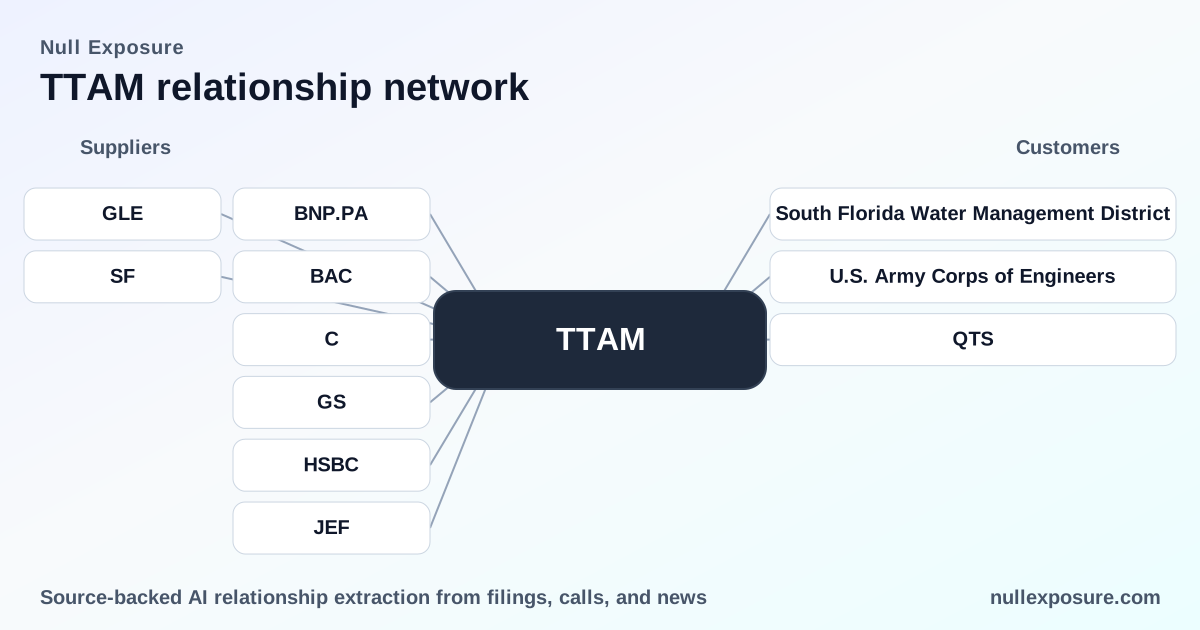
Below is a concise, plain-English run-through of every relationship captured in reporting on TTAM’s listing and the role each firm plays in the deal.
-
Citigroup — Named as a lead manager for the proposed offering, Citigroup brings global distribution and institutional placement capabilities that support large cross-border book-building. According to Ekathimerini coverage of the listing (March 10, 2026), Citigroup is one of the lead managers of the offering. (Ekathimerini, March 10, 2026)
-
Goldman Sachs & Co LLC — Acting alongside Citigroup as a lead manager, Goldman Sachs provides strategic guidance on pricing and high-touch institutional coverage that typically helps secure anchor orders. Ekathimerini lists Goldman Sachs as a lead manager for the proposed offering. (Ekathimerini, March 10, 2026)
-
BofA Securities — Included in the manager group, BofA contributes retail and institutional distribution breadth in U.S. equity markets, which supports aftermarket stability. Ekathimerini notes BofA Securities as a participating manager. (Ekathimerini, March 10, 2026)
-
BNP Paribas — As part of the international manager roster, BNP Paribas extends European investor access and complements U.S. syndicate coverage for cross-border flows. Ekathimerini identifies BNP Paribas among the acting managers. (Ekathimerini, March 10, 2026)
-
HSBC — Listed as a manager, HSBC adds Asia‑Pacific network reach and global wealth management channels that can broaden geographic distribution, especially for international demand. Ekathimerini includes HSBC in the manager list. (Ekathimerini, March 10, 2026)
-
Jefferies — As a manager, Jefferies supplies mid‑market and institutional buy-side connectivity in the U.S., helpful for building depth beyond flagship accounts. Ekathimerini notes Jefferies is acting as a manager. (Ekathimerini, March 10, 2026)
-
Societe Generale — Participating as a manager, Societe Generale reinforces European institutional placement and debt-market relationships that can be useful for follow‑on funding or hedging programs. Ekathimerini lists Societe Generale among the managers. (Ekathimerini, March 10, 2026)
-
Stifel — Included in the manager group, Stifel provides regional U.S. distribution and corporate access to middle‑market investors, improving retail and regional desk support. Ekathimerini notes Stifel is part of the manager syndicate. (Ekathimerini, March 10, 2026)
Collectively, this syndicate mixes global bulge‑bracket lead managers with regional and mid‑market firms, which is consistent with a strategy to balance institutional anchors and wide retail/international reach. For counterparties, that mix reduces the single-point dependence on one bank for aftermarket and corporate-finance coverage.
Mid-article note: if you want a summarized supplier-risk profile and transaction history for due diligence, visit https://nullexposure.com/ for consolidated research and ongoing coverage.
How the operating model and business constraints shape risk
Titan America’s operational signals, separate from the deal parties, present a clear set of business model characteristics:
-
Contracting posture: TTAM sells commodity construction materials in markets where offtake is governed by localized contracts and spot transactions; the company’s focus on strategic plant location implies a contracting posture centered on regional pricing and service reliability rather than long-duration national supply contracts.
-
Concentration: Company-level metrics show extremely high insider ownership (~86.7%) and a relatively small float — this is a material governance and liquidity constraint that increases the importance of the new listing to diversify holdings and improve price discovery.
-
Criticality: Cement supply has high criticality in construction chains; disruptions at TTAM plants would have direct impacts on regional projects and procurement schedules, elevating the firm to a critical supplier status for localized infrastructure pipelines.
-
Maturity and capital intensity: Cement production is capital-intensive and mature; margin expansion is driven by scale, efficiency investments, and favorable regional demand — the company’s near-term financing and market access choices will therefore dictate capacity deployment decisions.
There are no explicit third-party contractual constraints reported in the available relationship data; that absence should be read as a company-level signal rather than an assurance of no counterparty obligations.
Risks, opportunities, and what operators should watch
-
Risk — liquidity and governance: With insiders controlling the majority of shares, post-listing liquidity and the effectiveness of governance reforms are the primary risks to monitor. A well-executed syndicate reduces this risk by widening the shareholder base.
-
Opportunity — market access via a strong syndicate: The participation of both global lead managers (Citigroup, Goldman Sachs) and regional distributors (Jefferies, Stifel) improves the probability of successful capital raising and follow-on financing, which supports capital expenditure and working-capital plans.
-
Operational exposure: Localized market dynamics and infrastructure demand cycles drive revenue volatility; counterparties should stress-test supply continuity in procurement agreements.
If you need consolidated counterparty intelligence or a tailored supplier-risk brief for TTAM, see the resource hub at https://nullexposure.com/.
Bottom line for investors and counterparties
Titan America is leveraging a broad, multi-jurisdictional syndicate to transition toward a more diversified public shareholder base while retaining a capital-intensive, regionally focused operating model. The mix of lead and co-managers increases the probability of broad distribution and aftermarket stability, but the company-level liquidity constraint from high insider ownership remains the central governance and market-risk factor to watch.
For pragmatic next steps: track syndicate execution and share‑distribution outcomes as your first-order signal, then monitor capex disclosures and regional sales volumes to assess delivery risk. For a consolidated briefing and ongoing updates on TTAM supplier relationships, visit https://nullexposure.com/.