ServiceTitan (TTAN) — supplier relationships, legal counterparties, and what they signal to investors
ServiceTitan operates a vertically focused software platform for contractors in plumbing, HVAC, and electrical services and monetizes primarily through recurring software and services revenue tied to customer operations, scheduling, invoicing and analytics. The business combines a subscription-led commercial model with enterprise implementations and professional services that drive near-term revenue while locking in long-lived customer relationships; the company reported $961M revenue (TTM) and a market capitalization of roughly $6.7B while remaining unprofitable on the bottom line. This note distills what the disclosed supplier relationships and corporate constraints tell investors about ServiceTitan’s contracting posture, operational concentration, and third‑party risk profile.
If you evaluate supplier counterparty risk for investments or vendor management, see the full catalog at https://nullexposure.com/ for comparable supplier intelligence and sourcing context.
What the disclosed supplier relationships reveal about corporate posture
ServiceTitan’s public disclosures and the single supplier mention in our results deliver a focused, investor‑relevant picture: legal counsel for capital markets and a company that carries long-term contractual commitments and a geographically dispersed engineering footprint in EMEA. These are not marginal facts — they affect cash flow flexibility, regulatory exposure, and third‑party security management.
- Capital markets relationships are transactional but strategically important. The law firm relationship recorded in our results relates to the company’s IPO work, a one-off but high-stakes engagement that shapes access to capital and governance.
- Long‑term lease liabilities increase fixed costs. The lease schedule shows multi‑year commitments through 2030 and beyond, translating to predictable fixed outflows that constrain operating leverage in downturns.
- EMEA staffing and past contractor exposure in Russia represent geographic operational diversification with regulatory complexity. Engineering resources in Armenia and Poland provide lower-cost talent pools but introduce jurisdictional risk and compliance burdens.
- Use of external service providers for security processes is explicit. Outsourced security work centralizes expertise but raises third‑party dependency and vendor‑management requirements.
For an investor-focused supplier analysis platform and deeper counterparty data, visit https://nullexposure.com/.
The single supplier relationship in the disclosure — what it means
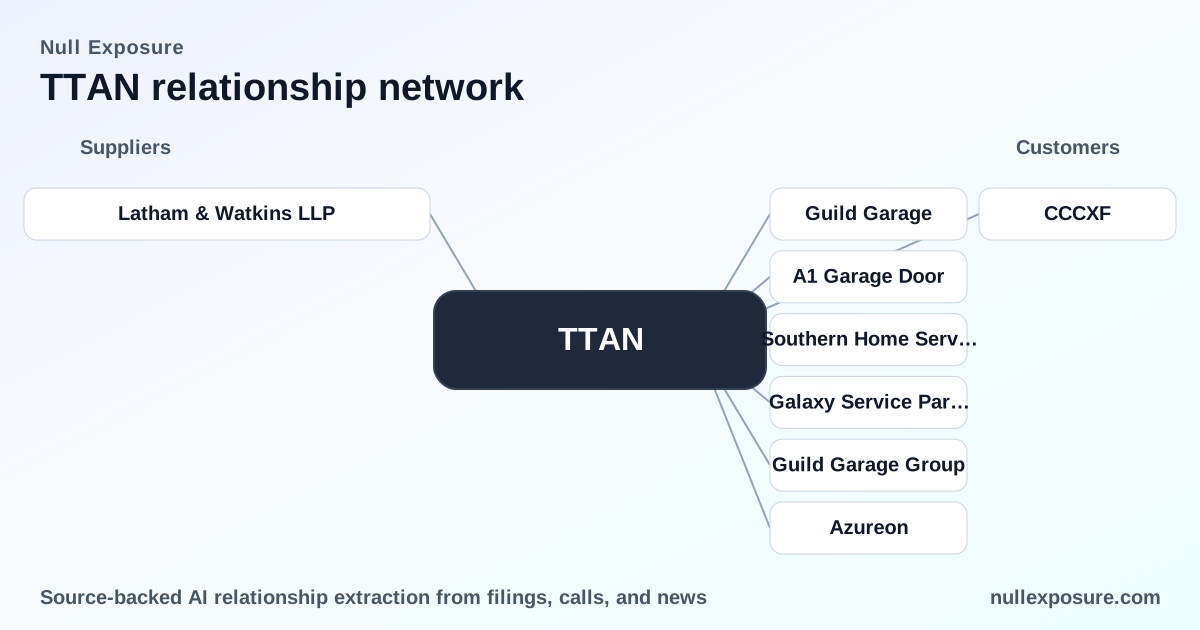
Latham & Watkins LLP
- Latham & Watkins acted as legal counsel to ServiceTitan in its U.S. offering, leading the corporate work for the IPO process. This reflects an engagement typical for high‑value capital markets transactions and signals ServiceTitan’s use of top‑tier external legal advisors for governance and securities matters (Latham & Watkins announcement, March 10, 2026 — https://www.lw.com/en/news/latham-watkins-represents-servicetitan-in-us624-8-million-ipo).
This is the only supplier relationship surfaced in the results set; it is transactional and concentrated around capital markets execution rather than an ongoing operational supplier like data centers, payment processors, or core platform vendors.
Company-level constraints that matter for supplier and operational risk
The data payload included several constraint excerpts that are company‑level signals — they do not name individual suppliers but materially affect supplier strategy and vendor risk management:
- Long-term lease commitments are material. ServiceTitan discloses long‑term lease liabilities with total future minimum payments of about $66M and a net present liability of roughly $60M as of the prior fiscal disclosure, reflecting multi‑year property commitments through 2030 and thereafter (ServiceTitan fiscal filing, year ended Jan 31, 2025). For investors this means fixed occupancy costs will continue to pressure operating leverage until lease terms roll or are renegotiated.
- EMEA engineering footprint and prior Russia contractor exposure. The company reports personnel and contractors in Armenia and Poland and previously engaged engineering contractors in Russia prior to U.S. sanctions. This signals deliberate offshoring/nearshoring of engineering capacity that reduces development cost but increases compliance and geopolitical risk in sourcing (ServiceTitan filing disclosures).
- Explicit use of external service providers for security testing and assessment. ServiceTitan relies on third‑party security firms to assess and test controls, which is common for scale software providers but creates concentration and vendor‑management implications for cybersecurity and incident response planning (Company disclosure).
None of these constraints names the law firm relationship; they are company‑level operational signals that investors must fold into procurement diligence and scenario analysis.
How these relationships and constraints affect valuation and operational risk
- Capital‑markets counsel is not a persistent operational dependency, but it matters. The Latham engagement signals ServiceTitan’s ability to attract elite advisers for transactions that affect capital structure and investor access; this reduces execution risk around equity events but does not substitute for operational vendor resilience.
- Fixed lease liabilities compress downside flexibility. With meaningful long‑term lease obligations, ServiceTitan’s cost base is less elastic in revenue drawdowns, elevating the importance of margin expansion and subscription renewal rates to reach profitability targets.
- EMEA staffing provides talent leverage and cost advantages while introducing compliance overhead. Nearshore engineering reduces unit development cost and supports scaling, yet requires active compliance programs and contingency planning in the event of sanctions or local disruptions.
- Third‑party security providers reduce internal burden but increase vendor concentration risk. Outsourced testing improves coverage but forces rigorous contract, SLAs, and audit clauses to protect intellectual property and customer data.
If you are conducting counterparty due diligence or vendor stress testing, review supplier profiles and contractual terms at https://nullexposure.com/ to benchmark ServiceTitan against peers.
Actionable investor takeaways
- Treat legal counsel as a transaction-level signal, not an operational dependency. The Latham relationship confirmed high‑quality capital markets representation during the IPO, but it does not substitute for resilient operational vendors.
- Model lease cash flows explicitly. Incorporate the disclosed multi‑year lease schedule into scenario analyses for EBITDA and free‑cash‑flow sensitivity; long‑term leases increase fixed costs and deepen downside exposure.
- Assess third‑party security and EMEA sourcing risk. Require transparency on vendor selection, incident history, and remediation SLAs for external security providers, and request details on the company’s contingency plans for EMEA personnel disruptions.
- Monitor for supplier concentration beyond the IPO cycle. The current disclosure set surfaces a capital‑markets counsel engagement only; investors should press management on material ongoing operational suppliers (payments, cloud, telephony, data protection) in routine earnings or due diligence calls.
For a deeper supplier and counterparty risk review tailored to investment or vendor management workflows, visit https://nullexposure.com/ for comparative supplier intelligence and sourcing signals.
Final read
ServiceTitan is a growth‑oriented software provider with a subscription‑style revenue base and visible fixed commitments that influence margin dynamics. The supplier evidence in the public record is concentrated and transactional (legal counsel for the IPO), while company disclosures flag meaningful long‑term leases, an EMEA engineering footprint, and reliance on external security providers — all of which require active oversight from investors focused on operational resilience and downside protection.