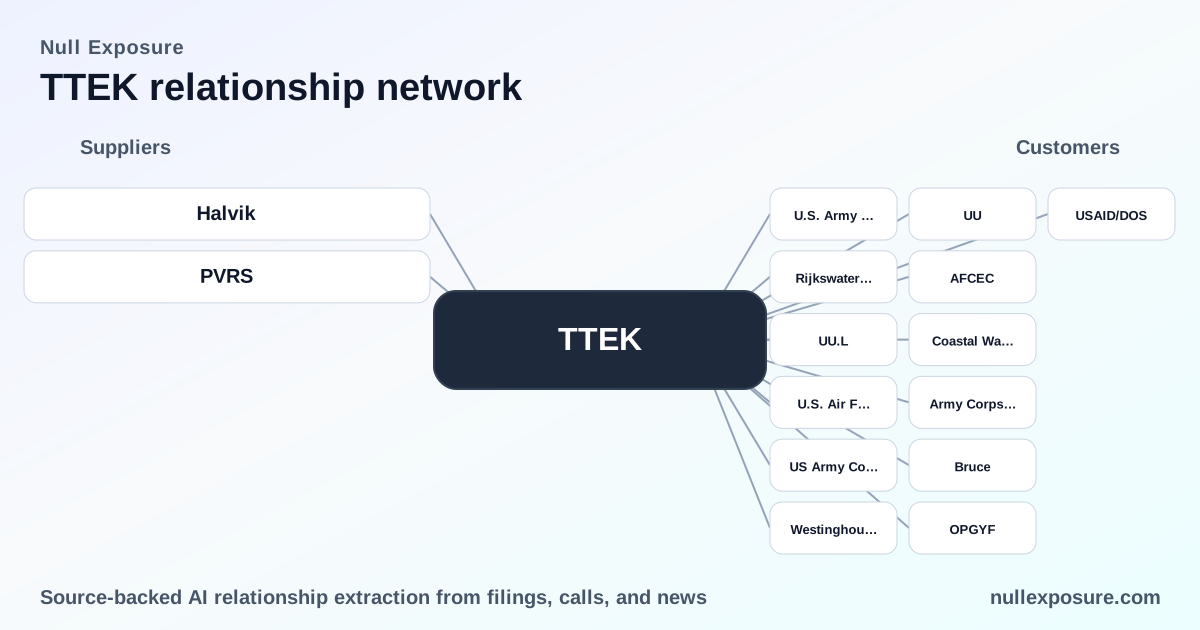
Tetra Tech (TTEK): Acquisitions sharpen the firm’s engineering-to-analytics pathway and alter supplier dynamics
Tetra Tech is a global consulting and engineering firm that monetizes through fee-based project delivery, program management, and advisory services across infrastructure, environmental, and defense markets. The company earns recurring, contract-driven revenue from long-cycle client engagements and expands addressable markets through targeted acquisitions that add higher-margin analytics and advisory capabilities. Investors should value Tetra Tech as an operational services platform whose upside depends on sustained government and utility spending, margin retention from acquired businesses, and integration discipline.
If you want a concise, investment-grade supplier risk snapshot and relationship map, visit https://nullexposure.com/ for an organized view of TTEK’s third-party footprint.
Why the Halvik and Providence deals matter for suppliers and operators
Tetra Tech’s recent transaction activity reorients supplier relationships in two ways: first, it brings specialized analytics and front-end advisory capabilities in-house, reducing reliance on external boutique suppliers; second, it increases Tetra Tech’s exposure to defense and resilient-infrastructure programs, where subcontracting layers and security-cleared suppliers are critical. That combination raises both margin opportunity and integration risk for operators who supply software, analytics, and cleared services to the defense-adjacent ecosystem.
Quick financial context that frames supplier bargaining power:
- Revenue TTM: $4.46B; EBITDA: $658.7M; operating margin ~13%.
- Market cap: $8.19B; trailing P/E ~23.6; forward P/E ~21.0; analyst target price $43.50. These figures position Tetra Tech as a mid-cap professional services firm with solid profitability and the firepower to pursue strategic acquisitions.
The relationships disclosed: Halvik and Providence, and what they imply
According to a Tetra Tech press release cited by The Globe and Mail in March 2026, the company closed or announced the Halvik and Providence acquisitions to expand high-end data analytics, resilient infrastructure optimization and front-end advisory for defense clients (https://www.theglobeandmail.com/investing/markets/stocks/TTEK/pressreleases/37309985/tetra-tech-delivers-strong-q1-results-raises-2026-guidance/).
-
Halvik — Tetra Tech acquired Halvik to add advanced data-analytics and resilient infrastructure optimization capabilities that strengthen program delivery for defense and critical-infrastructure clients; this brings analytical workstreams in-house and reduces Tetra Tech’s dependency on external analytics suppliers. Source: The Globe and Mail press release on March 10, 2026 (https://www.theglobeandmail.com/investing/markets/stocks/TTEK/pressreleases/37309985/tetra-tech-delivers-strong-q1-results-raises-2026-guidance/).
-
Providence (PVRS) — The Providence deal is positioned to expand front-end advisory services for defense customers, bolstering Tetra Tech’s ability to win and structure large defense programs and capture higher-margin advisory fees; Providence’s capabilities shift some advisory spend from external consultants to Tetra Tech. Source: The Globe and Mail press release on March 10, 2026 (https://www.theglobeandmail.com/investing/markets/stocks/TTEK/pressreleases/37309985/tetra-tech-delivers-strong-q1-results-raises-2026-guidance/).
These two relationships are not simple vendor contracts: they are acquisitions that change Tetra Tech’s supplier footprint by internalizing capabilities historically purchased from specialized suppliers and advisors.
What this means for supplier concentration, contracting posture, and criticality
Tetra Tech’s operating model is project-driven and contract-centric: revenue converts from bidding and winning large, long-duration contracts with government, utilities, and industrial clients. That posture produces predictable procurement patterns—formal RFPs, security and compliance gates, and multi-year subcontract arrangements—favoring suppliers with proven performance, clear compliance credentials, and scale.
- Concentration: Company-level signals show Tetra Tech diversifies across sectors but is increasing concentration in defense and resilient infrastructure via these acquisitions, which concentrates supplier demand on specialist analytics, cleared personnel, and integrated delivery partners rather than commodity providers.
- Contracting posture: Tetra Tech behaves like a prime contractor for complex programs—suppliers face competitive bidding, strict performance milestones, and certification requirements that favor suppliers able to demonstrate past performance on defense and infrastructure projects.
- Criticality: Suppliers that deliver analytics, security-cleared staff, or front-end advisory services become more critical as Tetra Tech internalizes complementary capabilities; commodity inputs remain lower criticality.
- Maturity: Tetra Tech is an established firm with healthy margins and acquisition capacity; suppliers should expect disciplined vendor management and standardization of procurement practices as the firm scales new capabilities.
There are no explicit constraints or unusual vendor-specific caveats disclosed in the available relationship data; that absence is itself a company-level signal of conventional integration risk rather than contract-specific disruption.
For a mapped view of these supplier shifts and real-time relationship signals, explore https://nullexposure.com/ to see how acquisition activity changes vendor exposure.
Investment implications and supplier risk takeaways
- Positive for margins and differentiation. Internalizing analytics and advisory work can lift revenue per engagement and improve margins if integration preserves revenue streams. Tetra Tech’s operating margin around 13% gives headroom to extract synergies.
- Higher bar for suppliers. Boutique analytics firms and small advisors will face tougher competition to win contracts from Tetra Tech once those capabilities are integrated; conversely, suppliers of specialized cleared services and infrastructure hardware retain leverage.
- Execution risk remains the primary watchpoint. M&A-driven capability expansion requires disciplined integration to preserve client relationships and cross-sell opportunities; investors should monitor quarterly updates on backlog conversion and margin trends.
- Valuation context. With a trailing P/E of 23.6 and forward P/E of 21.0, market pricing assumes continued growth and margin resilience; any slip in integration or contract wins would pressure multiples.
Practical next steps for investors and operators
- For investors evaluating TTEK exposure, focus on backlog growth, organic revenue trends in defense and infrastructure, and margin progression post-acquisition.
- For suppliers, align capabilities to cleared services, resilient-infrastructure delivery, and integrated analytic workflows to remain competitive in Tetra Tech’s bid ecosystem.
- To track supplier and relationship changes as Tetra Tech continues acquisition-driven expansion, use an organized relationship monitoring tool at https://nullexposure.com/.
Conclusion: a clearer supplier map under a growing services platform
Tetra Tech’s acquisitions of Halvik and Providence are strategic moves to internalize analytics and front-end advisory capabilities, which reshapes supplier demand toward cleared, high-value technical services and away from commoditized external advisors. Investors and operators should treat these changes as structural: they alter procurement patterns, raise integration execution as the principal risk, and provide a clearer path to differentiated, higher-margin engagements if managed effectively.
If you want an operational supplier-risk brief tailored to portfolio or vendor management needs, visit https://nullexposure.com/ to request a focused report and live relationship map.